I. Introduction
When you see two drill bits labelled “carbide” and “tungsten carbide” the terms don’t tell you which one is harder, tougher or better for your job. If the setup is not stable the steel may wear out fast or chip before it should, if you go by the label. This guide describes the meaning of these phrases and how to select the words according to the carbide grade, the material of the workpiece and the drilling conditions.
II. Are Tungsten Carbide and Carbide Drill Bits Really Different?
1. What Tungsten Carbide Means in a Drill Bit
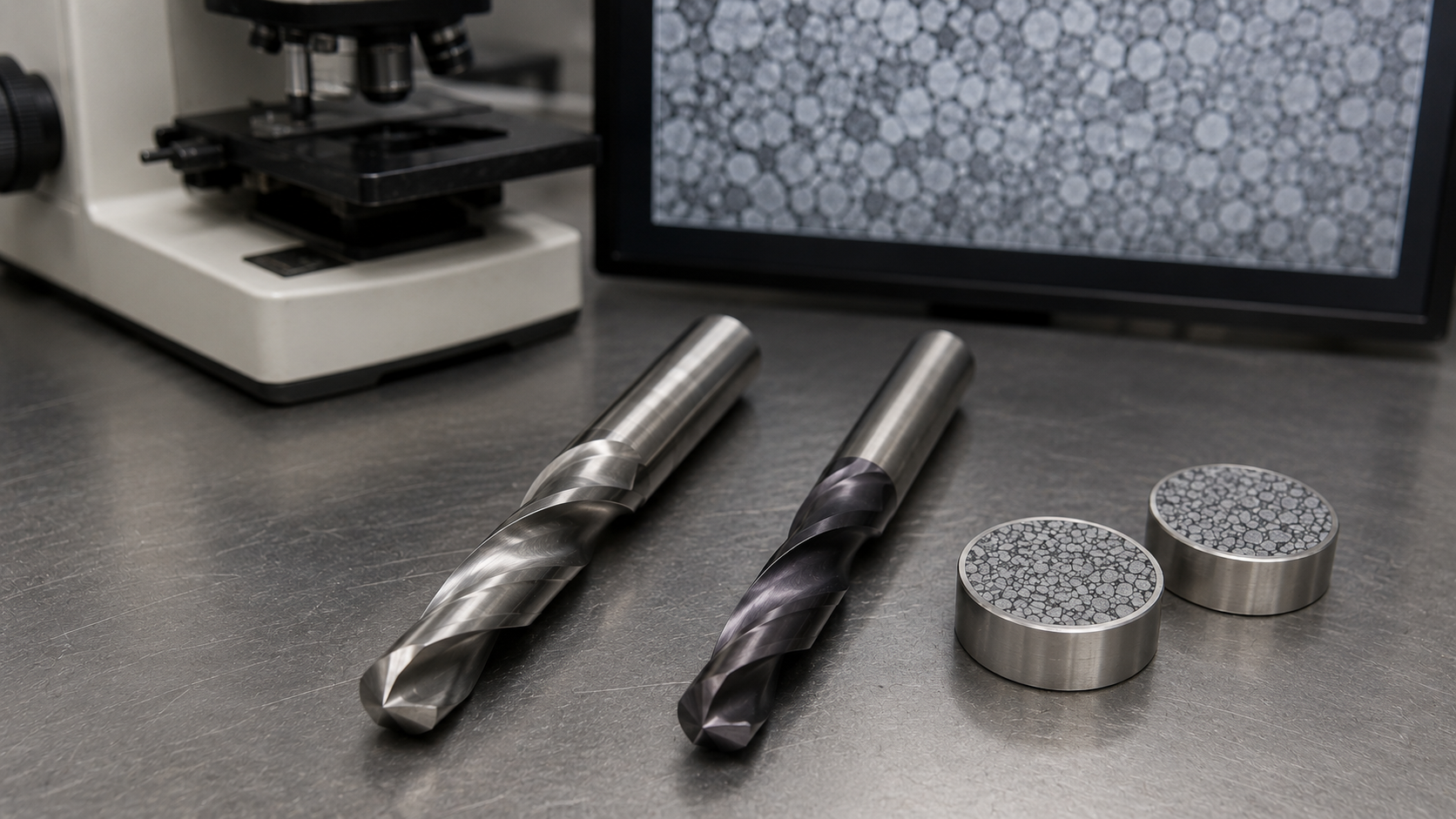
In most carbide cutting tools, the hard WC grains are called tungsten carbide grains. WC is too brittle to be a useful drill on its own and is typically combined with cobalt or another metallic binder to form cemented carbide. The WC provides hardness and wear resistance and the binder holds the particles in place and helps the cutting edge withstand load. Thus, a drill bit of tungsten carbide is usually formed of cemented tungsten carbide, not pure tungsten carbide.
2. What “Standard Carbide” Usually Means
Standard carbide is not a grade of carbide. Depending on the product it could be a general purpose WC-Co grade, a harsher grade with more binder or just a carbide drill not marketed for a demanding material. You cannot assume that all drills marked “tungsten carbide” have a higher WC content or a higher hardness than all drills marked “standard carbide.” The grade spec and the intended workpiece are more reliable than the marketing phrase.
3. Why the Product Name Is Not Enough
Two drills, both of tungsten carbide, with different WC grain sizes, binder percentages, cutting edge preparations, coatings and flute form. They may also use solid carbide, brazed carbide tips or replaceable carbide heads. The differences dictate whether the drill is suitable for steady high volume manufacturing, interrupted hole, aluminium, stainless steel or hardened steel. The word “tungsten” does not give this information.
III. What Actually Changes between Carbide Grades?
1. Tungsten Carbide Content and Cobalt Binder
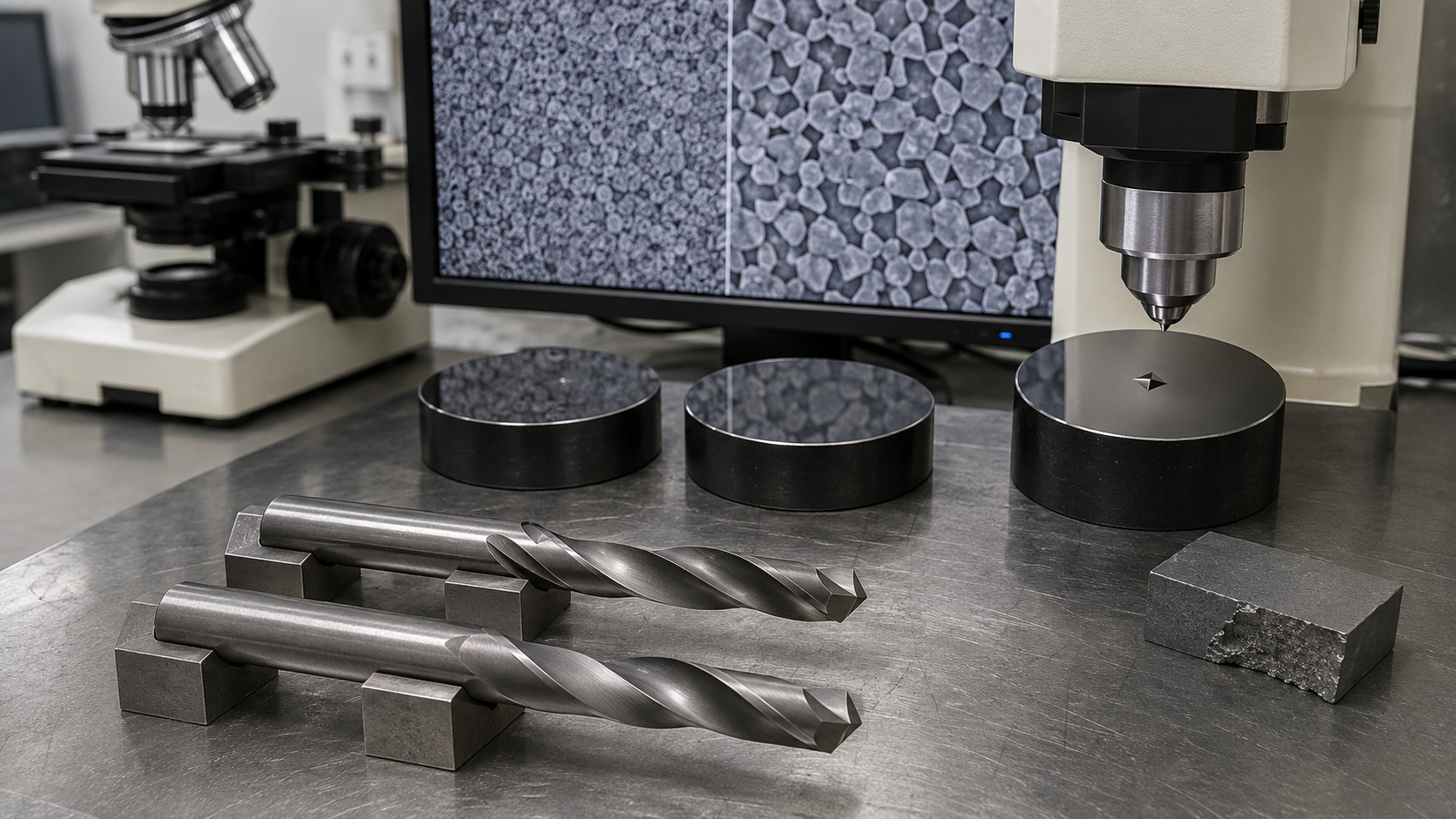
The cobalt concentration is typically in the single digits to low teens depending on grade, and the hard phase of metal cutting cemented carbide is more than 80% WC. The WC content can be increased or the binder can be decreased to increase hardness and wear resistance, however this may make the cutting edge less capable of absorbing impact. More binder generally leads to more toughness, but an excessive amount of binder could lead to a decreased resistance to edge deformation and abrasive wear. Therefore, the best choice in all situations is not the highest percentage of WC.
2. Carbide Grain Size
Precision solid carbide drills are made with fine and submicron WC grains for a sharp, wear resistant cutting edge. Other mixtures of grain and binder may offer greater balance with changing loads or interrupted contact. Micrograin should not be viewed as a comprehensive performance parameter, but rather not considered on its own without consideration of binder content and edge preparation.
3. Hardness and Toughness Must Be Balanced
It is the hardness which allows the drill to resist the abrasive wear, heat induced distortion and slow rounding of the edge. It is difficult enough to resist vibration, run-out, skewed entrance and abrupt changes in cutting load. If you are drilling in an abrasive material with a stable CNC, a wear-resistant grade can increase the edge life. If you are drilling cross holes or doing interrupted cutting, a slightly tougher grade can prevent premature chipping. If the machine or workpiece is very unsteady, however, changing the carbide grade will not solve the setup problem.
IV. How Carbide Grade Changes Drilling Results
1. Edge Retention and Wear
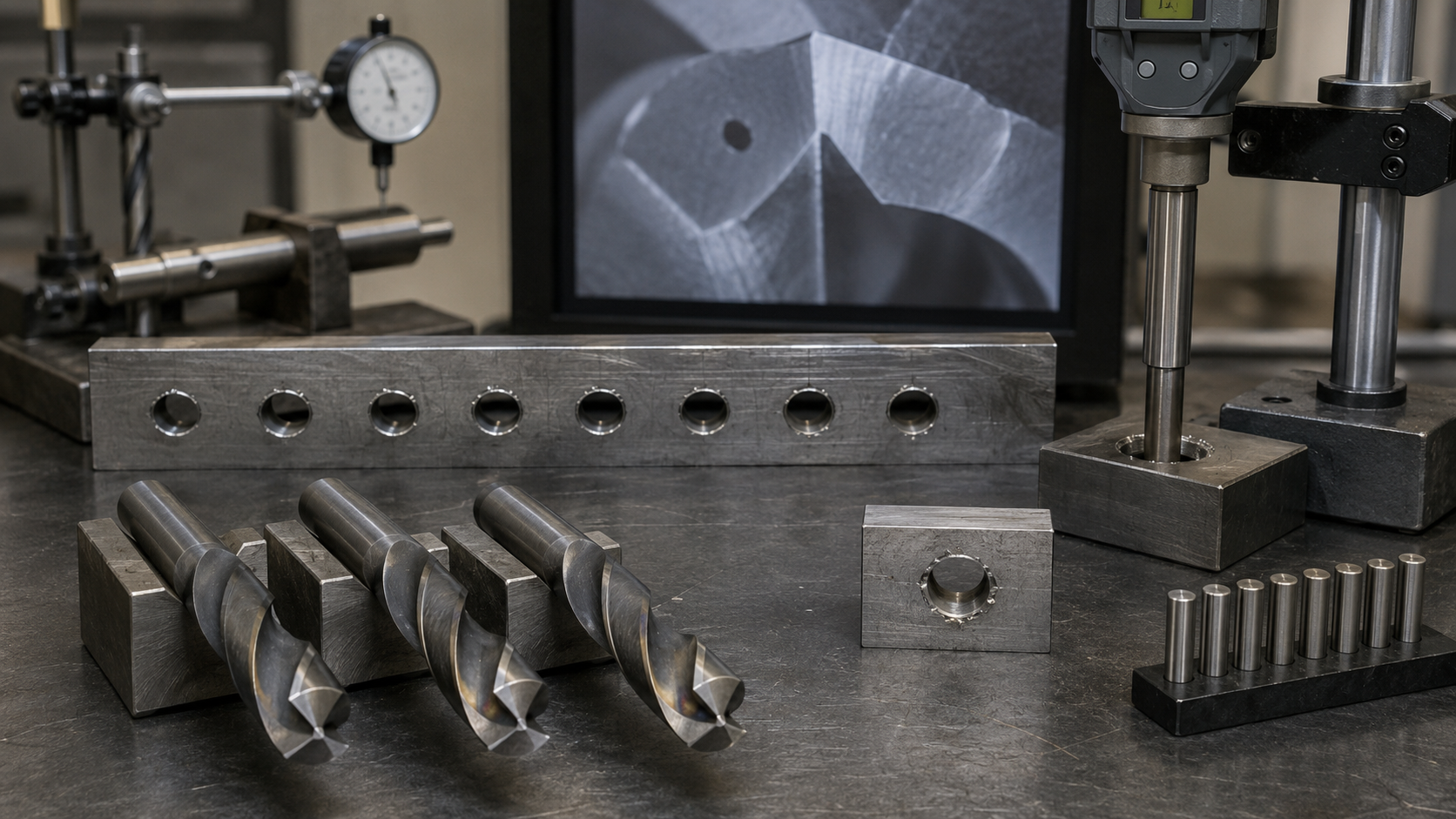
Wear-resistant carbide grade keeps the drill tip, outer cutting corners and margins closer to their original form for a longer batch. A dull edge inhibits the gradual increase of force, burr size and change in hole diameter. But higher wear resistance is of little use if progressive wear is the primary mode of failure. For a drill normally failing by sudden chipping, the change to a tougher grade may have the effect of decreasing rather than increasing the tool life.
2. Heat Resistance at the Cutting Edge
Carbide retains its cutting hardness at greater temperatures that would cause HSS to soften more quickly . Not all carbide grades and coatings respond in the same way to focussed heat . This is crucial in stainless steel, titanium and nickel alloy drilling operations because the heat is concentrated on the cutting edge and wear can progress quickly. A good grade must hold its edge but not be so brittle that it will chip locally under normal fluctuations of cutting force.
3. Chipping and Breakage Risk
Carbide drills are stiff and won’t bend as much as HSS drills. In the case of a sudden application of a side-force to one edge the failure is generally not due to bending but a small chip or a complete break. A harder grade of carbide will handle more variation in the load but it still needs to be positioned correctly and fed stably. The first thing to evaluate is not the hardness of the carbide but the runout, angle of entry, toolholding and movement of workpiece. If only one cutting edge is breaking.
4. Hole Size Consistency
The drill still cuts normally but the hole can change as the outside cutting corners and margins go away. A grade that retains its sharpness can help maintain consistent diameter across numerous production runs, but the ultimate result depends on drill geometry and machine alignment. A harder carbide grade will not achieve a tighter tolerance hole if the holder runs out or the drill is not suitable for the material.
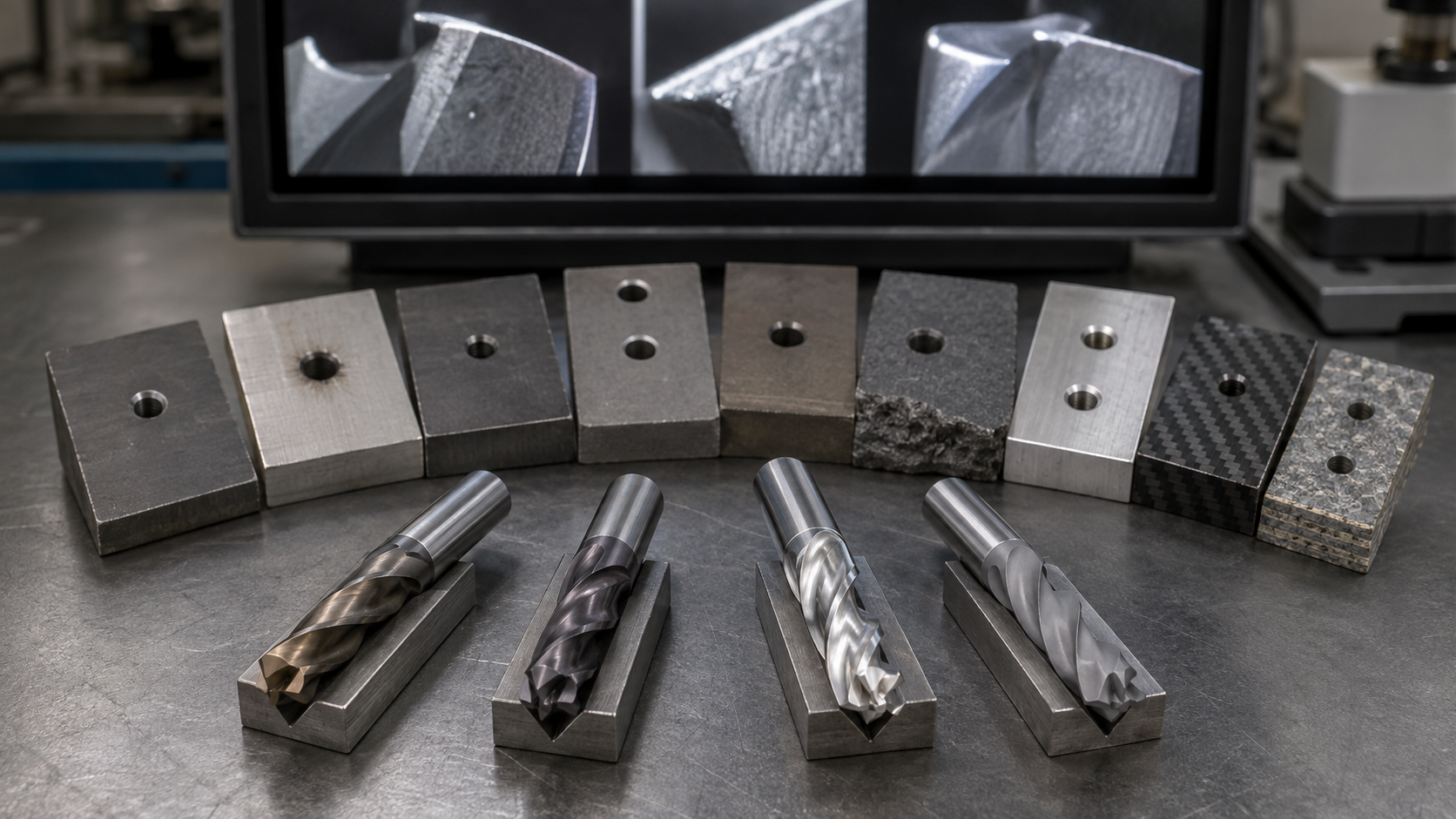
V. Choose the Carbide Grade for Your Workpiece
1. Carbon and Alloy Steel
For ordinary carbon and alloy steels generally you need a balance between wear resistance and cutting edge strength. A wear-resistant coated carbide grade that retains the outer cutting corners over a long batch can be used for stable CNC production. Safer if the hole is slanted, the wall is interrupted or the exit is cross-hole. Is a tougher grade with a more strongly reinforced edge. Drilling simply for maximal hardness will give fine first holes but can cause rapid corner chipping when the drill encounters an unbalanced load.
2. Stainless Steel
Stainless steel can work-harden and generate concentrated heat if the drill rubs instead of smoothly cutting. A carbide drill suitable for the task will consequently have a sharp cutting action, sufficient edge toughness, regulated chip production and a coating chosen for heat and adhesion. If the grade is too soft, it will wear and round out rapidly; if the grade is too brittle, it may chip under the high cutting stress. The greatest WC content carbide is not necessarily the best choice.
3. Hardened Steel
If the steel hardness is greater than about 45 HRC, use a solid carbide drill developed for hardened materials, not a regular carbide drill. Some specialist products can drill steel at around 60-65 HRC but it is contingent upon the complete grade, point, edge preparation, coating and condition of the machine. If the drill is not firm enough it will polish the hole entrance but not penetrate. If the edge is excessively hard but not well maintained it will chip on entry.
4. Titanium Alloys
Titanium is a poor conductor of heat, thus much of the heat from the cutting is concentrated at the edge of the drill. It can also stick to the cutting surface and cause point loads along the cutting corners. Select a carbide grade that provides hot hardness but is robust enough to prevent local chipping. And select a sharp shape to minimise friction. Simply lowering the cobalt percentage to boost hardness will reduce the drill’s tolerance for the unstable loads that titanium chips often create.
5. Nickel-Based Alloys
Nickel based alloys such as Inconel maintain strength at high temperatures and can result in rapid flank wear, edge notching and local chipping. The carbide grade should be resistant to deformation under heat and be able to support the cutting edge at high load. A very hard grade may offer strong wear resistance but fail if the edge is too brittle, and a very tough grade may lose its shape too rapidly. Use an alloy-specific carbide drill, not just any drill that says “premium tungsten carbide”.
6. Cast Iron
Normally cast iron produces short chips but hard particles in the material might cause wear of the cutting corners and edges. In steady conditions, a wear resistant carbide grade may be superior to a high binder grade selected just for its toughness. If there are interrupted surfaces in the casting, or scale or hard places inside, the drill must have sufficient edge strength to prevent the development of small chips along the cutting edge.
7. Aluminum and Other Non-Ferrous Metals
Ordinary aluminium does not often require the hardest carbide grade. More important qualities are the sharp edge, the polished flute surface, the suitable chip space and the low adhesion of the material. A heavy general purpose coating can reduce edge sharpness and allow soft metal to build up around the drill tip resulting in rough walls and a change in hole size. In the case of high silicon aluminium the wear resistance is more important due to the abrasive particles of silicon.
8. Abrasive Composites
Glass-filled polymers, carbon fibre composites and aluminium composites will quickly wear normal carbide edges. For modest output, a fine grain solid carbide drill with strong wear resistance is a reasonable starting point, but the point design must also control delamination, fibre breakout or layer damage. For long runs, if a regular carbide wears out too fast, a diamond coated carbide or PCD may be worth a try as an investment. When the extended wear life cannot be used, no instruments are required.
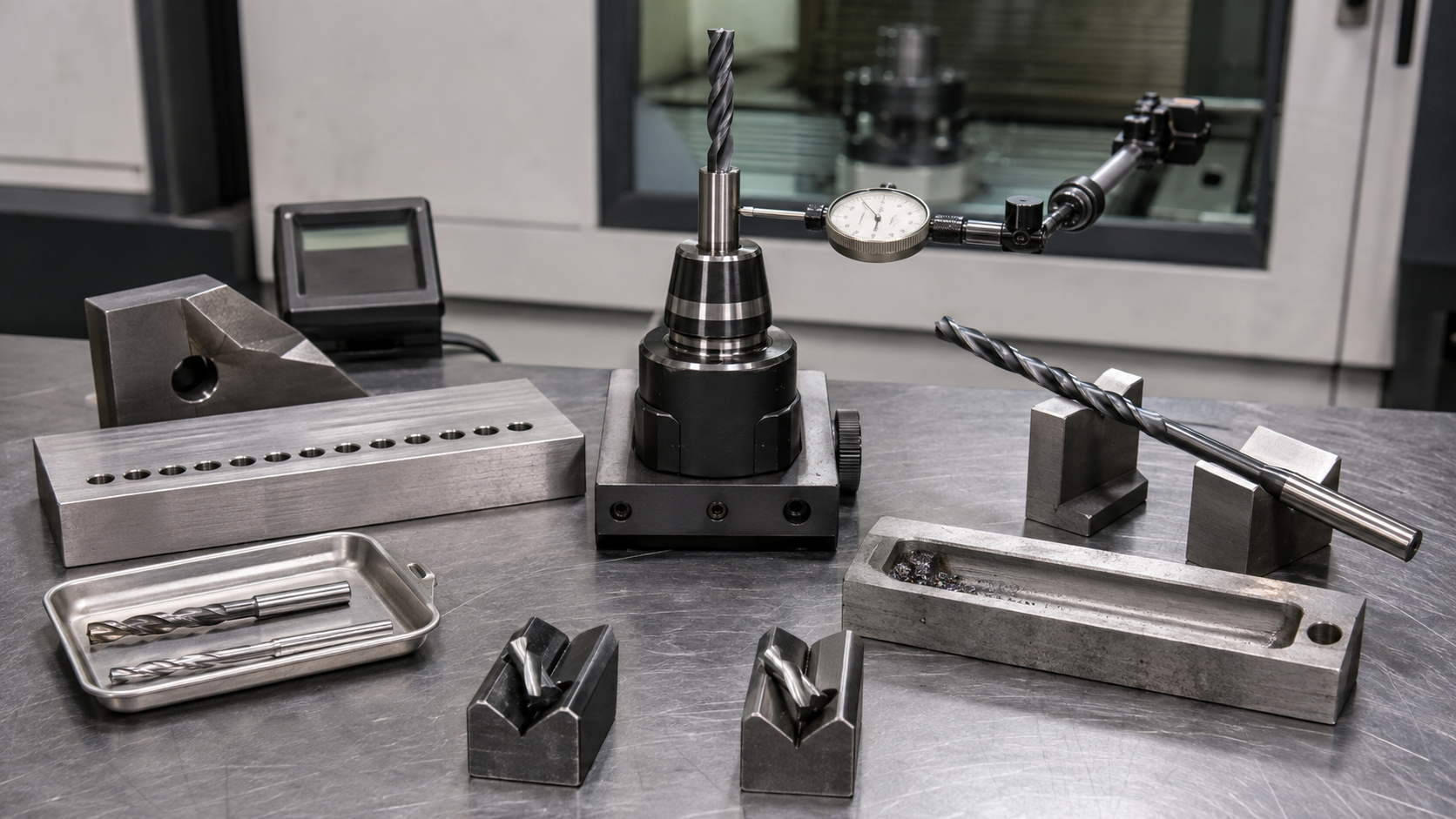
VI. Match the Carbide Grade to the Drilling Conditions
1. Stable CNC Production
The steadiness of the CNC machine allows a hard, wear-resistant carbide grade to cut under balanced loading and controlled feed. This makes the slow wear predictable, and the drill will maintain its diameter from hole to hole. If you keep the spindle, holder and work piece in line you can utilise the wear capabilities of the grade instead of loosing the drill early to impact damage. This is where a higher performing grade of carbide typically gives the most value.
2. Interrupted and Uneven Cutting
One cutting edge loads cross holes, sloping entry, uneven casting surfaces, interrupted exits before the other cutting edge. The requirements require a tougher grade of carbide, a supported point and geometry for engagement on the irregular. A very wear resistant grade designed for continuous cutting may chip as the edge enters and departs the material repeatedly. In case of severe interruption, the drilling procedure and the tool geometry are more essential than a small adjustment in the composition of the carbide.
3. Machine Runout and Vibration
Runout causes one cutting edge to cut more material and wear out faster than the other edge. The smaller the drill diameter and the more tight the tolerances on the hole, the more sensitive the drill will be. So there is no common runout number for all drills. On one corner or an expanded hole. Before changing grades examine the entire tool assembly for damage. A harder carbide may delay failure, but it will not bring back balanced cutting.
4. Hole Depth
As the hole becomes deeper, chip removal and the flow of coolant become more important than increasing the carbide hardness. For depths more than around 5xD use a drill with the proper flute length, chip spacing, internal coolant and claimed depth capacity. Chips that get caught behind the cutting edge might increase torque and damage a drill of a hard, wear-resistant carbide. A clogged flutes failure should not be considered a carbide grade problem.
5. Production Quantity
If the material is not prone to rapid wear and the holes are few and far between, a general purpose carbide grade will do the job and still preserve acceptable hole quality. In continuous manufacturing, gradual wear, tool changes and hole size drift become more critical, therefore a material specific wear resistant grade is easier to explain. The option should be made based on how the drill fails, and the number of holes that are permissible to be drilled, not based on the idea that “tungsten carbide” is always longer lasting.
VII. Practical Selection Examples
1. Repeated 8 mm Holes in 304 Stainless Steel
Assume you need thousands of holes, 8 mm in diameter, in 304 stainless steel, using a stable CNC machine with internal coolant. The optimum general purpose grade for a stainless-steel-specific solid carbide drill is one that has a sharp cutting action coupled with sufficient toughness and resistance to heat and adhesion. Selecting the grade with the lowest binder or greatest claimed hardness may enhance edge chipping without increasing the actual number of allowable holes.
2. Precision Holes in 55 HRC Tool Steel
If you are drilling a tight-tolerance hole in tool steel, about 55 HRC, select a hardened-steel drill that is rated for a range that includes that hardness. The drill has to be of a wear resistant carbide grade, supported point and coating for hard material. A typical carbide drill could be mostly tungsten carbide but that does not mean its cutting edge can cut 55 HRC steel without rapid rounding or chipping .
3. Cross Holes in Alloy Steel
As the drill enters an existing hole, the cutting load rapidly shifts and one edge may lose support before the other. The toughest grade available is not as safe as a harder grade carbide and cross hole capable geometry. If all cross sections are chipped in the same cutting corner, replacing the coating will not help because the root reason is mechanical impact.
4. Small-Batch Holes in Aluminum
For a few holes in ordinary aluminium use a sharp carbide drill with polished flutes and plenty of chip room. If the drill will drill the whole batch before normal wear becomes a problem, you don’t require a heavy coating or maximum wear resistance rating. If hole is getting rough, check cutting edge for aluminium build-up before deciding carbide is too soft.
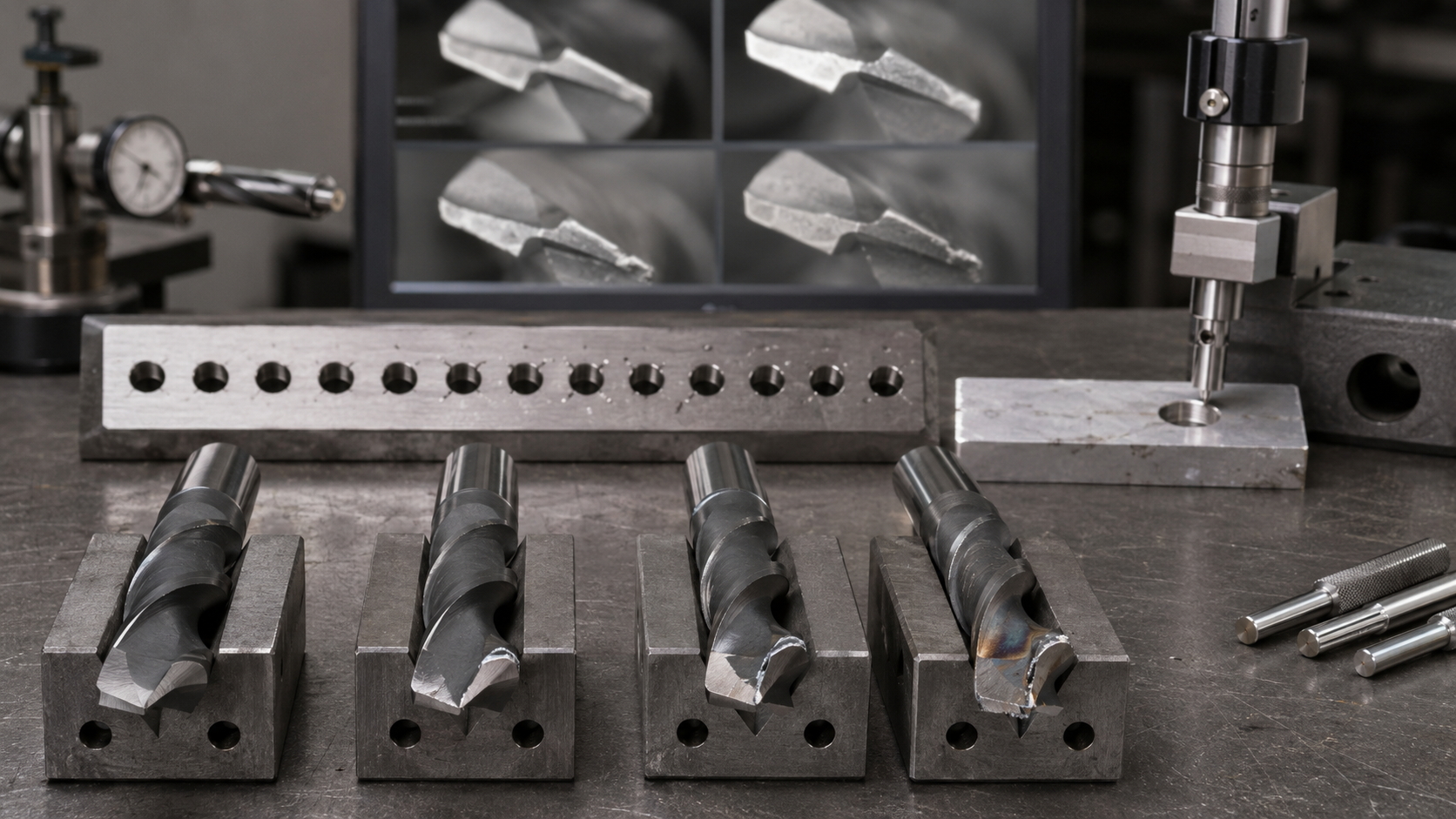
VIII. What the Failure Pattern Says about the Carbide Grade
1. Gradual and Even Edge Wear
If the wear is even on both cutting edges, the drill is in line and the grade is tough enough for the job. If tool life is still too short, a more wear resistant carbide grade or a more appropriate coating may be the solution. Before changing grades, be sure that the drill is producing normal chips and not rubbing excessively on the workpiece.
2. Small Chips along Both Cutting Edges
Micro-chipping on both sides can be a sign that the carbide grade is too brittle, that the edge prep is too sharp for the load, or that the drill is entering an interrupted surface. Edge or grade harder may help more strongly supported reliability. If the damage occurs only after chips get stuck, fix the evacuation problem instead of changing the carbide composition.
3. One Cutting Edge Fails First
If you see damage on only one side, it’s likely runout, misalignment, tilted entrance, or movement of the workpiece. Going to a harder grade may allow the drill to go a little longer, but the uneven load will still be present. Before you try another carbide grade, check the holder, spindle, clamping and drill position.
4. The Drill Overheats without Forming Normal Chips
A drill that heats up but does not go thru is rubbing, not cutting. The cutting edge may be blunt, the grade may not be able to cover the hardness of the workpiece, or the point geometry may not be able to enter the material. Increasing the feed pressure will not correct an inappropriate hardness range and may lead to edge chipping.
5. Hole Size Changes during a Long Batch
Wear on the outside cutting corners or margins may lead to a gradual drift in hole size . Sudden changes typically imply chipping or material buildup . If the edges hold up but wear too fast, try a more wear resistant grade. If aluminium or stainless steel sticks to the edge, adjusting the flute finish or coating may be more beneficial than increasing the carbide hardness.
IX. Final Recommendation
Tungsten carbide and carbide drill bits are often both WC-based cemented carbide family, therefore the product name alone won’t tell you which one will perform better. Compare carbide grade, WC grain, binder balance, workpiece range, edge prep, geometry, coating. Select wear resistance for reliable, abrasive, high-volume drilling and increased toughness if the drill is subject to interrupted or uneven loading. Send us your workpiece material, hardness, hole diameter, depth, tolerance, machine type, and expected hole amount, and we can help you restrict the option to a suitable carbide drill grade and design.
X. FAQs About Tungsten Carbide and Carbide Drill Bits
1. Is Tungsten Carbide Harder than Standard Carbide?
Not automatic. Standard carbide is not some set grade of material. The actual hardness is influenced by the WC particle size, binder content, additives and the manufacturing process of the carbide.
2. Do All Carbide Drill Bits Contain Tungsten Carbide?
The majority of the carbide drills used in metal cutting are based on tungsten carbide as the main hard phase. Some cutting materials incorporate extra titanium, tantalum or niobium carbides to change wear and heat resistance.
3. Does a Higher Tungsten Carbide Content Always Improve Tool Life?
No, because a lower metallic binder can make the material harder, but less resistant to impact and chipping. The only way to improve tool life is to match the harsher grade to the machine stability and failure mode.
4. Why Can a Harder Carbide Drill Wear Out Faster?
A tougher drill may experience micro-chipping if the operation causes vibration or varying loads. The worn edge therefore becomes the faster wearing edge than a little tougher grade without damage.
5. Is Standard Carbide More Forgiving than Tungsten Carbide?
Only if the item known as standard carbide is using a tougher grade or more appropriate edge preparation. The marketing term itself does not prove that it has more binder or can stand more vibration.
6. What Does Cobalt Do in a Tungsten Carbide Drill?
Cobalt is used to bind the WC grains together and to give the cutting edge the ability to resist mechanical loads. Increasing cobalt usually enhances toughness but can decrease hardness and wear resistance.
7. Can the Same Carbide Grade Drill Stainless Steel and Aluminum?
A general purpose grade can drill both but the edge, flute finish and coating are best different. Stainless steel requires control of heat and work hardening Aluminium requires sharp, clean cutting edges that resist sticking.
8. Can a Tungsten Carbide Drill Machine 60 HRC Steel?
A solid carbide drill devoted hardened-steel can process up to about 60 HRC. Tungsten carbide doesn’t automatically mean the same hardness range just because it is a general purpose drill.
9. Why Does a Carbide Drill Chip before It Becomes Dull?
Chipping is usually produced by impact, runout, interrupted contact, unstable clamping or a brittle edge for the load. Such conditions can damage a sharp drill before the abrasive wear is noticeable.
10. Which Carbide Grade Is Better for Cross Holes?
A harder carbide grade with a supported cutting edge is usually safer as the drill is subjected to an unequal force when entering the existing hole. The drill should be specifically designed for drilling interrupted or cross holes as well.
11. Does a Coating Make a Carbide Drill Harder?
This coating gives a robust wear resistant surface but does not alter the toughness of the underlying carbide body. Even if the substrate or the cutting edge of the drill is not well designed, the drill can chip.
12. Is Fine-Grain Carbide Always Better than Coarse-Grain Carbide?
No. Fine grains create sharp, wear-resistant edges. Other grain and binder combinations can offer improved reliability under varying loads.
13. Why Does One Edge of a Carbide Drill Wear Faster?
Runout, misalignment, tilted entry and uneven contact with the work piece are the most prevalent culprits. You can’t entirely repair a drill that cuts only on one side thru a change of composition.
14. When Is a More Wear-Resistant Carbide Grade Worth Choosing?
Use this for even wear on the drill, steady setup, and when abrasive wear is the limiting factor for the number of permissible holes. It is less beneficial when the drill fails first by chipping, vibration or jammed chips.
15. Can Tool Color Tell You Which Carbide Grade Was Used?
No, since what you see is normally the coating, not the carbide substrate itself. The actual cutting material of the drill you need to know the grade or application requirements.