
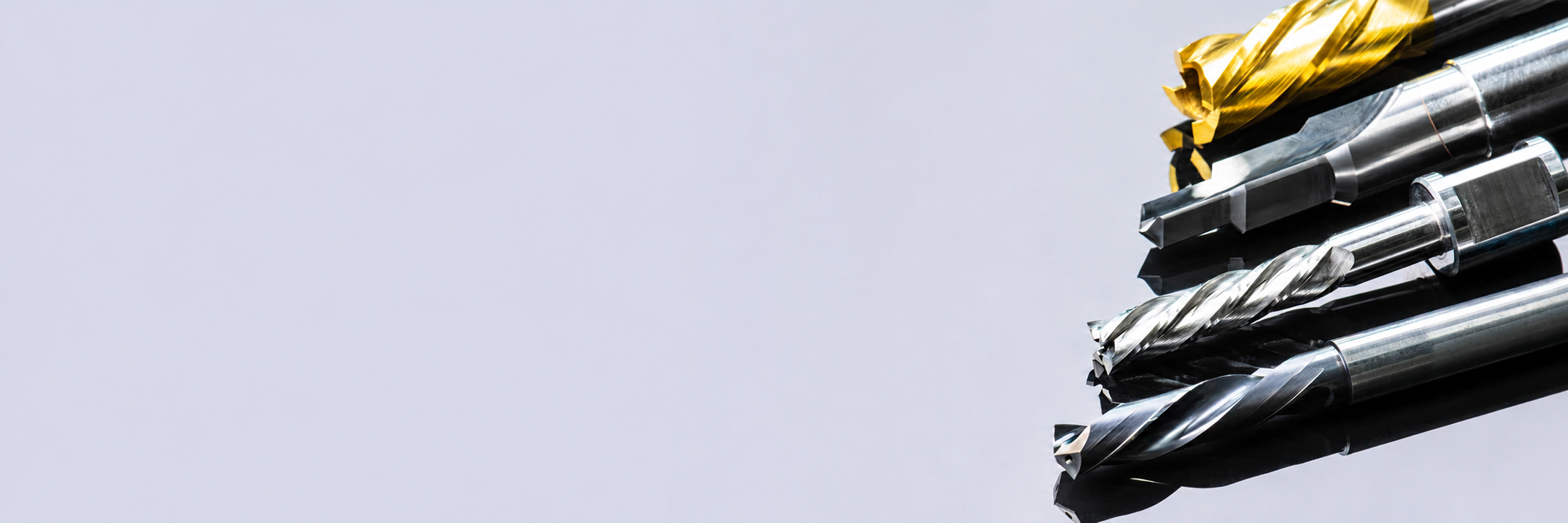
Material explanation
When people choose tools, they will face many chooses for different kinds of materials. So which materials are used in cutting tools and what are the difference between these kinds of materials?
In cutting tool area, the most commonly materials are HSS and tungsten carbide also called hard alloy. HSS have many grades, like PM-HSS, M42, M35, 6542, etc. Let’s analyze the differences in composition and function between different materials.
M35 high-speed steel contains 5% tungsten, 5% molybdenum, 3% cobalt, and 1.5% vanadium. It is well known for its high hardness and wear resistance, suitable for machining difficult-to-machine materials such as stainless steel, nickel alloys, and titanium alloys. M35 is suitable for a variety of processing techniques, like drilling, cutting,turning,milling and grinding.
M42 high-speed steel consists of 8% cobalt, 10% tungsten, and 1.5% vanadium. These elements give it higher hardness and better thermal stability. This kind of steel is suitable for processing materials with high hardness, such as cast iron, stainless steel, and high-speed steel. M42 is also suitable for machining processes such as turning, drilling, cutting, milling.
M2 high-speed steel contains 1.5% carbon, 6.5% calcium, 2.5% cobalt, and 2.75% molybdenum. Similarly, this kind of steel is suitable for processing materials with high hardness, such as cast iron, stainless steel, and high-speed steel. M2 is also suitable for machining processes such as turning, drilling, cutting, milling.
PM-HSS named High Speed Steel produced by Power Metallurgy. Due to its excellent microstructure uniformity and the absence of carbide segregation, it compensates for the inherent defects of ordinary high-speed steel, thereby comprehensively improving the quality and performance of the steel.
It can reach very high hardness from HRC 63 to70. Even at 550~600℃, it also can maintain high wear resistance and hardness which can reach HRC 60 and above.
This type of cemented carbide, also known as carbon steel, boasts advantages including ultra-high hardness, wear resistance, high strength, good toughness, and excellent heat and corrosion resistance. Even at 500°C, its ultra-high hardness and wear resistance remain unchanged, and it retains high hardness even at 1000°C.
Tungsten steel is widely used in the manufacture of tools such as drill bits, end mills, and boring tools. It can be used to cut cast iron, plastics, non-ferrous metals, glass, synthetic fibers, stone, graphite, and ordinary steel. It can also be used to process materials that are difficult to process, such as tool steel, heat-resistant steel, high-manganese steel and stainless steel.