I. Introduction
The choice between a bull nose and ball nose end mill can directly impact your cycle time, surface polish, tool life and the ability of the cutter to reach every radius on the part. Using the wrong profile can leave behind surplus stock, noticeable scallops or an inaccurate corner radius. Their practical differences are described in this article to assist you make the right choice depending on part geometry, stage of machining, material and finish requirements.
II. Understanding the Two Cutting Profiles
1. Bull Nose End Mill
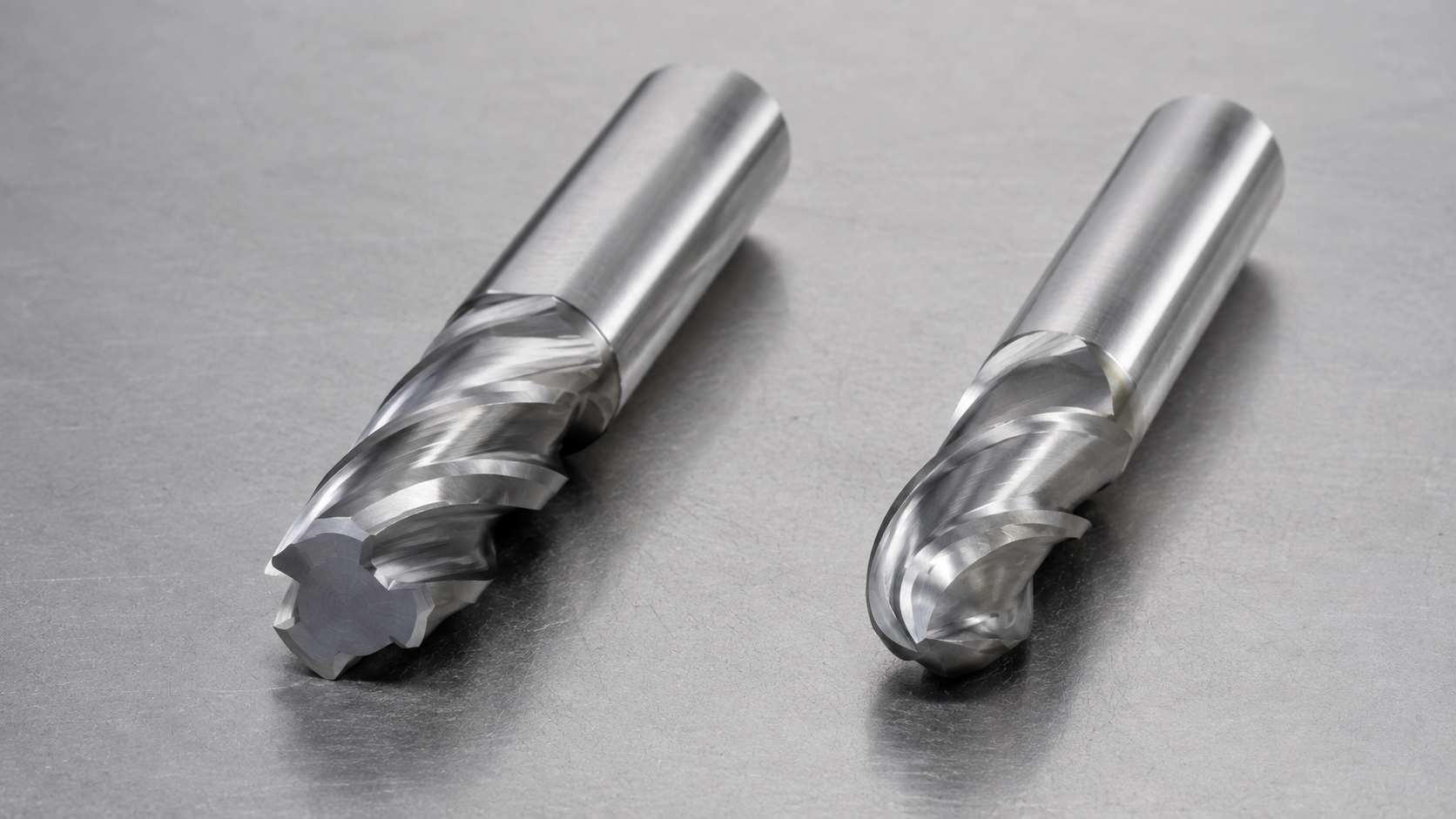
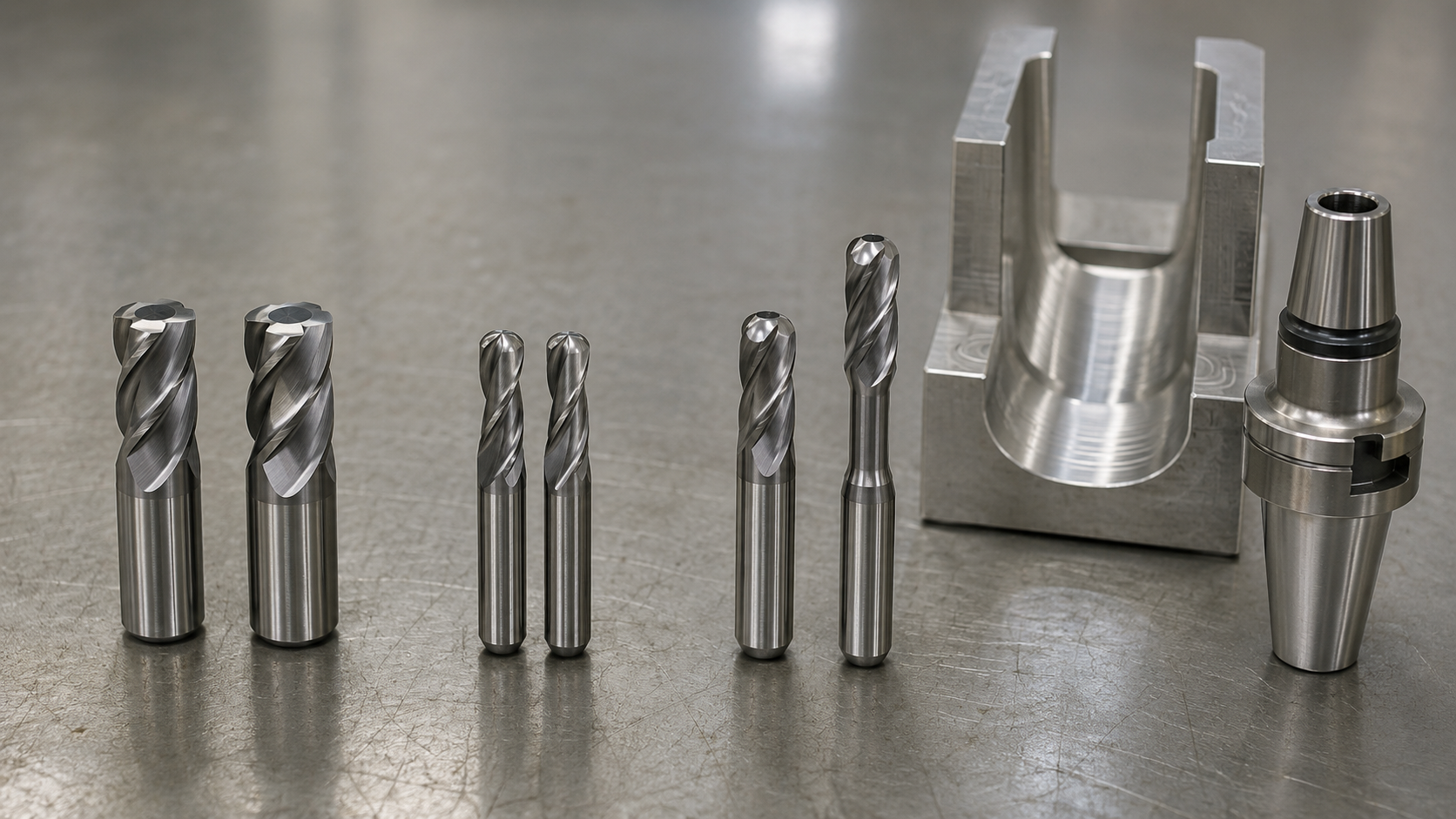
A bull nose end mill or corner radius end mill is a flat cutting end mill with a rounded corner connecting the flat cutting end to the side cutting edge. The corner radius is less than half the tool diameter and comes in different sizes, such as R0.5, R1, R2, or R3.
The flat end supports the bottom of the cutter, and the rounded corner cuts away the fragile 90° edge of a square end mill. This offers the instrument a more aggressive cutting corner without balling up the whole end.
2. Ball Nose End Mill
A ball nose end mill features a round cutting end. It has a ball radius that is always equal to half the cutter diameter. So a 6 mm ball nose will have an R3 profile and a 10 mm ball nose will have an R5 profile.
Since there is no flat part at the end, the cutting location wanders around the ball as the surface angle changes. This keeps the cutter in contact with continually curved geometry.
III. Choose According to the Part Geometry
1. Flat Floors with Rounded Bottom Corners
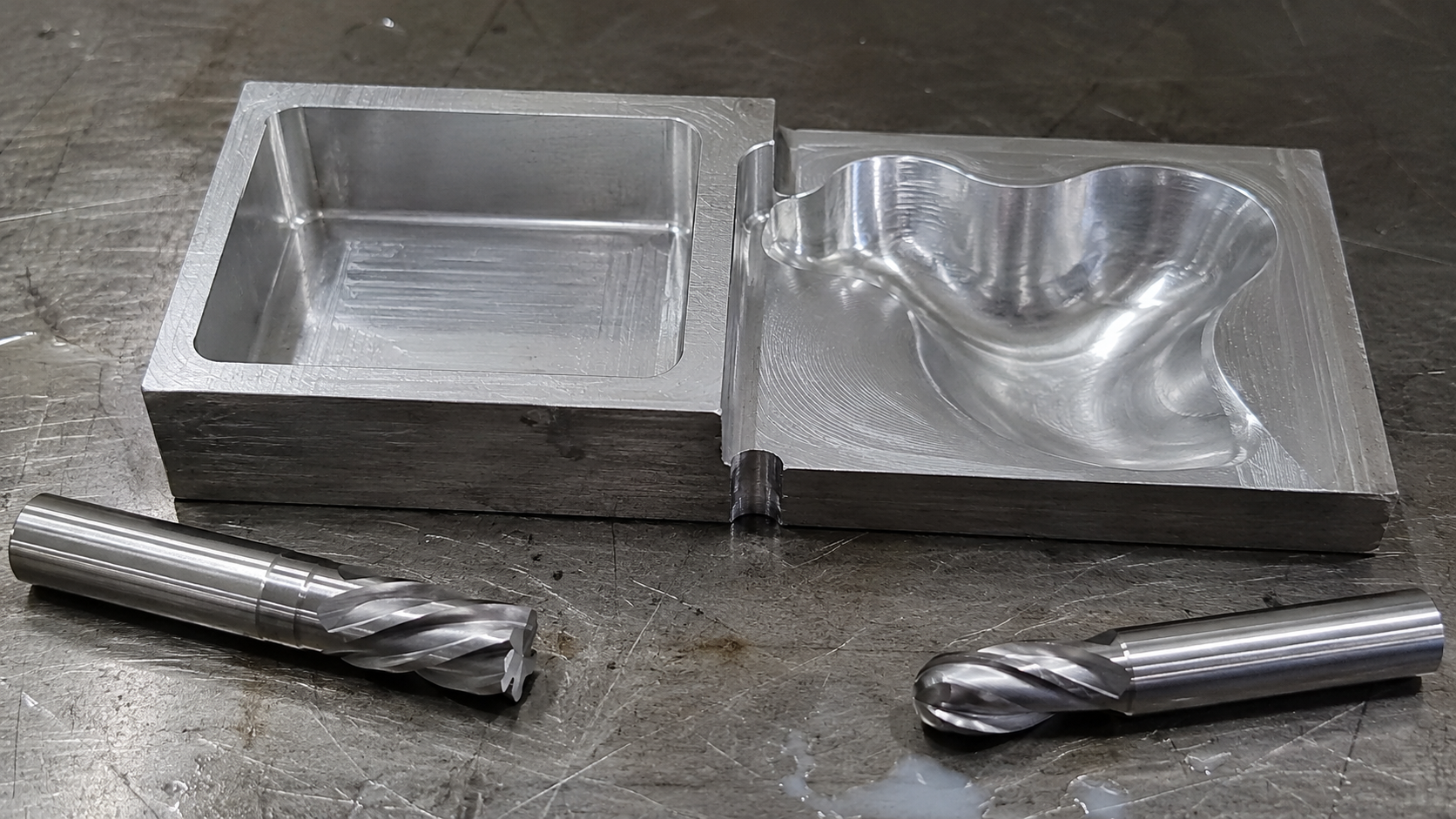
If the part has a flat floor that is linked to a wall with a defined corner radius, use a bull nose end mill. The flat section machines the floor, the corner radius is the transition from the floor to wall.
For example, if you have a pocket with an R2 bottom fillet, the floor and fillet will be machined with an R2 bull nose with the same tool. The R3 cutter cannot duplicate the R2 corner, because of its already too big cutting radius .
A smaller radius will fit inside the corner, but it will not automatically give the larger portion fillet. The additional contouring toolpath is then to produce the desired shape.
2. Shoulders and Open Pockets
A bull nose is also a good option when the section has wide floors, or shoulders or open pockets. Its flat cutting area is more effective on these surfaces than a fully rounded ball nose.
The rounded corner gives more edge support when engaged from the side and bottom. This is handy when the cutter rotates around pocket corners and the cutting load fluctuates between its bottom and side edges.
3. Continuous 3D Curves
If the surface is curved in several directions and there is no level floor to speak of, then go for a ball nose end mill. The rounded end can thus accommodate shifting slopes without generating a significant step between neighbouring surface angles.
This comprises mould cavities, dies, blades, impellers and other free form parts. The essential to remember is not the industry the part is utilised in, but rather if the surface of the part is continually changing direction.
4. Narrow Valleys and Concave Surfaces
The ball nose should be tiny enough to fit into the tightest concave area on the part. A big cutter may process the open section right but leave material inside small valleys.
For example a 10 mm ball nose has an R5 profile. It can not go into a concave surface with an R4 radius thus you need a cutter smaller than 8mm diameter and enough extra space for the programd toolpath.
5. Parts Containing Both Flat and Curved Areas
You don’t have to run one cutter for the entire portion. It is frequently more effective to use both profiles when a component has both wide floors and complex 3D curves.
A bull nose can cut material from the open spaces, floors and shoulders. The curved areas and narrow valleys just need to be finished with a ball nose then, as they need the entire round profile.
IV. Choose According to the Machining Stage
1. Roughing
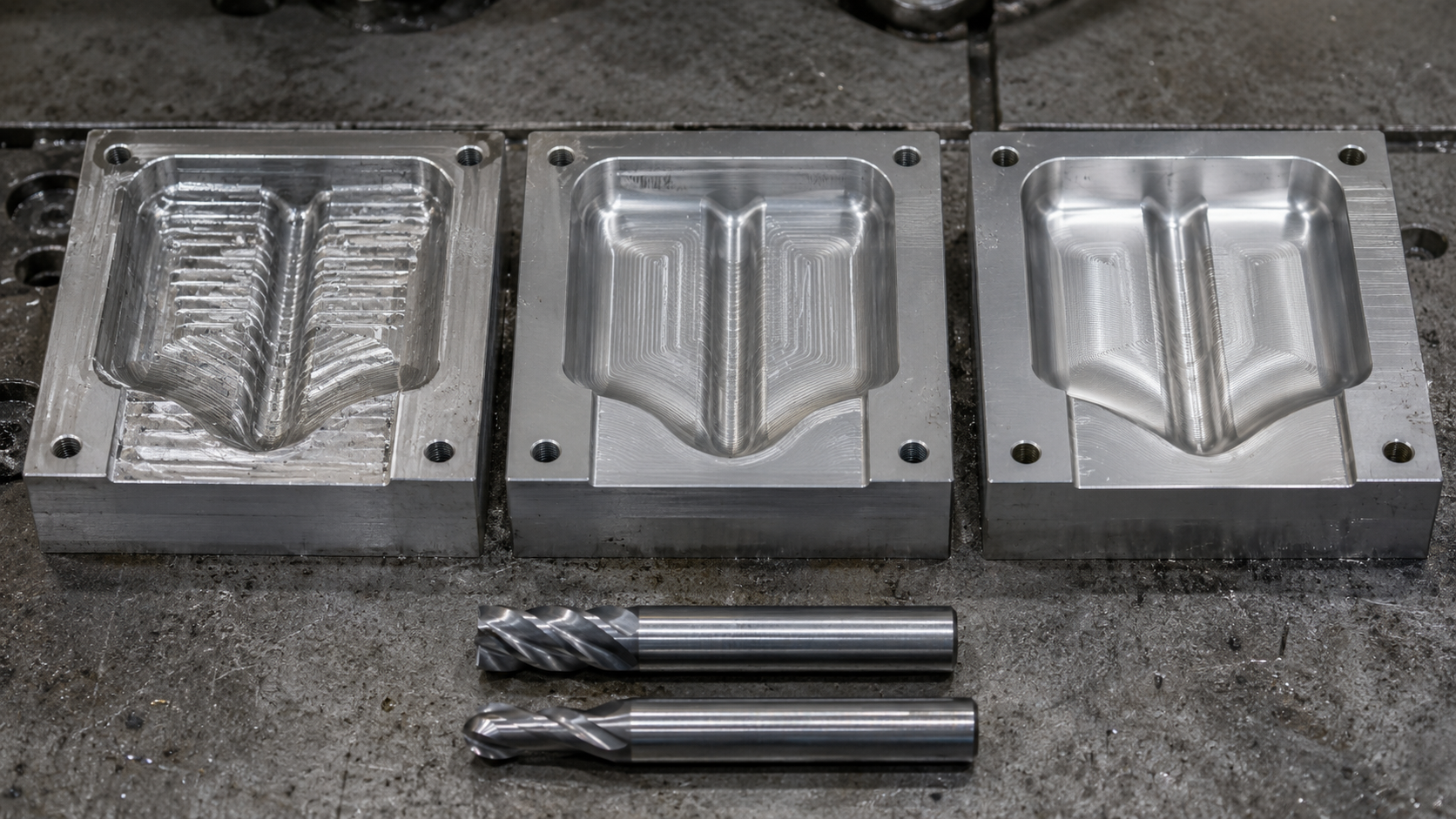
A bull nose is usually the more feasible starting point for roughing a pocket with a big floor surface. The flat end is a good material remover and the corner radius is stronger than the sharp corner of a square end mill.
A ball nose can still be employed even if the roughing path has to follow closely a curved hollow. But usually more passes are required in vast flat areas, without giving any geometrical advantage.
2. Semi-Finishing
The semi-finish must remove the uneven stock left by the roughing and leave a more uniform allowance for the finishing tool. A bull nose is good for open or shallow geometry because it may cover a larger area and still have a supported cutting corner.
This can reduce abrupt changes in load during the last ball nose finishing. That way the finishing tool gets more uniform stock removal instead of a lot of material in one region and nearly none in another.
Not every narrow valley or deep concave region can be ready by a bull nose. Those leftover portions can need a smaller ball nose or a different rest machining toolpath.
3. Finishing
For a flat floor, shoulder or specified bottom fillet, employ a bull nose with the proper geometry. This prevents a flat area from being covered by tightly packed ball nose passes.
Use a ball nose for continuous 3D surface. It has a circular profile that can follow the final geometry but the stepover and contact location must be regulated to attain the desired finish.
V. Select the Correct Radius, Diameter, and Reach
1. Bull Nose Corner Radius
The corner radius shall be no greater than the smallest bottom fillet the tool needs to manufacture. If the tool needs to penetrate an R1.5 corner, an R2 bull nose is too big even if it is inside the pocket’s overall diameter.
The bigger the corner radius, the more support the cutting edge has . But you lose access to minor details . Select the biggest radius that will maintain the whole geometry of the part.
Don’t assume that two tools of the same diameter will interfit. A 10 mm end mill with an R1 corner will leave a different bottom fillet than a 10 mm end mill with an R3 corner.
2. Ball Nose Diameter
A larger ball nose covers open curved surfaces with fewer passes and gives a more robust tool body. The smaller ball nose can get into finer detail but needs more toolpaths to cover the same area.
Start with the minimum concave radius on the part, then examine neighbouring walls, cavity depth, holder clearance. This stops you from choosing a cutter that will reach the main surface but cannot reach its detailed areas.
3. Tool Reach
Use the shortest tool that will reach the cut without the holder touching the workpiece. Extra overhang increases deflection and enhances the vibration sensitivity of both profiles .
For deep cavities, check the diameter of the neck and the length of the flute. A cutter can have ample cutting length and nevertheless hit the wall with its neck or shank.
VI. Control the Surface Left by Each Tool
1. Bull Nose Surface Transitions
A bull nose can provide a clean transition from floor to wall if the corner radius matches the required fillet. If the radius is improper or already worn, the floor may still look decent while the fillet becomes small, uneven, or marked.
Inspect the transition region and not just the flat floor. This is where the bull nose profile makes the biggest difference on the finished product.
2. Ball Nose Scallops
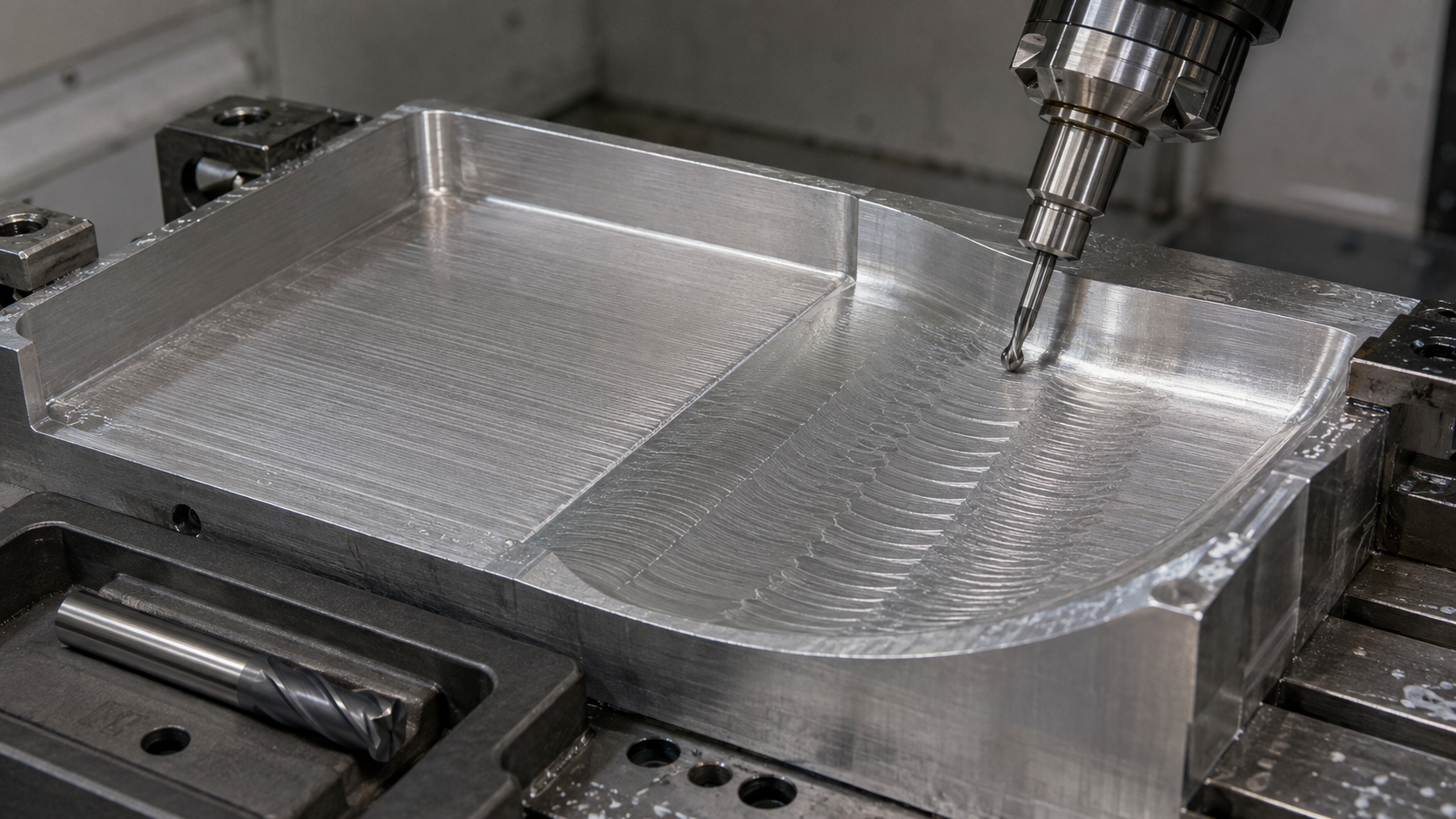
A ball nose leaves tiny scallops between successive passes. Reducing the stepover reduces these scallops but increases the number of toolpaths and machining time.
For example, a 10 mm ball nose will generate a theoretical cusp of around 0.006 mm on flat or shallow surface at a stepover of 0.5 mm. A stepover of 1 mm will bring the theoretical cusp to about .025 mm.
These numbers are beginning points and are not guarantyd to yield these surface outcomes. The actual finish is additionally affected by runout, edge wear, tool deflection, material condition and machine movement.
3. Ball Nose Contact on Shallow Surfaces
The cutting speed near the very center of a ball nose is almost zero. If the point is on a shallow surface, it can rub rather than cut neatly, creating heat, surface smearing, or concentrated tip wear.
Where the machine configuration permits, tilting the tool or workpiece by 10–15° displaces the cutting contact from the center. For a fixed 3 axis configuration you might have to alter the toolpath or use a bull nose to process the flat areas first.
4. Ball Nose Contact on Steep Surfaces
On a steep surface, the cutting contact is farther away from the center of the ball. This generally gives a better cut than if the exact point of the tip is used on a horizontal plane.
But during a protracted finishing procedure the active cutting area may be in the same band surrounding the tool. Watch this spot, because the whole ball will not wear evenly.
VII. Match the Cutter Construction to the Material
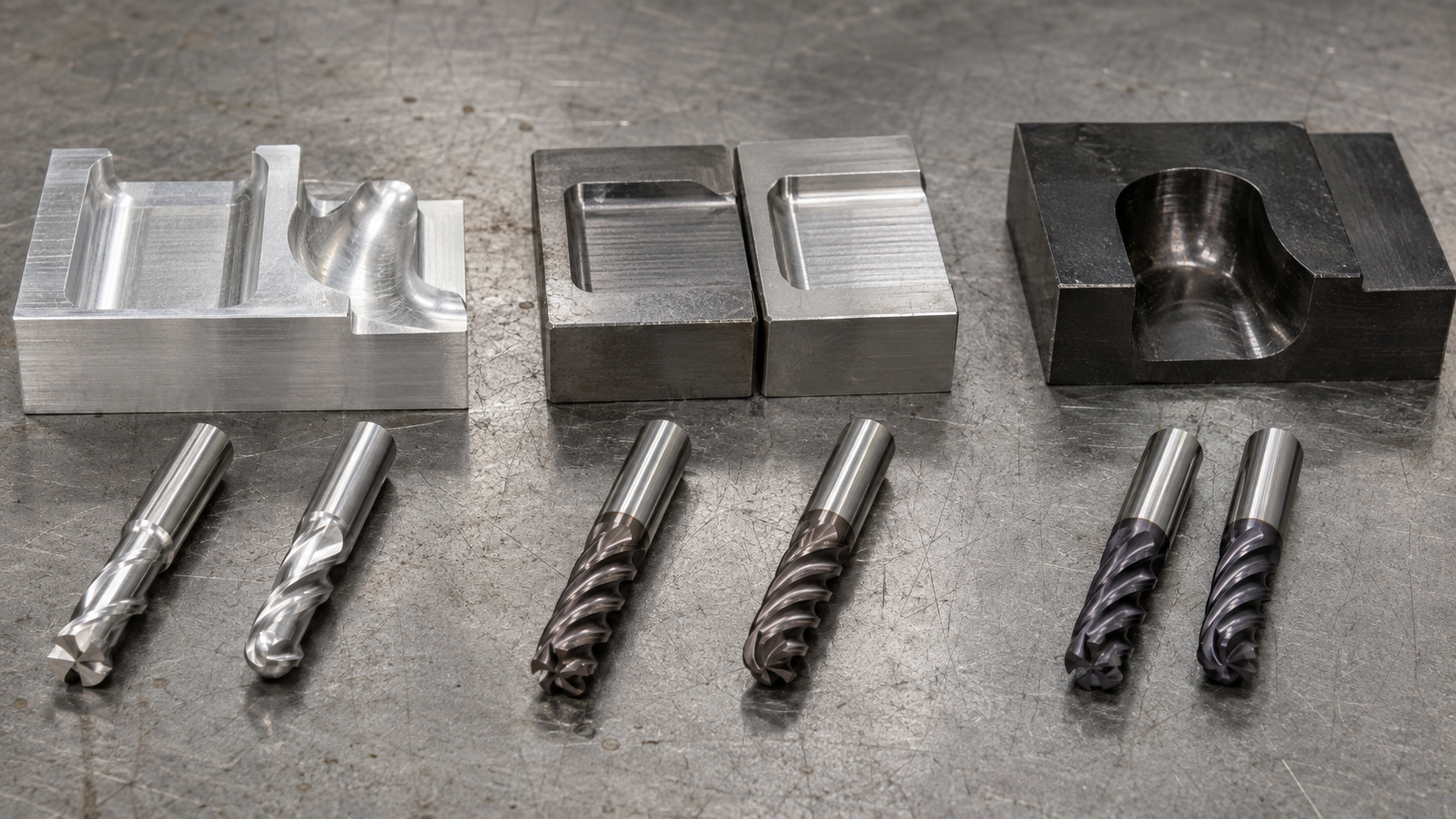
The profile dictates the shape the cutter may generate. The specified workpiece material can be cut successfully depending on carbide grade, coating, flute count and edge preparation.
1. Aluminum
Aluminium is usually initially milled with two- or three-flute end mills because the greater intervals between the flutes facilitate chip evacuation. Sharp cutting edges and polished flute surfaces minimise aluminium build-up, as well.
You can choose between a bull nose or ball nose profile. Select between them relative to the part surface, then select a cutting design for aluminium.
2. Steel and Stainless Steel
For many applications in steel, four-flute tools are a good compromise for edge strength and chip space. For regulated semi-finish and finish cuts, where the ejection of the chips is not troublesome, five or six flute designs may be used.
Too many flutes in stainless steel can decrease the room for the chip and cause friction. The number of cutting edges should be relevant to the task and not be considered as a direct indicator of the tool quality.
3. Hardened Steel
If the hardness is above around 45 HRC, the carbide grade, the coating, the edge preparation, the tool runout and the machine rigidity are of particular importance. Dedicated solid carbide end mills are available for hardened materials approximately 60–65 HRC, however not every carbide tool is made for this range.
Use a bull nose for applicable flat, shoulder and fillet features Use a ball nose when the final hardened surface has continuous curves which the bull nose cannot recreate.
VIII. Read the Wear in the Correct Area
1. Bull Nose Wear
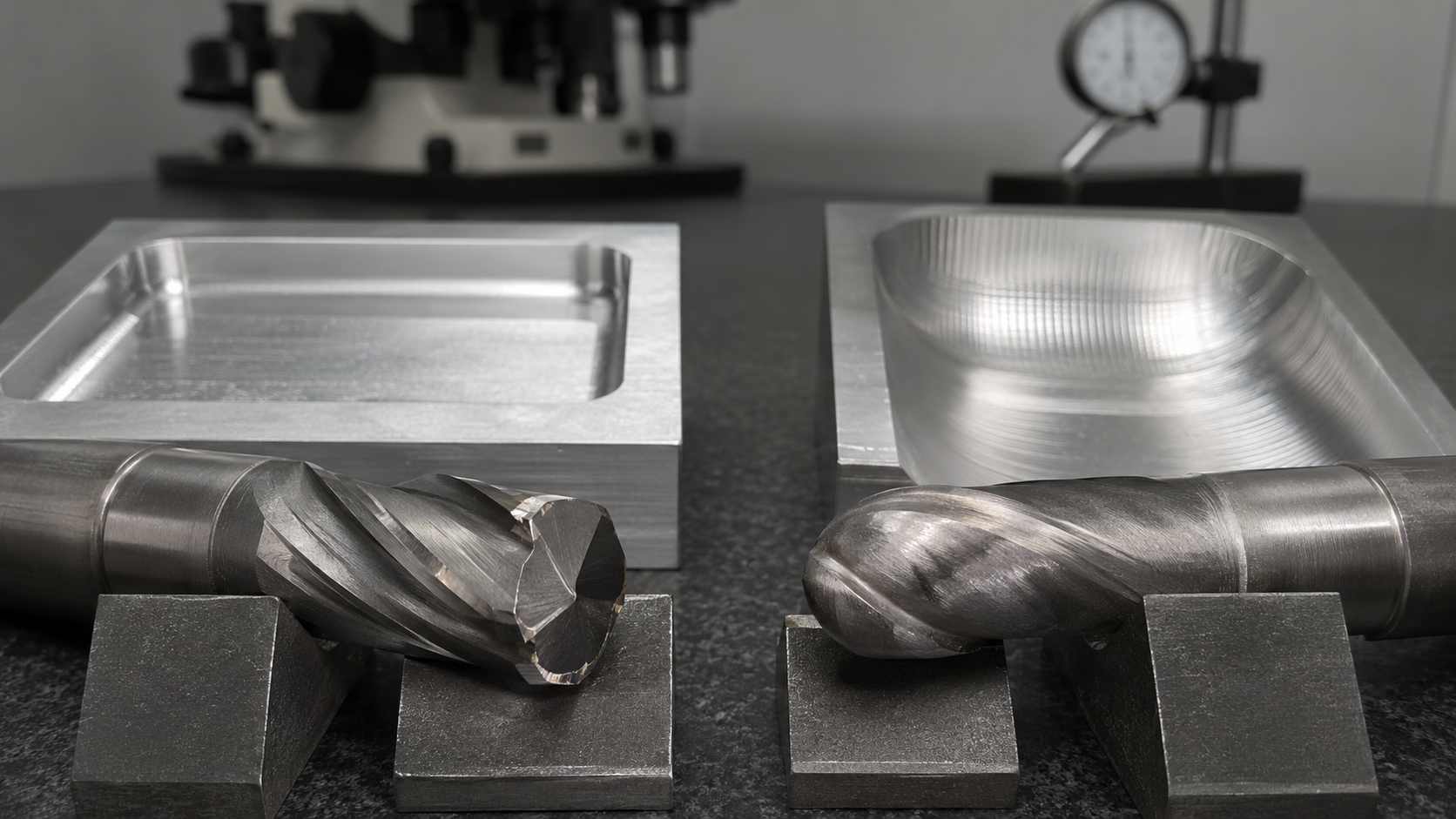
Bull noses wear is generally concentrated at the corner radius and at the transition between the bottom and side cutting edges. Damage in this area can alter the resulting fillet before the flat cutting part seems badly worn.
If the pocket floor is still OK but the corner blend has lines or dimensional changes, check the radius for local wear or chipping.
2. Ball Nose Wear
Often ball nose wear takes the form of a band around the section of the ball that continually strikes the surface. Even if the active contact surface is already dull, the rest of the cutting edge could appear sharp.
Wear at the dead center is frequently the result of repeated cutting shallow surfaces. A larger wear band on the ball usually means the tool has been cutting steeper geometry or at an inclined contact angle.
3. Vibration and Deflection
The tool profile is not only for vibration. Excessive reach, inadequate clamping, holder runout and unstable engagement can harm either cutter.
Locate the marks. Chatter in tight corners can be a sign of a rapid increase in engagement, whereas marks throughout the whole surface are more commonly an indication of a stiffness or setup problem.
IX. Final Recommendation
For flat floors, shoulders, open pockets and specified bottom fillets use a bull nose end mill. For continuous 3D curves, concave surfaces and detailed valleys, use a ball nose end mill. For parts that have both types of geometry , a bull nose to remove stock and semi-finish , then a ball nose for the rest of the curved surfaces is frequently the more efficient procedure . Send us your drawing, material, hardness, necessary radius, cavity depth, surface finish and production quantities and we can assist you match the tool profile and specification.
X. FAQs
1. Is a Bull Nose End Mill the Same as a Corner Radius End Mill?
Yes. Both terms refer to an end mill with a flat cutting end and rounded outside edges
2. Can a Bull Nose End Mill Produce a Flat Bottom?
Yes the middle section can manufacture a flat floor and the rounded corners create the floor to wall fillet. It cannot make a perfectly crisp inner bottom corner.
3. Can a Ball Nose End Mill Machine a Flat Surface?
It can, but it takes close spaced passes to reduce the scallops left by the rounded tip. When most of the surface is flat, it is generally more efficient to use a bull nose or flat end mill.
4. Can a Bull Nose End Mill Finish a 3D Surface?
It can cut thru open or shallow places when the cutter matches the surface. It can not replace a ball nose in tight valleys or ever changing concave geometry.
5. Can a Ball Nose End Mill Be Used for Roughing?
Yes, especially when the roughing path is following a 3D geometry. For areas with level floors and walls a bull nose generally cuts material more efficiently.
6. How Do You Select a Bull Nose Corner Radius?
Select a radius no larger than the smallest bottom fillet the tool must enter. A bigger radius will make the corner stronger, but may prohibit the cutter from getting to minor part characteristics.
7. How Do You Select a Ball Nose Diameter?
Begin with the minimum concave radius and tool clearance. Use the largest ball nose that can reach all of the surface without interference from walls around or leaving unreachable stuff.
8. Does a Larger Ball Nose Always Produce a Better Finish?
A larger ball can produce a lower scallop at the same stepover, but may not fit into tight concave sections. The same applies to surface finish, a function of stepover, runout, contact position, tool wear and machine movement.
9. Why Does a Ball Nose Leave Visible Lines on a Shallow Surface?
Usually the lines are scallops left in between neighbouring tool tracks, or traces made by rubbing at the center of the ball. They can be reduced by a smaller stepover or a different contact point.
10. Why Does a Bull Nose Leave a Line between the Floor and Wall?
The corner radius may be worn, chipped, wrong size or cutting with too much engagement. Check the radius condition and make sure it is the required bottom fillet.
11. Which Tool Is Better for Mold Semi-Finishing?
A bull nose is frequently more efficient for open cavities with wide shallow sections . It removes stock while keeping a firm cutting corner . A ball nose may still be needed at the portions where the semi-finished geometry has narrow valleys or deep curves.
12. Which Tool Is Better for Mold Finishing?
For continuous 3D mould surfaces a ball nose is usually the better choice. “Flat floors, shoulders and specified bottom radii can all be finished in the same mould with one bull nose.”
13. Should You Use the Same Tool for Roughing and Finishing?
You can when geometry and finish permits, but distinct tools give more control in repeat manufacture. Roughing or semi-finishing is done by using a bull nose and the final curved surface is generated using a ball nose . This is a popular process .
14. Which Tool Is More Rigid?
A bull nose often gives a greater support of the cutting edge for pocketing and semi-finishing at the same diameter and reach. Real stiffness still varies on flute length, overhang, carbide grade, and holder condition.
15. Which Tool Usually Lasts Longer?
There is no single answer, because wear happens in diverse places. Bull nose wear is frequent on the corner radius . Ball nose wear usually occurs on the section of the ball that strikes the surface repeatedly .
16. What Information Is Needed before Ordering?
Specify workpiece material and hardness, tool diameter, needed bull nose radius or ball profile, cavity depth, smallest part radius, flute length, surface-finish requirement, machine type and production quantity. This information is more informative than searching only the phrases “bull nose” or “ball nose.”