I. Introduction
Choosing a drill bit for aluminum should not begin with the most expensive material. A bit that works well for a few holes in thin sheet may fail or cost too much in repeated plate drilling. This guide shows you how to match HSS, cobalt, carbide, and PCD drills with the hole size, material thickness, accuracy requirement, and expected workload.
II. Why Aluminum Needs the Right Drill Bit
1. Aluminum Can Stick to the Cutting Edge
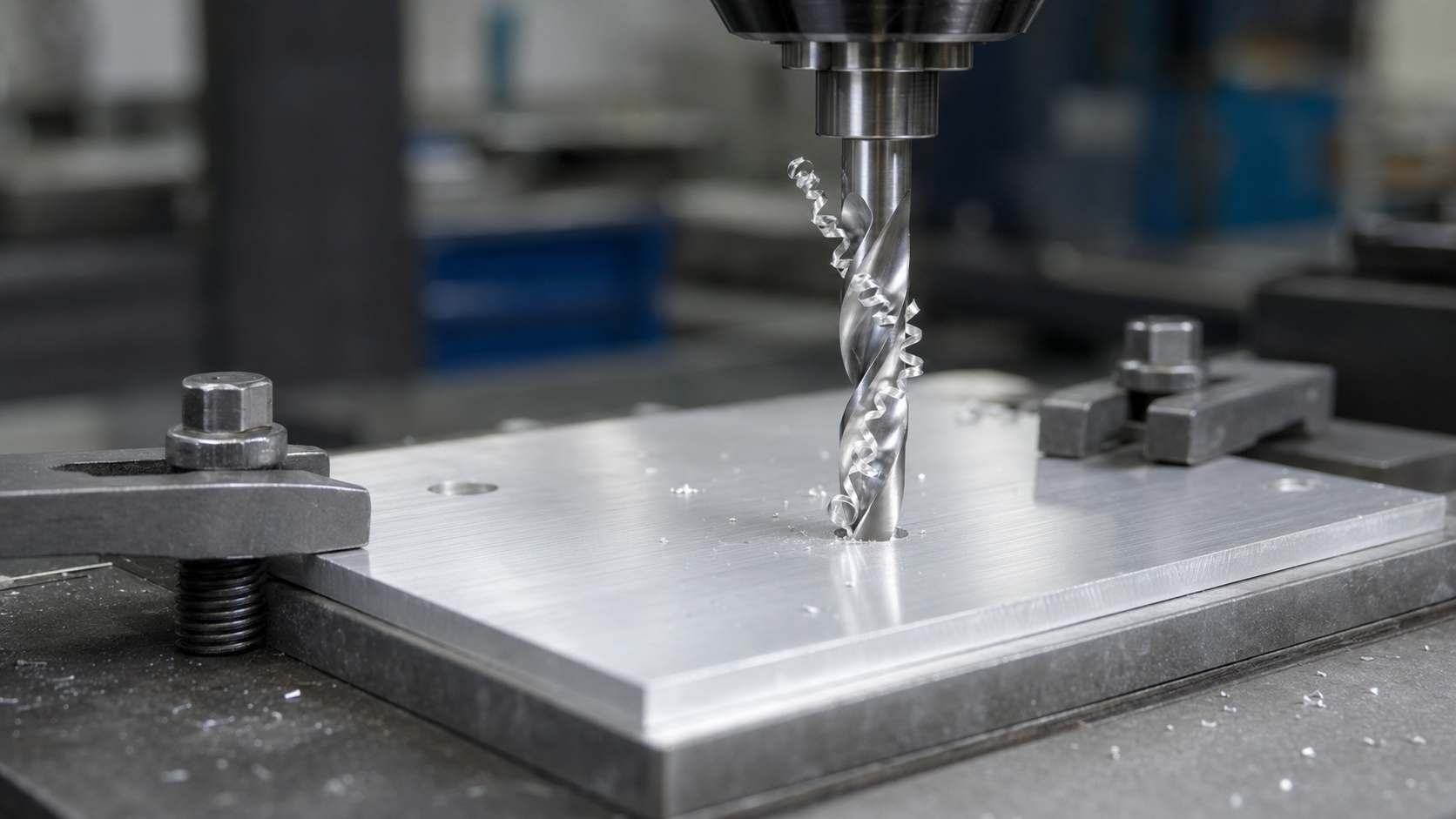
Soft aluminium can adhere to the drill tip and alter the effective size of the cutting edge, which causes over-sized holes, rough hole walls, and unstable accuracy of dimensions. Sharp drill with polished flutes helps reduce the adherence of material and keeps hole size more uniform.
2. Aluminum Chips Can Block the Flutes
Long aluminium chips can fill the flutes, scrape the wall of the hole, raise the temperature and finally ruin the drill. Use a drill with broad polished spiral flutes to help the chips get out of the hole easier.
3. Thin Aluminum Can Grab or Deform
Thin aluminium can snag on a standard twist drill as it breaks through, resulting in sheet deformation, uneven holes and huge exit burrs. A short split point or step drill works better with thin aluminium sheet.
III. Suitable Drill Bit Choices for Different Aluminum Applications
The suitable drill bit depends on the aluminum type, hole requirements, equipment, and drilling volume. The table below gives you a practical starting point for different applications.
| Your drilling requirement | Recommended drill bit | Suitable specification |
| A few holes with a hand drill | HSS drill | Bright finish and sharp split point |
| Regular work with a drill press | HSS or M35 cobalt drill | Polished flutes and 118–135° point |
| Thicker or harder aluminum plate | M35 cobalt or carbide drill | Strong edge and sufficient flute space |
| Repeated CNC production | Solid carbide drill | Polished flutes and approximately 135° point |
| High-silicon cast aluminum | Diamond-coated carbide or PCD drill | Higher resistance to abrasive wear |
| Thin aluminum sheet | Step drill or short split-point drill | Lower thrust and better control |
| Large through hole | Step drill, hole saw, or annular cutter | Removes less material than a solid drill |
| Close-tolerance hole | Carbide drill followed by reaming | Better control of the finished diameter |
| Hole deeper than 5×D | Through-coolant carbide drill | Deep-hole flute and internal coolant channels |
IV. Choose the Drill Bit Material
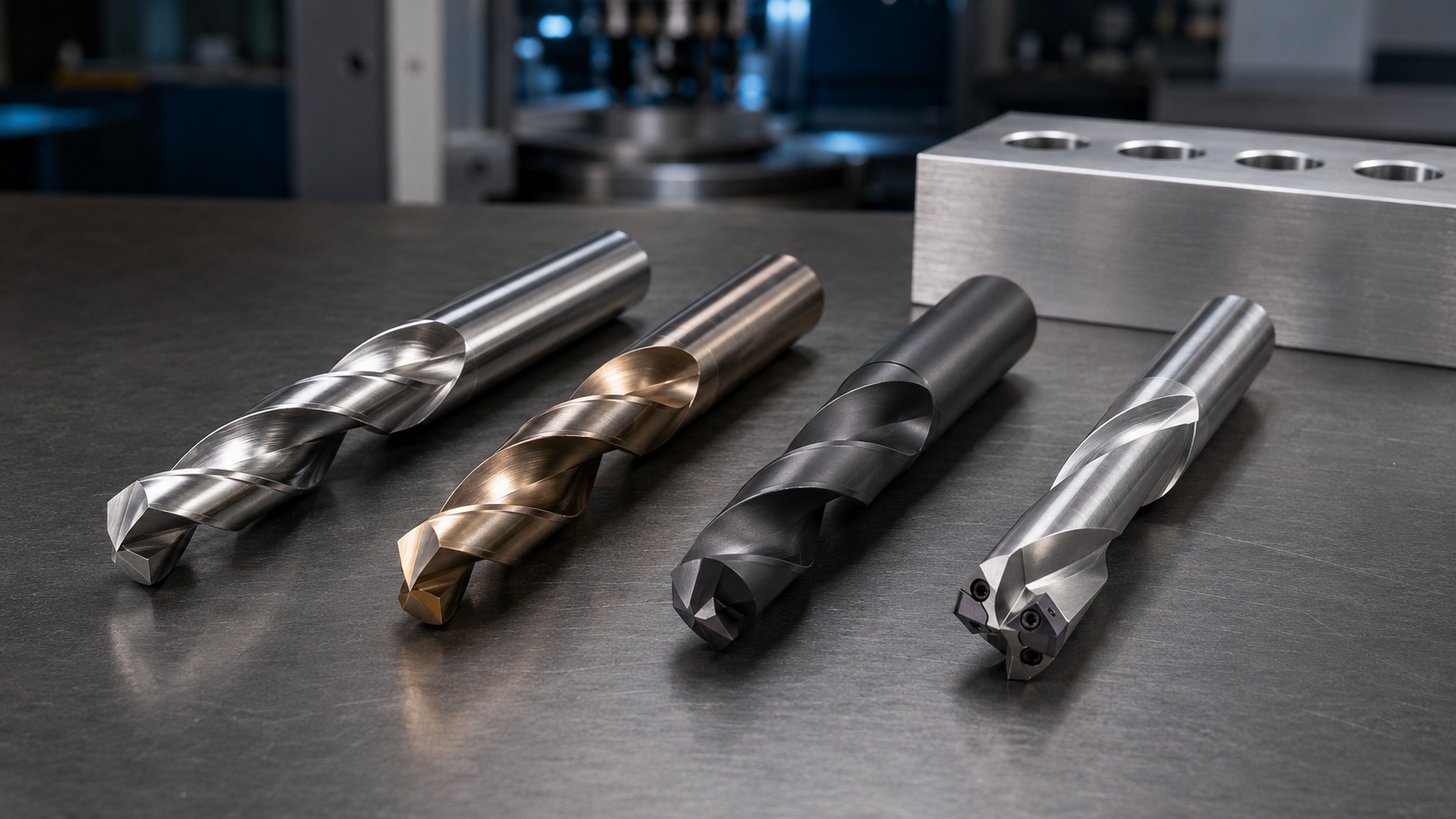
1. HSS Drill Bits for Occasional Aluminum Drilling
HSS drill bits can be powered by hand drills and general drill presses, so they’re useful when you simply need a few holes. HSS drill bits are cheaper. In repeated production they are more subject to wear than carbide and are better on occasional work than on drilling in long runs.
2. M35 Cobalt Drill Bits for Regular or Harder Aluminum Drilling
M35 drill bits include around 5% cobalt, which helps them stay sharper longer than regular HSS when drilling through thicker aluminium, 2024 or 7075. If HSS is being broken too often, but your drilling volumes or machine stability do not justify solid carbide, use M35.
3. Solid Carbide Drill Bits for Repeated CNC Drilling
Solid carbide is more robust, wear resistant. This keeps your hole measurements more constant when you are drilling the same holes more than one time with a CNC. It makes economic sense if the higher price is mitigated by fewer tool changes. Carbide is more likely to runout and migrate sideways, therefore you need good equipment.
4. PCD Drill Bits for High-Silicon Aluminum Production
High-silicon cast aluminium will rapidly blunt standard HSS and carbide cutting edges. PCD keeps its edge longer and reduces variations in hole size throughout large manufacturing runs. But regular aluminium has occasional holes that aren’t affordable, because you never get enough usage out of the longer tool life to pay for the higher purchase cost.
V. Choose the Drill Point and Flute Design
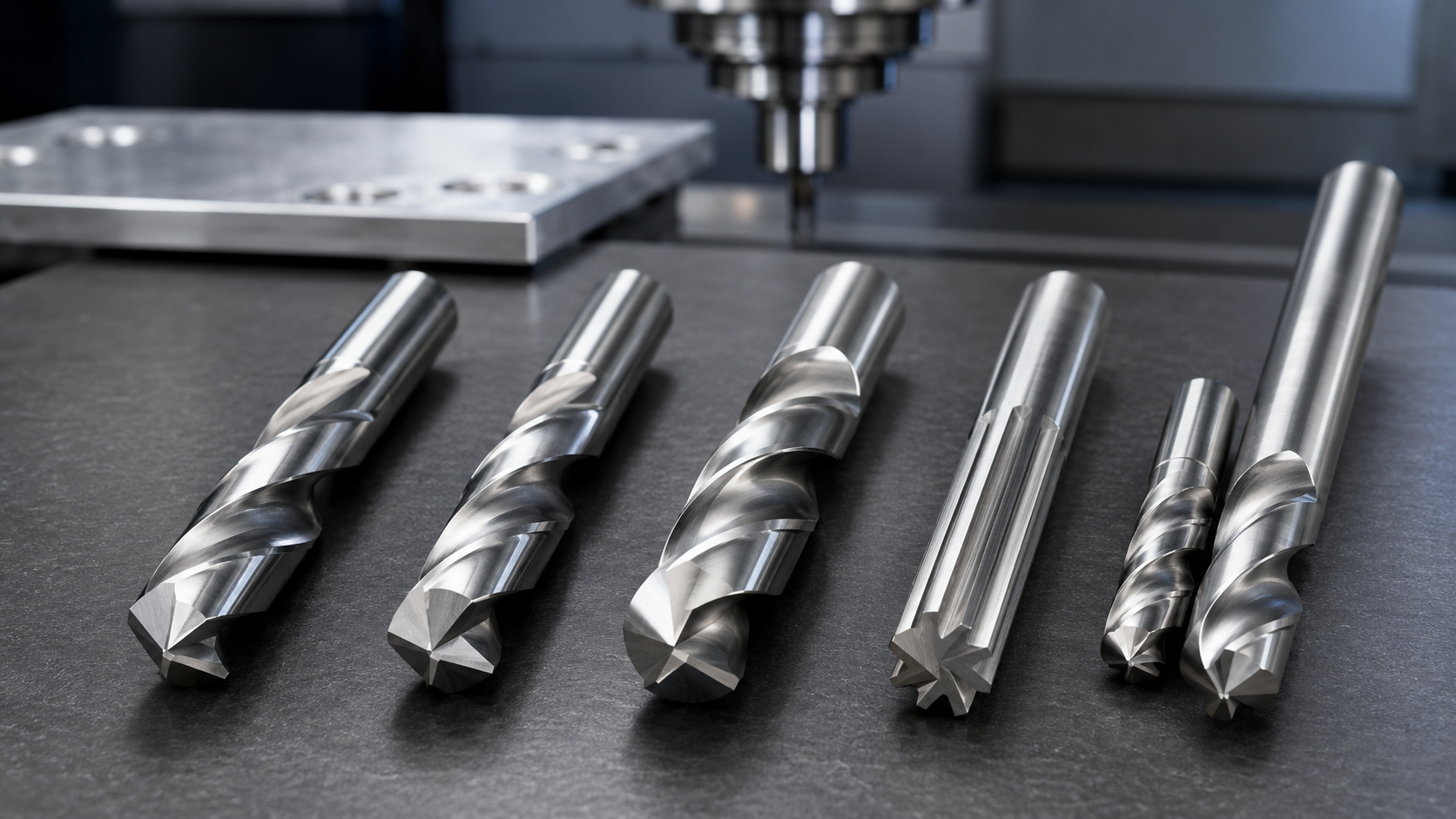
1. Use a 118° Point for General Aluminum Drilling
A 118° point is popular on general purpose HSS drills and quite useful for many typical aluminium holes. They are readily accessible, easily resharpened and are appropriate where hole-position accuracy is not very critical.
It’s a sensible choice for occasional drilling in mild aluminium. But a conventional 118° drill without a split point can wander a little when it initially touches a smooth aluminium surface.
2. Use a 135° Split Point for Better Positioning
A 135° split point drill is a superior choice for applications where you want improved self-centering and less tool wandering. The split point minimises the breadth of the middle chisel edge so that the drill may enter the material with less pushing power.
It is useful for harder aluminium alloys, thicker plates and for holes where the beginning position is important. Many of the aluminium specialised carbide drills also use point angles in the 130° to 140° range.
Point angle is not the sole factor in drill performance. The design of point and flute must be checked simultaneously, a 135° point with rough flutes can still have chip adhesion.
3. Use Polished Spiral Flutes for Common Wrought Aluminum
For 6061, 6063 and other aluminium alloys that tend to create longer chips polished spiral flutes are usually the superior choice. The spiral shape helps to remove chips out of the hole . The polished surface decreases friction and material adhesion .
Look for flutes that leave enough room to carry the volume of chips you expect. A drill that is built with small chip gaps for short-chipping materials may get clogged when drilling soft aluminium.
4. Consider Straight Flutes for High-Silicon Cast Aluminum
Some high silicon cast aluminium alloys create shorter chips and cause greater abrasive wear. Straight flute or short chip geometries may be appropriate for these materials, especially with steady production equipment.
Don’t think that a high-helix drill is the ideal choice for all types of aluminium. Whether the material is producing lengthy, sticky chips or short, abrasive chips determines the proper shape of the flute.
5. Choose the Shortest Drill That Reaches the Required Depth
A longer drill isn’t always a more versatile drill. This extra length weakens stiffness and increases the effect of spindle or chuck movement.
If you can, use a stub or short drill for a shallow hole. Use a drill for hole depth, if the hole is ~3–5×D deep, and only use an 8×D, 15×D or 25×D tool if the hole genuinely needs it.
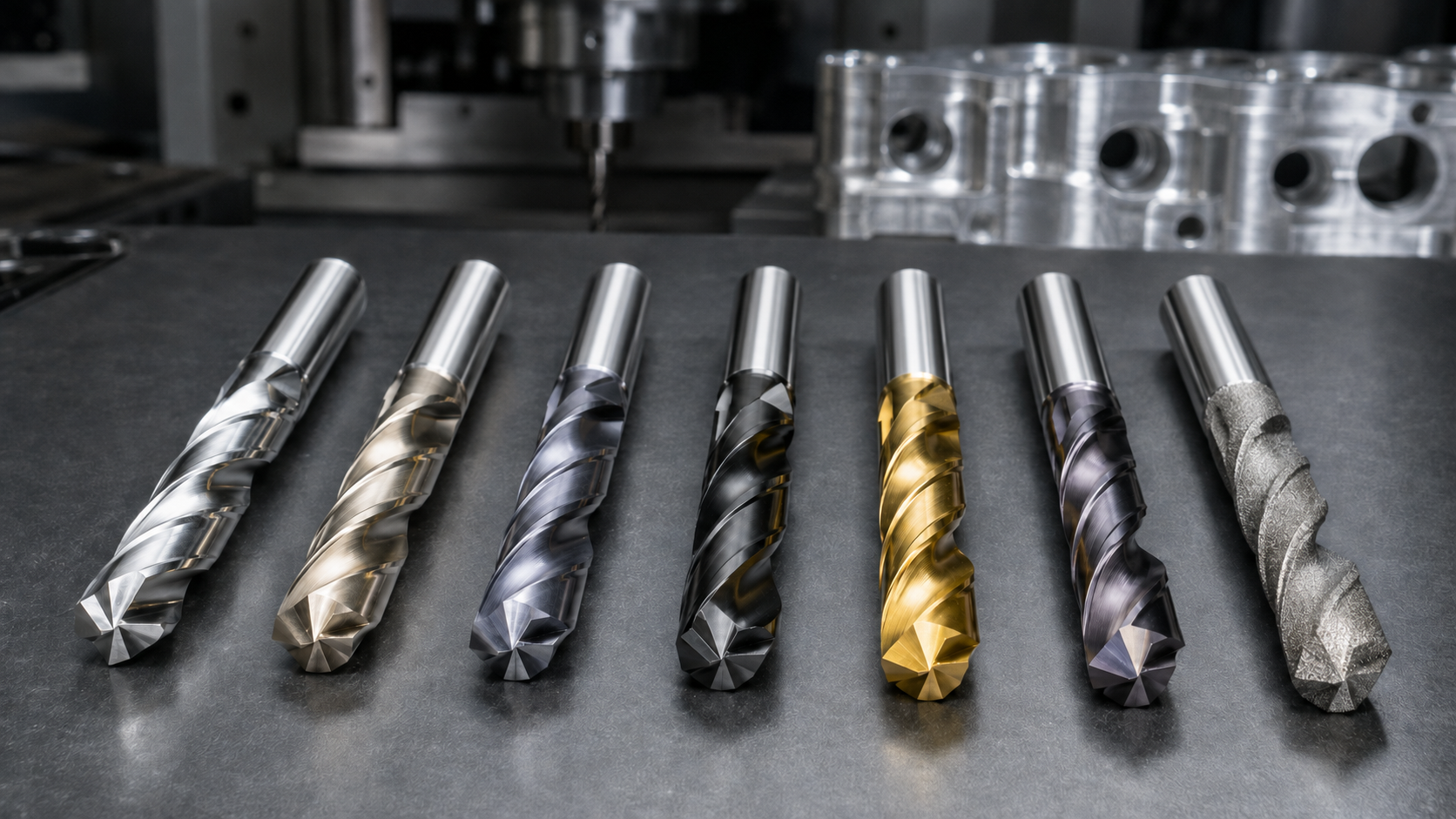
VI. Choose the Right Surface Finish or Coating
1. Bright or Polished Drills for Common Aluminum
Bright or polished surfaces aid to make long chips go through the flutes and reduce aluminium adhesion, making them good for 6061, 6063 and other typical soft aluminium. This is sometimes more convenient than paying for a premium coating if you simply need occasional or general drilling.
2. ZrN, TiB₂, or DLC for Repeated Aluminum Drilling
These low-friction coatings help to decrease the built-up aluminium and maintain the cutting edge cleaner over multiple drillings. Use them when you have material adhesion or frequent drill breakage with an uncoated drill. But also make sure the drill is sharp-edged and polished-fluted.
3. TiN and TiAlN Are Not the First Choice for Aluminum
TiN can enhance overall wear resistance, but it does not inhibit aluminium adhesion as well as coatings designed for non-ferrous materials. TiAlN is mostly used for high-temperature machining, thus when the manufacturer specifically recommends that particular drill for aluminium, only select one of these coatings.
4. Diamond Coating for High-Silicon Aluminum
Diamond-coated carbide resists the abrasive silicon particles that quickly wear out regular HSS and carbide drills. It works well with high silicon cast aluminium . It works well with large production runs . The additional cost is hard to justify for infrequent holes in common aluminium .
VII. Match the Drill Bit to the Hole
1. Thin Aluminum Sheet
For thin aluminium sheet, select a step drill, short split-point drill, or drill made for sheet metal. The designs limit the chance of the tool catching the sheet as it passes through.
The step drill is extremely helpful when drilling medium or big holes in thin sheet. The size of the hole is increased at each phase such that the cutting load is less than that of one huge twist drill.
Use drill bits that aren’t too lengthy. A short drill will allow you to manage the hole better and have less possibility of making a triangular or distorted hole.
2. General Holes in Aluminum Plate
A bright HSS drill is generally sufficient for occasional holes in typical aluminium plate. If the plate is thicker, the aluminium is tougher, or the process is done repeatedly, an M35 cobalt drill can provide a longer edge life.
Use an aluminum-specific carbide drill with polished flutes for CNC production. The drill length should be the real hole depth, not the thickest plate you might ever see in the future.
High-silicon cast aluminium must be processed separately away from the normal aluminium plate. Abrasive silicon particles may require a coated carbide, diamond coated carbide or PCD.
3. Deep Holes
Drill diameter vs. hole depth comparison. A 25 mm deep hole with a 10 mm drill is just 2.5×D, while the same depth with a 3 mm drill is more than 8×D.
For holes up to about 3×D a short conventional drill is usually sufficient. For this depth, a 3-5×D drill should be chosen. If the depth is over 5×D, a through-coolant carbide drill with a specific deep-hole flute is safer.
Very deep holes of 15-25×D generally need a matched pilot drill and a dedicated deep-hole tool. Do not substitute a general purpose extra long jobber drill just because the size is right.
4. Large-Diameter Holes
For large holes in thin sheet utilise a step drill or hole saw. If the plate is thick and the hole is large, you can use an annular cutter. This type of cutter simply cuts around the circumference of the hole, so it removes less material.
If you require a huge hole that is very accurate, first pilot-drill the hole and then bore or ream it. The basic hole can be made with a big twist drill but may not offer the finished diameter and roundness necessary.
5. Close-Tolerance Holes
A drill bit alone will not always give you the final tolerance stated on the drawing. If the final hole is greater than the drill diameter, it is because of drill runout, edge wear, material adhesion and the drilling machine.
If you require tighter tolerances go with a carbide drill and then ream or bore. In steady mass production, a combination tool with a bespoke drill-reamer or PCD can take numerous stages with less tool change.
Don’t buy a more expensive drill and think that it’s going to eliminate the need for finishing. Check the tolerance that the entire drilling process can consistently attain, not just the drill bit.
VIII. Common Mistakes When Buying Drill Bits for Aluminum
1. Buying Cobalt for Every Aluminum Alloy
Cobalt helps with heat resistance for HSS, but doesn’t instantly fix the aluminium adhesion problem. For infrequent holes in normal 6061, a sharp bright HSS drill may give the same usable result at cheaper price.
Not just because it sounds more professional, choose cobalt when you require more edge life or often drill harder aluminium alloys.
2. Using a General Steel Drill for Aluminum
A drill for steel may have a coating, edge prep and flute shape that are not appropriate for sticky aluminium chips. It may be hard enough yet may still have a lot of build up material and poor chip flow.
Look for a polished flute, crisp edge and a clear aluminium or ISO N application suggestion.
3. Choosing Carbide for an Unstable Machine
Carbide is fine if the machine and holder maintain the drill in line. Side motion in a shaky hand drill or a worn chuck might damage the carbide edge before typical wear becomes an issue.
If you cannot be sure equipment stability then a good quality HSS or cobalt drill may give more reliable life.
4. Choosing the Coating before the Geometry
You can’t fix a dull point, narrow flutes or an overly lengthy drill with a premium coating. Before you can decide whether a coating adds value you first have to select the drill material, tip, flute and length.
On soft aluminium, a sharp polished unprotected drill can outperform a thickly coated general-purpose drill.
5. Buying a Longer Drill Than the Hole Requires
Drills with large overhangs have less stiffness and are more sensitive to runout. Say you want a 2×D hole . If you buy an 8×D drill , you have unused length , but the tool is less sturdy .
Choose the shortest drill capable of securely reaching the specified depth.
6. Expecting a Drill to Produce a Finished Precision Hole
The diameter of the drill does not ensure the exact completed hole size. The outcome can be influenced by tool runout, edge wear, chip adhesion and machine alignment.
If the hole has a tight tolerance, incorporate reaming, boring or a combination finishing tool in the selection strategy.
IX. Final Recommendation
For the odd hole in common aluminium, use a sharp bright HSS drill rather than pay for tool life you may never use. For thicker or tougher aluminium you still need HSS hardness but now you want to go to polished solid carbide for repeat CNC drilling. PCD or diamond coated carbide is generally used for high silicon aluminium and lengthy manufacturing runs. Send us your aluminium grade, material thickness, hole diameter, depth, tolerance, machine type and expected hole quantity and we will help you determine the correct drill material, geometry and coating.
X. FAQs About Choosing Drill Bits for Aluminum
1. Is HSS or Carbide Better for Drilling Aluminum?
If you only need a few holes, HSS is cheaper and more tolerant of shaky equipment. For CNC drilling on a repetitive basis, the longer tool life and more consistent hole size can justify the greater price of carbide.
2. Do You Need Cobalt Drill Bits for 6061 Aluminum?
A good sharp HSS drill is usually sufficient for the odd hole in 6061 aluminium. If you drill a lot, if the plate is thicker, or ordinary HSS dulls too soon, go for M35 cobalt.
3. What Drill Bit Should You Use for 7075 Aluminum?
M35 cobalt HSS is cheaper for smaller quantities and common equipment. If you’re doing a lot of drilling on a stout CNC machine, an aluminum-specific solid carbide drill will give you superior wear resistance and more consistent holes.
4. Is a 118° or 135° Drill Bit Better for Aluminum?
A 118° point is good for general drilling in softer aluminium and easy to resharpen. A 135° split point enables greater self-centering and is beneficial when hole position or tougher aluminium is involved.
5. What Drill Bit Is Best for Thin Aluminum Sheet?
It is usually better to use a step drill or short split point drill than a long general purpose twist drill. It also enlarges the hole more slowly and prevents grasping, distortion and big exit burrs.
6. Are Step Drill Bits Good for Aluminum?
Yes, step drills are good for medium to large holes in thin sheet aluminium. Choose a sharp step drill and make sure the plate thickness you require will fit inside the useful depth of each step.
7. Which Drill Coating Is Best for Aluminum?
Repeated Al drilling is enabled by low-friction materials such as ZrN, TiB$_2$ and DLC. For common soft aluminium a sharp brilliant or polished uncoated drill could still be better value.
8. Are Uncoated Drill Bits Good for Aluminum?
Yes, polished flute, high quality uncoated drills are prevalent on aluminium. The sharp edges and smooth surfaces lead to a reduction of material adhesion and enable chip removal .
9. Can TiN-Coated Drill Bits Be Used on Aluminum?
Yes, TiN drill bits can be used on aluminium and can enhance general wear resistance. TiN however is not a given as the best anti-sticking solution. The point and flute shape must also be appropriate for aluminium.
10. When Should You Use a PCD Drill for Aluminum?
Application Use PCD when drilling high-silicon aluminium, aluminium composites or huge quantities of similar production holes. For occasional holes in standard 6061 or 6063 aluminium, normally not required.
11. What Flute Design Is Best for Soft Aluminum?
Good chip space, polished spiral flutes generally are good for soft, long-chipping aluminium. They aid to evacuate chips from the cutting edge and reduce build up of material within the flutes.
12. What Drill Bit Should You Use for High-Silicon Cast Aluminum?
For medium manufacturing quantities, coated carbide that is wear resistant can be used. Diamond coated carbide or PCD is usually more economical for abrasive aluminium with silicon content near or above about 12% and extended manufacturing runs.
13. When Does an Aluminum Hole Need a Through-Coolant Drill?
Through-coolant is more useful when hole depth is larger than around 5×D or when repeated production makes chip removal difficult. For shallower holes, a conventional drill with external coolant will usually do.
14. Can You Use a Standard Jobber Drill for Deep Aluminum Holes?
For moderate depths, a normal jobber drill will function, but it is no substitute for a proper deep-hole tool. For holes larger than roughly 5×D, use a drill with the correct flute length, chip spacing and preferably through-coolant.
15. Can a Drill Bit Produce a Close-Tolerance Aluminum Hole?
A drill will get you started, but tight tolerances usually require reaming or boring. For high volume operations a tailored drill-reamer combo cuts down on tool changes and controls the final diameter.
16. What Information Should You Provide before Ordering an Aluminum Drill Bit?
Please indicate the aluminium grade, material thickness, hole diameter, depth, tolerance, kind of machine, coolant technique and the expected number of holes. These details let you decide whether to use HSS, cobalt, carbide, coated carbide or PCD, and which point and flute design to utilise.