I. Introduction
A drill bit that can drill ordinary steel with ease may skip, overheat or dull before it finishes a hole in stainless steel. Correct choice depends on drill material & design to match to the stainless grade, machine stability, hole dimension and output amount. This guide helps you decide when to go with HSS, M35, M42 or carbide without paying for performance your application can’t use.
II. Why Stainless Steel Requires the Right Drill Bit
Stainless steel holds the heat near the cutting edge , makes sticky chips , and can work harden if a drill rubs rather than cuts . When this hardened layer develops, a worn or poor drill may fail to penetrate even when extra pressure is added. A drill should consequently have adequate hot hardness to stay sharp, appropriate toughness for the machine conditions and a flute design that can remove chips before they block the hole.
III. How to Choose the Right Drill Bits for Stainless Steel?
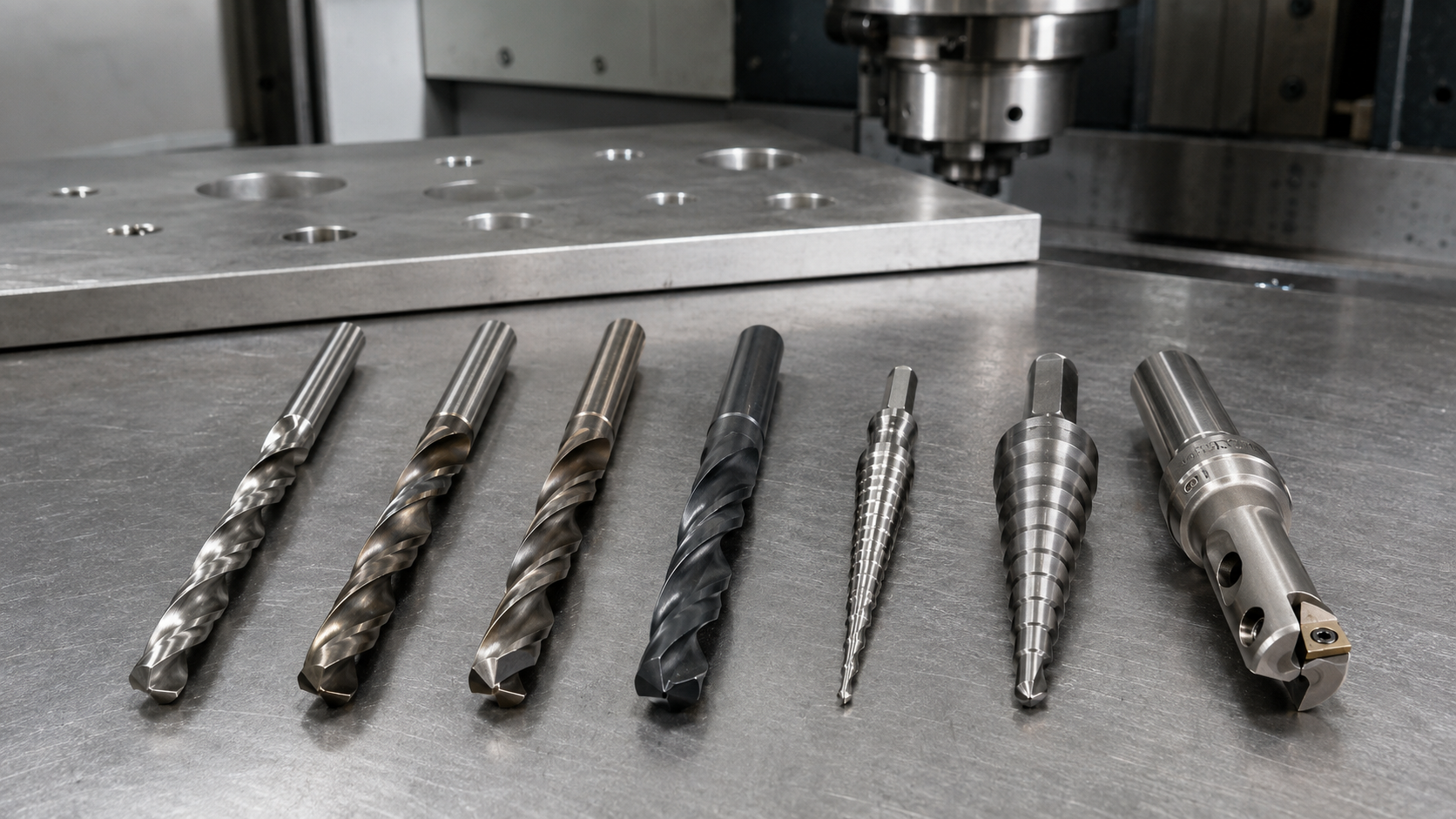
1. Choose the Right Drill Bit Material and Type
M35 Cobalt Drill Bits
M35 cobalt drills have about 5% cobalt, making them more heat resistant and better at holding their edge than ordinary HSS drills. They are an economical choice for periodic drilling, thin stainless steel sheet and low volume work in annealed 304 stainless steel. M35 is a good choice when the cost of the tooling is more important than the longest possible tool life.
M42 Cobalt Drill Bits
M42 cobalt drills contain about 8% cobalt and have higher hot hardness and wear resistance than M35 drills. They hold their edge more dependably while drilling 304, 316 and comparable stainless steels, especially in heavier workpieces in repeated-hole applications. M42 is the ideal all-round material for combined stainless-steel operations on portable drills, drill presses or less stiff machinery.
Solid-Carbide Drill Bits
Solid carbide drills are more robust, wear resistant and dimensionally stable than cobalt drills. When utilised on robust CNC machines or steady drill presses they are suited to high production, close precision holes and harder grades of stainless steel. Edge Chipping requires low spindle runout, good workholding, regulated feed and dependable coolant.
Standard HSS Drill Bits
Standard HSS drills are strong and affordable but their cutting edges weaken more quickly under the heat generated by stainless steel. They can be used for a limited number of holes in thin annealed stainless steel sheet, but are not suggested for thick material or continuous manufacturing. M35 or M42 cobalt is better value for normal stainless-steel drilling.
Cobalt and Carbide Step Drills
Step drills are used for hole enlargement in thin stainless steel sheet without tool changes. Their stepped shape controls hole diameter and reduces grasping, burrs and sheet deformation. Good for general fabrication are cobalt step drills, carbide step drills are excellent for sturdy machines and frequent output.
Replaceable-Head Drills
Replaceable-head drills consist of a carbide cutting head and a reusable steel drill body. They provide efficient chip evacuation and reduced replacement cost than changing a solid-carbide drill entirely, especially in medium and large diameters. Through-coolant replaceable-head drills are appropriate for continuous CNC production and deep holes in stainless steel.
2. Check the Key Performance Requirements
Heat Resistance
Stainless steel is a poor conductor of heat therefore a lot of the heat generated by cutting remains at the point of the drill. The drill must retain its hardness at high temperatures, else it will get dull and rub very quickly . Both cobalt and carbide are heat-resistant enough to drill into normal stainless steel.
Toughness
Its toughness enables the drill resist vibration, interrupted cutting and unpredictable machine circumstances. If it is a hand tool or drill press then cobalt drills are more forgiving. Cobalt is therefore the safer material if some vibration cannot be avoided.
Edge Retention
The drill has a sharp edge so it cuts through the stainless steel instead of rubbing against it and work hardening it. Solid carbide gives the longest edge life in stable machining circumstances; Cobalt enables guaranteed edge retention with less chipping. Standard HSS is best utilised in a limited way.
Wear Resistance
Repeated contact with stainless steel eventually wears away the cutting lips and margins. Carbide is best for wear resistance for continuous production runs, whereas coated cobalt offers a sensible compromise between service life and tooling cost. Whether the extra cost of carbide is justifiable should be based on the estimated number of holes.
Drill Length and Stability
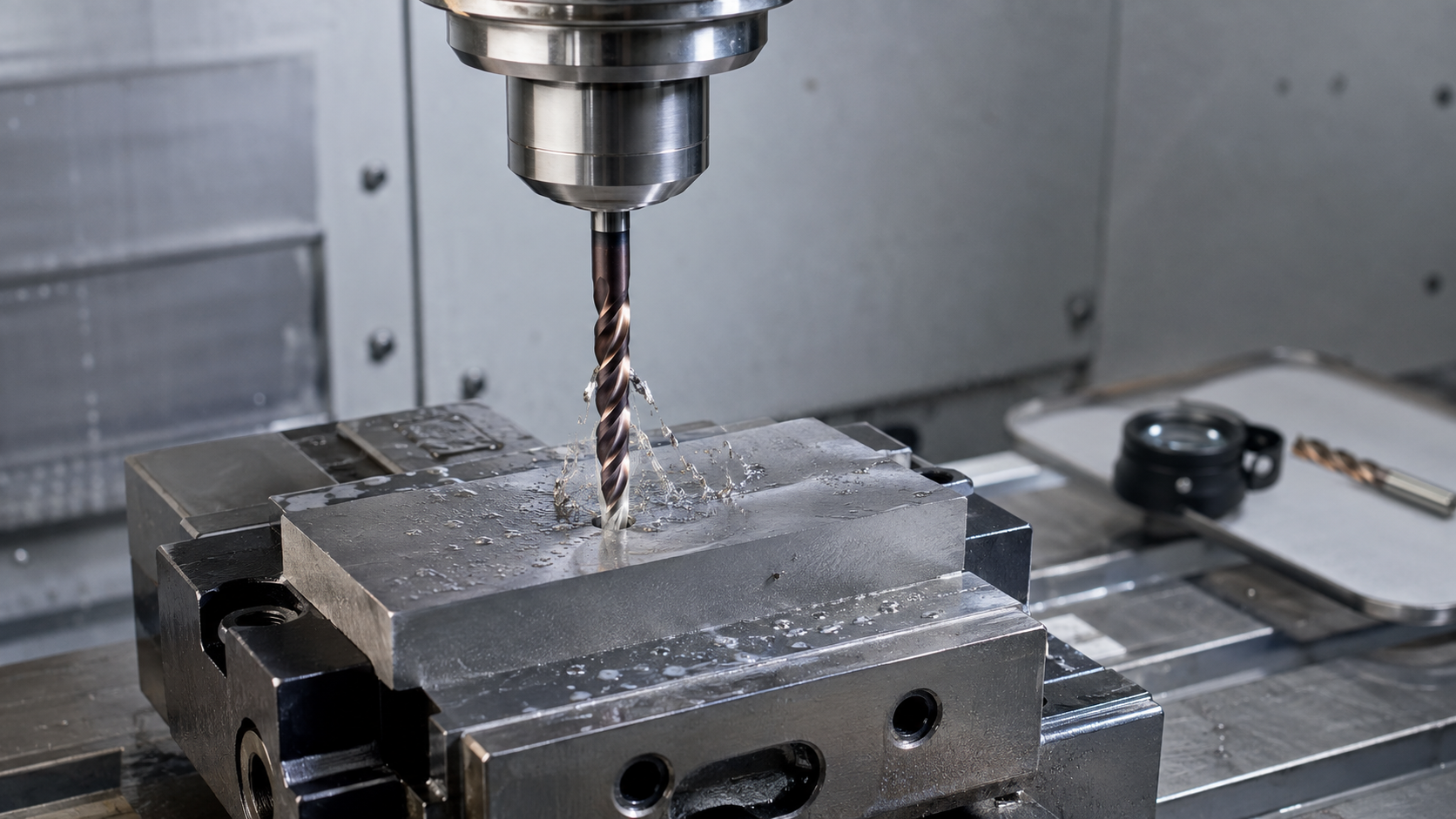
Small diameter drills are sensitive to runout and can overheat or fail rapidly, whereas larger drills demand greater torque, machine power and coolant flow. The selected diameter must therefore be compatible with the required hole tolerance and with the available equipment. Tapped holes and close tolerance production are best done using precision ground drills.
Through-Coolant Design
Via-coolant drills supply cutting fluid directly to the point of the drill. This helps to eliminate heat and drive the chips out via the flutes. They are especially suitable for deep holes, CNC machining and continuous manufacturing. Internal coolant enhances tool life and process uniformity where external coolant cannot efficiently get to the bottom of the hole.
3. Consider Drill Bit Geometry
Point Angle
A 135° split point is ideal for most stainless steel applications as it provides better centring, decreases wandering and requires less thrust. Especially suitable on stainless steel sheet, curved surfaces and workpieces where exact hole location is required. The standard 118° point is used mostly for gentler grades and less strenuous tasks.
Helix Angle
The helix angle influences the mobility of the chip and the cutting strength. A medium helix of around 28° to 35° provides a reasonable compromise between chip evacuation and stiffness for popular stainless steel grades. Lower helix designs offer a more rigid cutting edge for harder materials while higher helix designs assist chip removal in softer stainless steel.
Flute Design
Stainless steel tends to produce lengthy, stringy chips that might pack inside the flutes and contribute to cutting heat. Wide, polished or variable-helix flutes provide better chip flow and less chance of clogging. The flutes are designed for internal coolant distribution for deep-hole and high-volume applications.
Core Thickness
A thicker core increases the rigidity and lowers the deflection of the drill. However the core should not be too thick as it leaves less area for the chips. Web-thinned drills lessen push and keep body strength enough. The core is strengthened and has sufficient flute capacity for general stainless machining.
Chip Evacuation
Poor chip evacuation leads to heat buildup, surface scratching and damage to the cutting edge. Open flute space, correct helix angle, and a continuous coolant flow push chips away from the cutting zone. Deep holes require accurate chip removal to prevent the drill from locking up in the workpiece.
Margin Design
Small margins reduce contact with the hole wall, therefore reducing friction and decreasing heat. Multi-margin drills give superior guiding, roundness and surface polish but need good lubrication. Multi-margin designs are excellent for precision CNC holes. Drills with narrow margins are good for common stainless-steel operations.
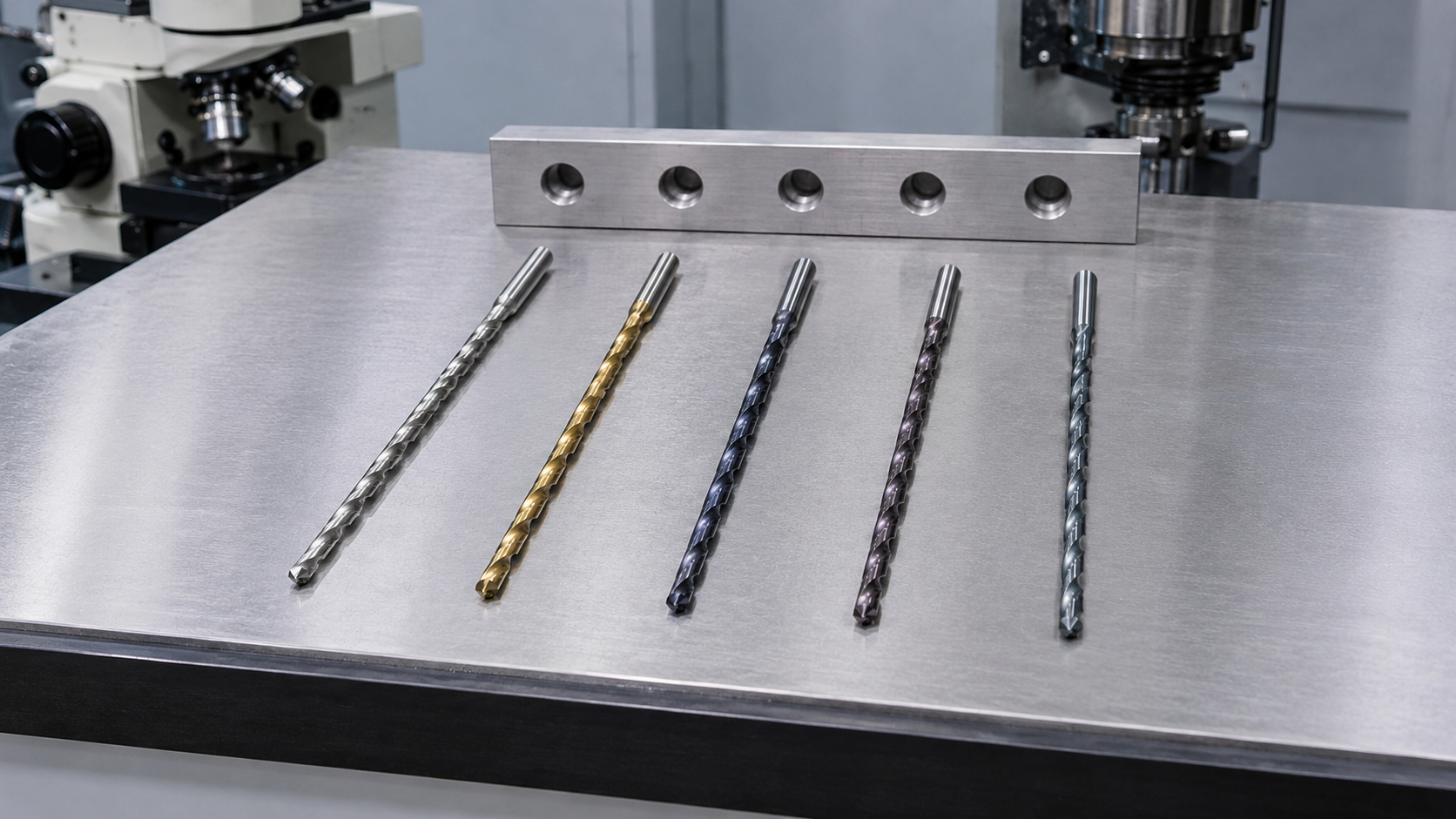
4. Select the Right Coating for Stainless Steel
TiN Coating
The TiN increases the surface hardness, lubricity and fundamental wear resistance. An affordable coating for HSS and cobalt drills used at controlled speeds in light to medium stainless steel applications. Its use is limited to forceful cutting or long manufacturing runs because of its low high-temperature resistance.
TiCN Coating
TiCN is harder and more wear resistant than TiN and reduces material adhesion around the cutting edge. It is well suited for abrasive stainless steel grades and applications where consistent hole size are required. TiCN coated drills operate best with sufficient coolant applied.
TiAlN and AlTiN Coatings
TiAlN and AlTiN have good heat and oxidation resistance, and are appropriate for carbide drills at higher cutting speeds. Their protective, aluminum-rich coating helps to shelter the cutting edge from intense heat. These coatings are advisable for steady CNC machining and continuous production of stainless steel.
AlCrN Coating
AlCrN has a very good resistance to heat, oxidation and abrasive wear. It is appropriate for demanding stainless steel applications with high cutting loads, deep holes and long production runs. If constant tool life is more important than the lowest purchasing cost, AlCrN-coated carbide drills are a good choice.
Uncoated and Coated Drill Selection
Uncoated cobalt drills are good for general upkeep, fabrication, and small amounts of production every once in a while. When used over and over, coated cobalt drills last longer. Coated carbide drills work better with strong CNC machines and a lot of work. The coating shouldn’t be the main thing that you choose; it should work with the drill material and the cutting conditions.
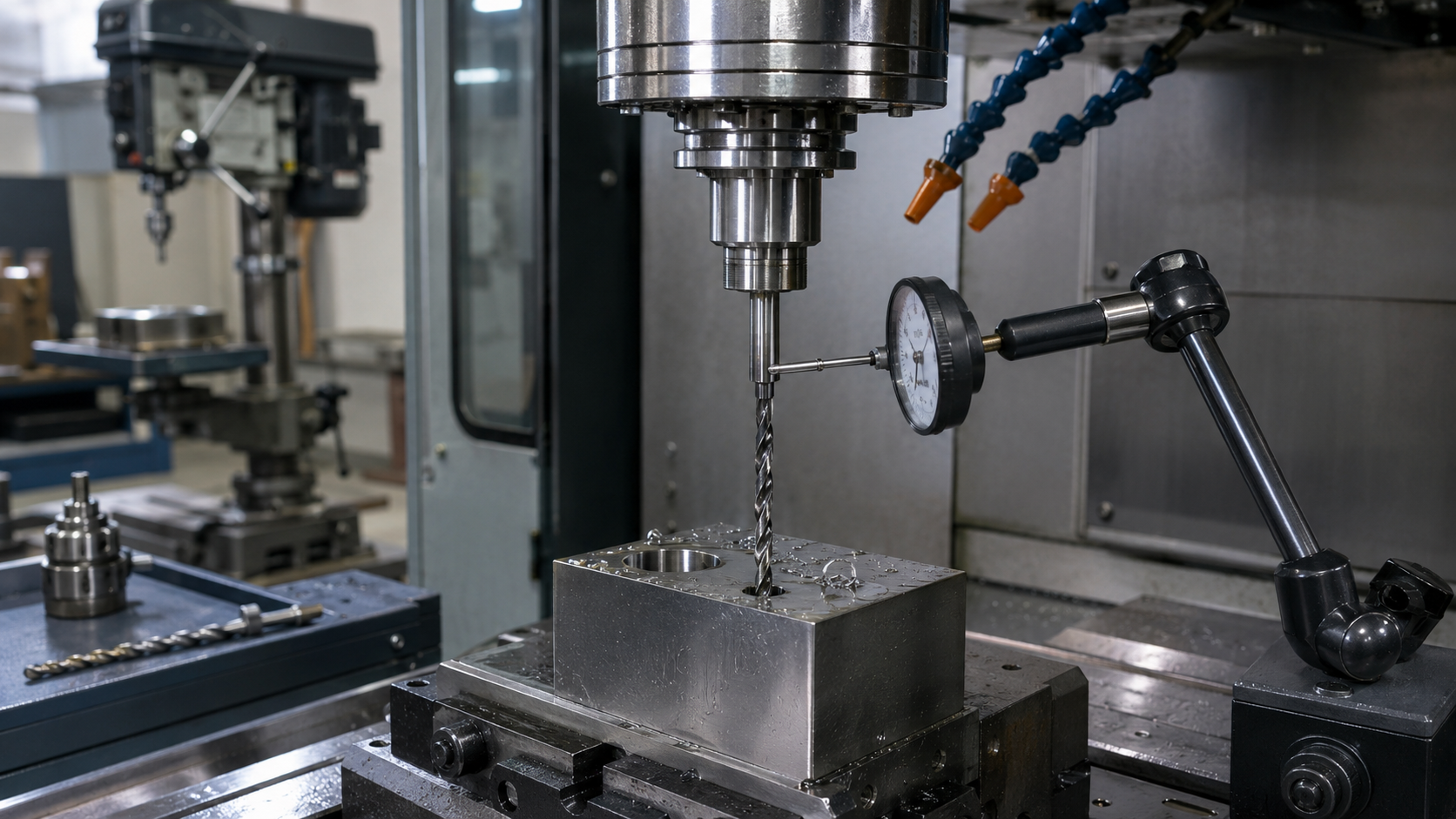
5. Match the Drill Bit to the Machine and Cutting Conditions
Machine Rigidity and Runout
The machine has to keep the drill in the centre of the hole and feed it steadily through. Most of the time, hand drills and standard drill presses use tougher M35 or M42 drills. However, solid carbide can hold its diameter and position better with low runout CNC spindles. One cutting edge can do more work than the other if there is too much runout. This can cause bigger holes, fast wear, or breaking in a single corner of the carbide.
Available Spindle Torque
Large diameter drills and strong core geometries need more torque than small drills. If a machine doesn’t have enough power, it can slow down or stop, which can damage the hole surface by rubbing against the cutting edges. Before you buy a big carbide or replaceable-head drill, make sure the spindle can keep giving you power at the right cutting speed and feed.
Cutting Speed and Feed Stability
To keep the cutting edge from getting too hot, stainless steel needs to be cut more slowly than mild steel. To make a real chip, the feed has to be steady and high enough. If you feed very slowly or focus on the surface over and over, it will get smoother and harder. To start, you should look at the drill’s manufacturer’s data. This is because acceptable values change depending on the drill material, coating, diameter, stainless grade, and coolant method.
External and Internal Coolant
Cutting oil or coolant lowers friction, restricts chip adhesion, and transfers heat away from the drill bit. External coolant can be helpful for small holes if it can reach the cutting zone regularly, however internal coolant is more reliable for repeated and deep holes. A through-coolant drill is only an advantage if the machine can produce the necessary flow of coolant, and the flutes can evacuate the chips from the hole.
Hole Depth and Chip Removal
Chips are pushed farther away before they can leave the flutes as the hole gets deeper, and coolant has a harder time getting to the cutting edges. Standard stainless steel drills can be used for short, shallow holes, but for 3xD, 5xD, and larger tasks, tools made for those depth ranges should be used. When the drill length, flute design, and coolant delivery are all matched to the depth, chip packing, wall damage, torque spikes, and drill breaks that aren’t expected don’t happen.
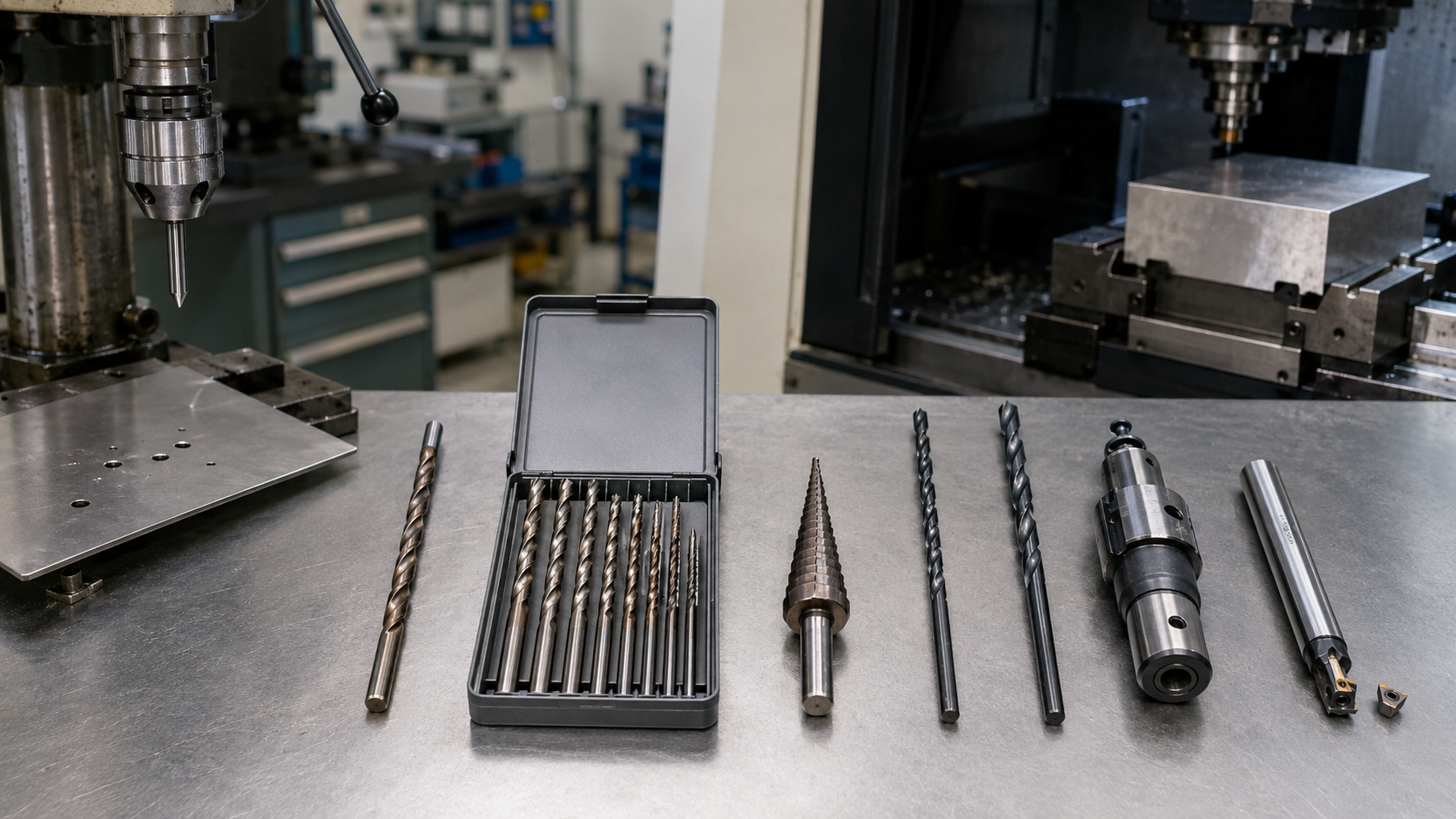
IV. Best Drill Bits for Stainless Steel by Application
1. Best Overall Choice
An M42 cobalt drill with a split point of 135° is the best combination of heat resistance, hardness, and ease of use for machining. A rigid CNC setup isn’t always possible, so this machine can be used for low- and medium-volume drilling in 304, 316, and similar stainless steels.
2. Best Budget Choice
An M35 cobalt drill is a cheap way to make holes in 304 stainless steel that has been annealed. It works better with stainless steel than regular HSS, but it’s not good for making thick 316 or higher strength grades all the time.
3. Best M42 Cobalt Drill Set
For maintenance, fabrication, and projects that need more than one hole diameter, an M42 set with 135° split points is useful. It keeps its edge better than a regular HSS set and can handle vibrations from drill presses and hand tools better than solid carbide.
4. Best Choice for Thin Stainless-Steel Sheet
For small holes, use an M35 or M42 drill with a short split point. For larger holes, use a cobalt or carbide step drill that is rated for stainless steel. With these choices, drill drift, exit grab, burrs, and sheet distortion are kept to a minimum.
5. Best Solid-Carbide Option
Use a professional solid-carbide drill with the correct flutes and length (3×D or 5×D) for stainless steel and with sharp cutting lips. It works best on solid drill presses and CNC machines where you can maintain runout minimal, feed controlled, and coolant reliable.
6. Best Choice for Industrial and CNC Production
Select a solid-carbide or replaceable-head drill, sized for the stainless grade and hole depth, with through-coolant for continuous output. If the machine and workholding are firm enough, this set-up will give you better chip removal, temperature control and dimensional stability.
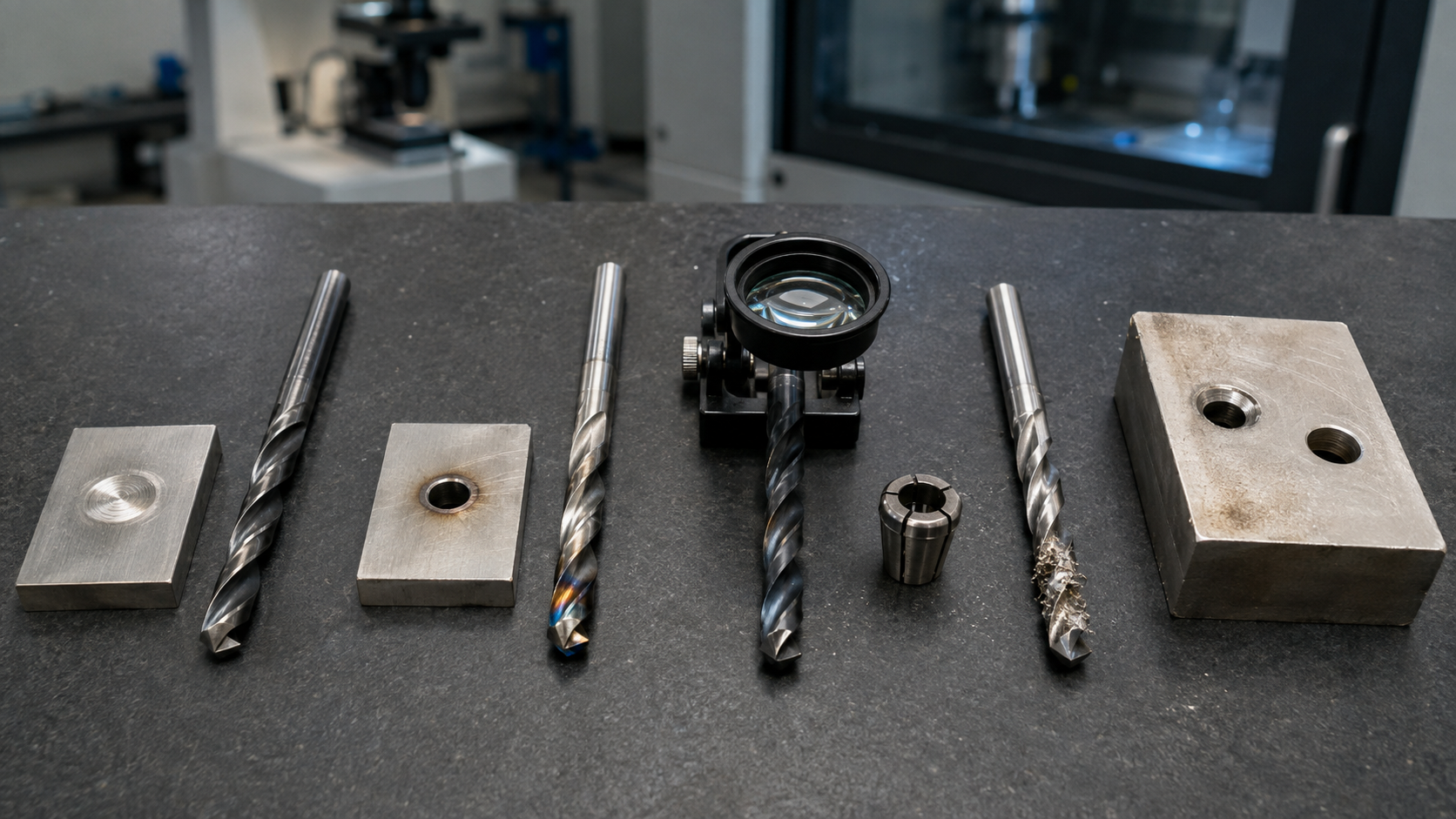
V. Common Problems That Indicate the Wrong Drill Selection
1. The Drill Skates or Fails to Penetrate
If the drill skids on the surface or leaves a shining round mark, the cutting edge may be dull, the point geometry may be wrong or the drill may be insufficiently centred. Don’t increase pressure to a tool that no longer cuts. Use a sharp drill with a 135° split point. If the drill begins to cut and then is stopped the surface of the hole may already be work hardened.
2. The Edge Dulls and Heat Builds Up Quickly
Too much heat at the cutting edge shows quick wear, blue discoloration or smoke. The drill material is probably under-specified, or the cutting speed is too high, or the coolant is not adequate, or the edge is worn and has started to rub. The use of M35, M42 or carbide instead of typical HSS extends tool life, however the cutting speed and coolant condition must be appropriate for the drill chosen.
3. The Carbide Edge Chips
Runout, vibration, steep entry, long overhang or unstable workholding can ruin one carbide corner. A harder carbide grade will not fix a shaky set-up. If the rigidity is not sufficient, adjust the machine and clamping settings or use a more forgiving M42 drill.
4. Chips Block the Flutes or the Hole Loses Accuracy
Packed chips can lead to torque, the wall of the hole may be damaged and the drill may jam or break. Worn edges, uneven cutting lips, excessive tool extension or poor guidance also result in large, tapering or off-center holes. Choose the proper drilling length and flute capacity, enhance the coolant supply and repair the setup before increasing the nominal drill diameter.
VI. Final Recommendation
M35 for infrequent drilling of annealed 304 stainless steel. M42 for better edge life in 304, 316 or repeated workshop use. Only use solid carbide in stainless steel when it is suited for the material and the CNC production is reliable (runout, feed, workholding and coolant are controlled). For thin sheet you may need a short split point or step drill and the correct length and coolant design for deep holes. Please tell us the grade of your stainless steel, material condition, hole diameter, depth, type of machine and quantity to be produced and we will help you to confirm the correct drill material, shape and coating.
VII. FAQs About Drill Bits for Stainless Steel
1. Why Are Small Drill Bits More Likely to Break in Stainless Steel?
The small drills have thinner cores, less area for chips, and less resistance to bending and heavy feed. “Good alignment, a sharp edge and feed control are needed as a small runout can cause a significant uneven load in relation to their diameter.”
2. Is M35 or M42 Better for 304 Stainless Steel?
M35 is a low cost option for occasional holes in annealed 304. M42 has greater hot hardness and extended edge life for repeated operations. If the material is thicker, or the engagement is longer, or if M35 has to be changed often, then choose M42.
3. Is M42 Suitable for 316 Stainless Steel?
M42 is a less expensive alternative to 316 stainless steel for drilling applications of low to medium volume. In repetitive CNC production, a carbide drill intended for stainless steel can produce increased productivity and more uniform holes.
4. Can a Coated HSS Drill Replace a Cobalt Drill?
A coating may improve wear resistance and lubricity of HSS but does not provide the same hot hardness to the underlying steel as M35 or M42. For light or occasional stainless-steel drilling, coated HSS is still your best bet.
5. Can Carbide Drill Bits Be Used in a Hand Drill?
Solid-carbide drills are not generally recommended for hand drills because the side motion and irregular feed might chip the cutting edges. M35 or M42 cobalt is safer, if the tool can’t remain firm.
6. When Should You Use a Step Drill on Stainless Steel?
Use a stainless steel rated step drill to drill or widen holes in thin sheet where a large twist drill may grab during breakthrough. This is not for deep holes or heavy solid sections.
7. Why Does a Thin Stainless-Steel Sheet Deform at the Hole Exit?
If the sheet is unsupported or the point geometry is too aggressive, the drill can pull into the material as it breaks through Use robust backing for the hole required, clamp firmly and use a short split-point or step drill.
8. What Drill Is Suitable for a Curved or Sloped Stainless-Steel Surface?
The curved and sloped surfaces cause uneven loading and increase the chances of wandering or carbide chipping. Use a short, stiff drill with good edge support . Check if a spotting or pilot operation is recommended for the specified drilling method .
9. When Is Internal Coolant Necessary?
Repeating holes about 3×D, internal coolant is beneficial. It is usually recommended for drilling 5×D or deeper. It forces coolant right to the cutting edge and helps drive chips back through the flutes.
10. Can Stainless Steel Be Drilled without Coolant?
Dry drilling is normally not chosen for stainless steel, although with adequate cutting oil applied by hand, sometimes occasional holes can be made that are quite shallow. When increasing hole depth and production quantity, tool life and chip control become less predictable.
11. Can Cobalt Drill Bits Be Resharpened?
M35 and M42 drills may usually be resharpened if the body and margins are in good condition. The original point angle, split point, lip symmetry and diameter must be restored precisely.
12. Can Solid-Carbide Drills Be Resharpened and Recoated?
Many solid-carbide drills can be properly recoated and resharpened if the body and coolant passageways are intact. Reapplication of suitable coating is only possible if the original geometry and edge preparation are restored by regrinding .
13. Why Do Stainless-Steel Chips Stick to the Drill?
Austenitic stainless steel is sticky and can build material on the edge if the speed, edge sharpness, coating or lubrication is not right. The attached material affects the cutting geometry and might lead to rough, large or irregular holes.
14. Does a Harder Drill Bit Always Last Longer?
No. A harder drill can provide better wear resistance but may also be more brittle and sensitive to vibration. The longest tool life comes from matching hardness, toughness, geometry, and coating to the actual machine and workpiece conditions.
15. How Should You Compare the Cost of Cobalt and Carbide Drills?
Purchase cost. Number of holes per cutting edge. Regrinding cost. Cycle time. Tool change time. Rejected parts. For tiny or unsteady tasks, cobalt frequently is more cheap, but carbide can give a lower cost per hole in reliable, recurring output.