Introduction
Picking the improper starting tool might result in off-center holes, damaged corners on the drill, broken pilot tips or a center hole that does not properly hold the workpiece. This tutorial examines the purpose, geometry, angle, rigidity, and outcomes of spotting drills and center drills, then advises you on which to use for CNC hole positioning, lathe center holes and different workpiece materials.
I. What Are Spotting Drills and Center Drills?
1. What Is a Spotting Drill?
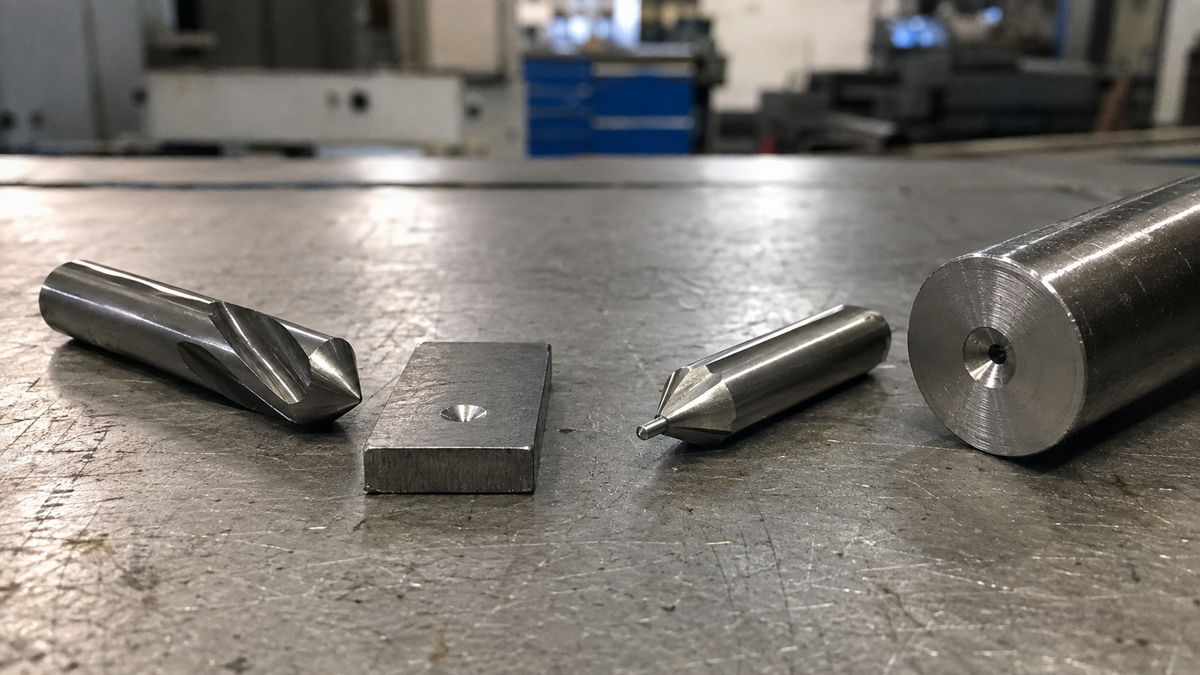
A spotting drill is a short, rigid tool used to establish a shallow starting point for the main drill to enter the workpiece. It assists the next twist drill to start in the right spot instead of walking across the surface. Spotting drills are often used in CNC machining centres, milling machines and automatic drilling lines when repeatable hole position accuracy is required.
Centre drills have a little pilot tip, spotting drills do not. The robust core and short length of the cutting edge increase the rigidity, while the diverse point angles of 90°, 120° and 140° make them suitable for a wide range of drilling and chamfering operations.
2. What Is a Center Drill?
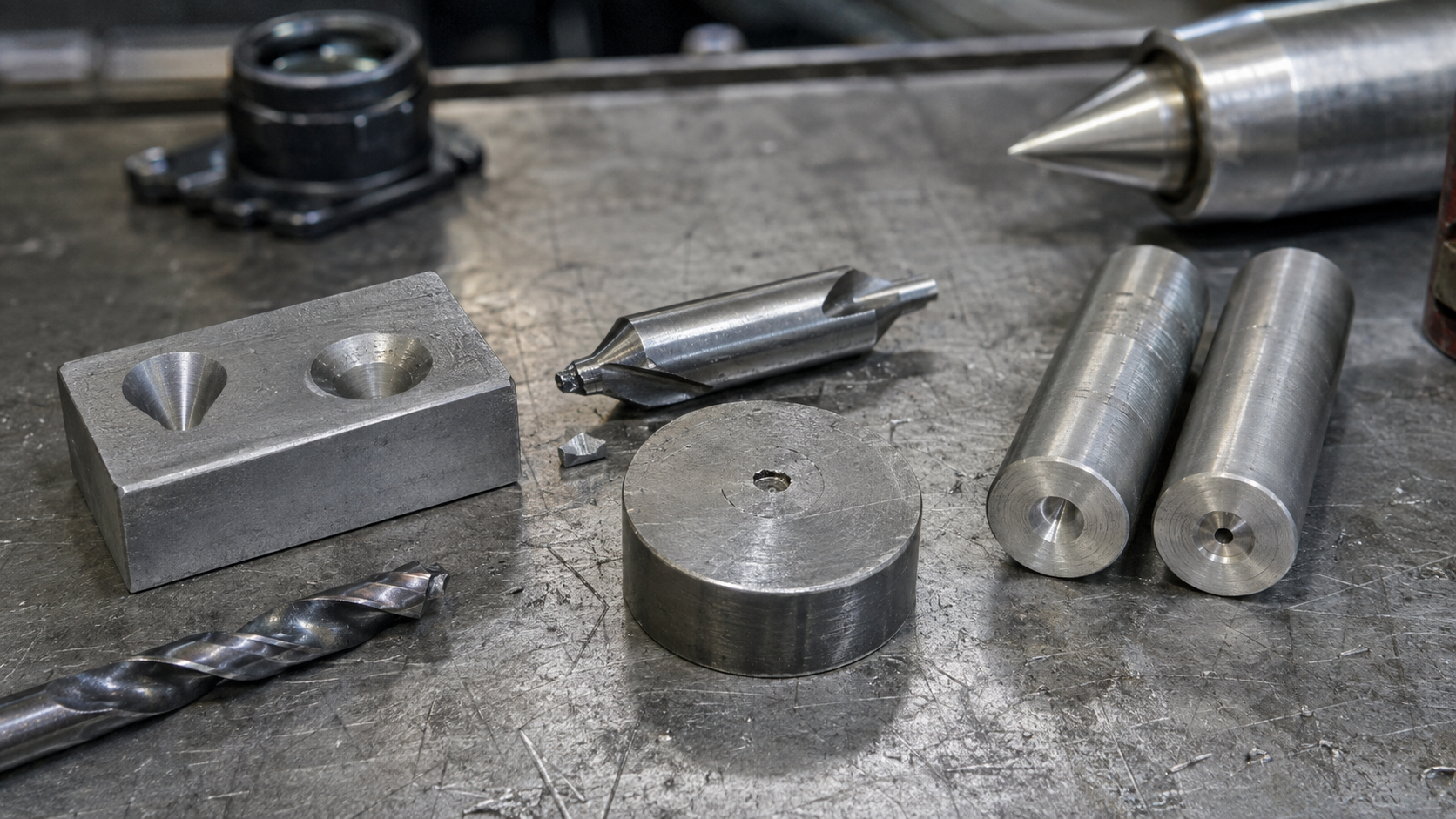
A centre drill is generally used to make a centre hole in the end of the shaft or round workpiece. The pilot features a small tip, and then a bigger 60° cutting portion. When complete the hole offers a solid seat for a lathe centre, so that a lengthy piece of work can be supported by the tailstock or machined between centres.
Centre drills are often made according to specifications like DIN 333. Form A has normal centre hole, Form B has protective countersink around 60° seat and Form R has rounded centre seat for improved load distribution in applications.
II. Spotting Drill vs. Center Drill: Key Differences
1. Primary Purpose
The spotting drill provides an exact starting point for a subsequent drilling operation. Its shallow cone guides the main drill into the correct position and helps you avoid drill walking, irregular hole placements and damage to the drill edges. Use when the last feature is going to be finished by another drill.
A finished centre seat for turning will be obtained by a centre drill. The section and pilot of a lathe centre provide the support geometry needed. Use it when you need to hold a shaft or lengthy piece in the tailstock or machine it between centres.
2. Tool Structure and Geometry
A spotting drill is generally short, with a thick core and a pointed end without a little pilot. This small structure is quite rigid, allowing the tool to make a shallow precise cone without much bending. This is not meant to keep boring a deep cylindrical hole.
A centre drill is a single instrument with two diameters. First the thin pilot is seated, then the larger cutting part is used to make the 60° centre seat. This geometry gives the necessary form for lathe support, but the small pilot is more prone to misalignment, excessive feed and uneven workpiece surfaces.
3. Point Angle
The drill angles should be selected according to the drill or operation to follow. If the spotting angle is equal to or slightly bigger than the main drill angle, the main drill begins cutting close to its centre and progressively comes into play towards the outer corners. A 120° spotting drill is a good match for a 118° twist drill, and a 140° spotting drill is good before a 135° split-point drill.
A conventional centre drill will usually make a 60° centre seat since most lathe centres have the same included angle. Special centre drills are available at 75° or 90° for some center-hole designs, but should not be substituted for a regular 60° tool unless the drawing or support system needs that angle. Select the spotting drill angle for the following drill and the centre drill angle for the lathe centre.
4. Hole Shape Produced
A spotting drill creates a shallow conical recess. The recess just needs to be large enough to guide the main drill, not a deep pilot section or the whole geometry of the final hole. Too deep of a spot increases cycle time and may cause the outer corners of the next drill to make first contact.
A centre drill creates a small cylindrical pilot and then a larger centre seat. This integrated structure stays on the workpiece and supports the centre point during turning. A spotting recess does not have the pilot and controlled center-seat geometry and hence cannot provide the same support.
5. Tool Strength and Breakage Risk
One good thing about a spotting drill is that the body remains thick at the cutting end. The small length also lowers deflection, making it appropriate for repeated CNC positioning operations. The tool is used simply to create a shallow location, making breakage less likely.
The centre drill is a short and rigid drill overall, but the narrow pilot is its weak point. It can break if the face of the workpiece is rough, the feed is too high or the pilot is driven too far into the material if the spindle and workpiece are not aligned. The small pilot of the centre drill creates an unwanted risk when only a further hole has to be found. A spotting drill circumvents this.
6. Tool Materials, Coatings, and Workpiece Compatibility
Spot drills are easily available in HSS, cobalt HSS and solid carbide. HSS is good for regular workshop work and low volume drilling. Cobalt gives improved heat resistance to stainless steel and harder alloys. For steady CNC production, solid carbide spotting drills give more stiffness and longer edge life. For aluminium a sharp, uncoated or polished tool is best to prevent chips from sticking to the tool. For steel and stainless steel a wear-resistant coating such as TiN, TiAlN, AlTiN or similar can extend the tool life.
Centre drills are also available in HSS, cobalt and carbide. HSS provides good toughness for common lathes and normal steel . Cobalt is a good choice for stainless steel . Carbide is good for rigid CNC lathes and harder materials . Carbide centre drills still need a short runout and a flat, properly faced workpiece, as carbide cannot compensate for bad alignment.
7. Machine Type and Tool Path
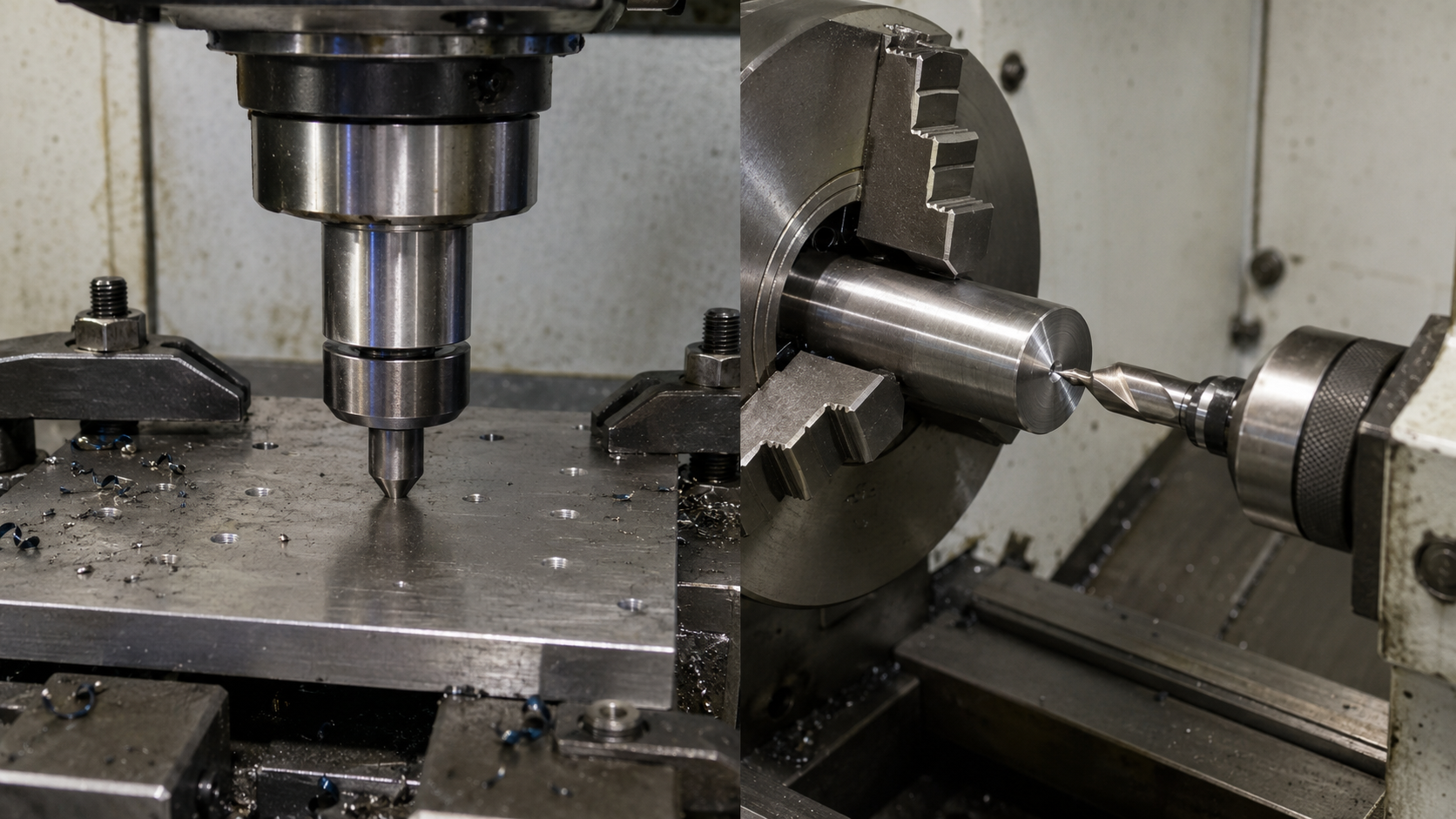
This is a common spotting drill used on milling machines and CNC machining centres. It moves a short distance along the Z axis and cuts a shallow beginning cone and retracts before the main drill enters its cycle. A spotting tool can put in multiple hole locations before the machine goes to the final drill.
Centre drills are usually used on a lathe. The workpiece is turned. The centre drill is fed along the spindle axis into the facing end of the workpiece. It is used to keep the centre hole in alignment with the axis of turning so that the workpiece can have stable tailstock support.
8. Relationship with the Following Tool
A spotting drill is used to prepare the material for another drill and needs the correct point angle and depth for the next operation. If the spotting angle is less than the main drill angle and the spot is too deep, the exterior parts of the main cutting edges may make contact first. This will generate an unstable entrance and may cause the drill corners to chip.
The centre drill creates a feature that could remain in the completed part during the entire time of turning. The size of the centre drill must initially give the proper seat of support, although a twist drill can follow later through the pilot hole. Don’t use a big centre drill just to make the subsequent twist drill easier to start.
9. Dimensional Accuracy and Machining Results
A spotting drill increases the beginning point for the main drill, especially with lengthy, flexible, or no strong self-centering drill. It does not influence the final hole diameter, straightness or wall finish. Those outcomes are still dependent on the main drill, spindle runout, work holding, feed and any subsequent reaming or boring operation.
When turning, the centre drill determines the location and geometry of the centre seat. If the centre hole is off-center, broken, not deep enough, or the wrong size, the workpiece may not turn accurately between centres. A well-made centre hole ensures a full and even contact with the lathe centre, which helps to hold the shaft axis throughout the next turning operation.
III. Which Tool Should You Use?
1. Best Choice for CNC Hole Positioning
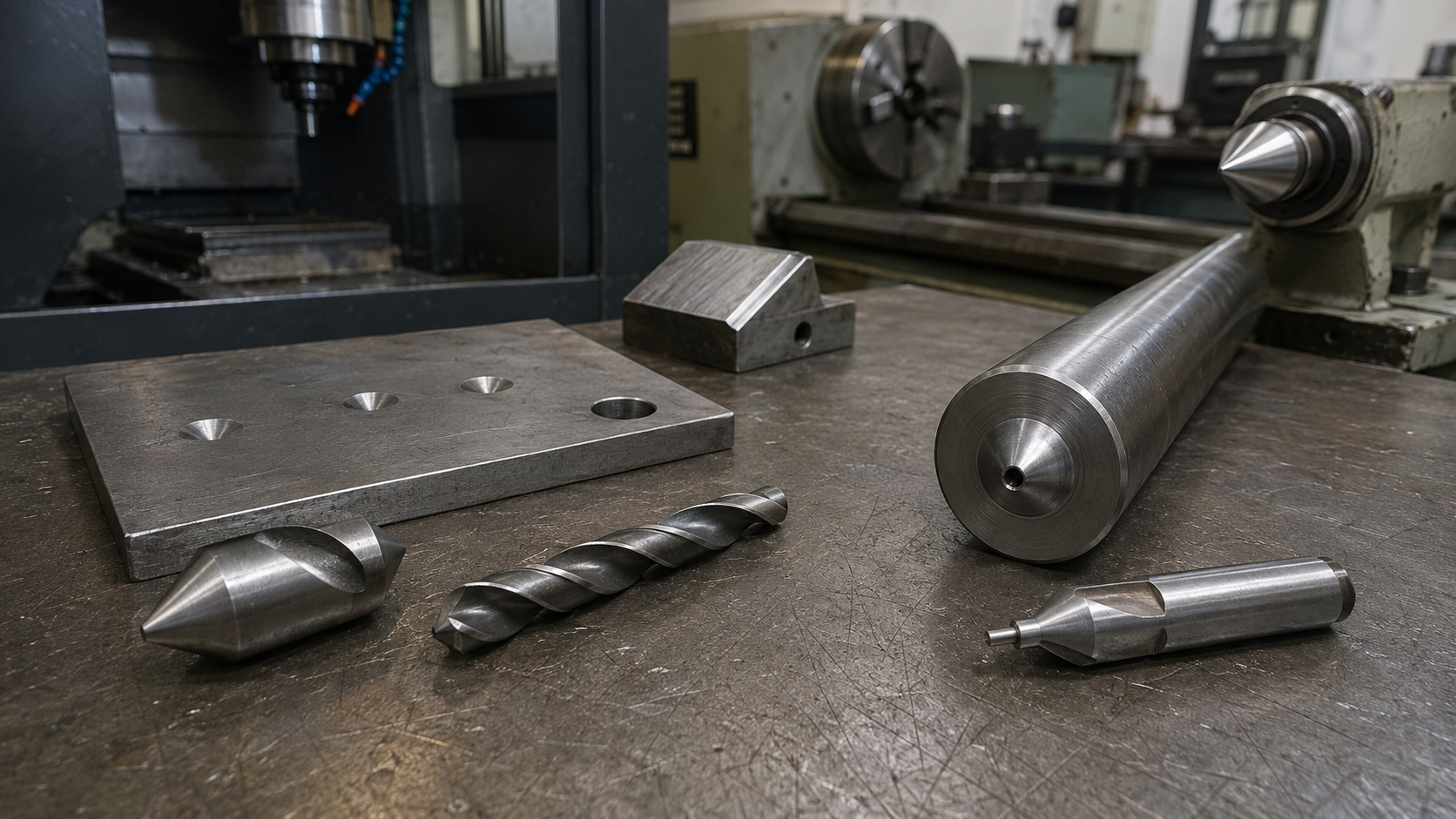
A spotting drill is used to correctly layout holes prior to drilling on a CNC machining centre or milling machine. The short stiff design provides a reproducible starting point without the fragility of a pilot tip of a centre drill. It is especially handy when you are using lengthy drills, tiny diameter drills and typical twist drills that may “walk” during entry.
2. Best Choice for Lathe Center Holes
Use a centre drill when a shaft, bar, or lengthy component is to be supported by a tailstock centre or machined between centres. A typical 60° centre drill will make the proper pilot and support seat for the lathe centre. Use Form A for a plain centre hole, Form B if a protective countersink is required on the support seat and Form R when a rounded seat is specified.
3. Best Choice Before a 118° Twist Drill
A 120° Spotting drill should be used prior to a 118° Twist drill. The somewhat wider spotting angle allows the main drill to start cutting near the centre before the outer corners are fully engaged. This enables a more gentle engagement and decreases the potential for injuring the cutting lips.
4. Best Choice Before a 135° Split-Point Drill
Use a 140° spotting drill when you require an accurate planned starting point for a 135° drill. But a lot of short split point and solid carbide drills are made to start right on a flat. If direct drilling is permitted by the drill manufacturer, skipping the spotting cycle saves machining time and prevents an unnecessary second entry.
5. Best Choice for Spotting and Chamfering
A 90° spotting drill can be used to establish a shallow starting point, and then manufacture a normal 90° hole chamfer. Before drilling, put it on light, do the primary hole, then come back with the same tool and cut the last chamfer. This keeps the locating operation shallow and prevents the 90° cone from getting in the way of the cutting corners of a 118° or 135° drill.
6. Best Choice for Long Shafts Supported Between Centers
Use a 60° centre drill of the suitable size for lengthy shafts requiring tailstock support. The centre seat must be big enough to carry the load without the centre point bottoming out in the pilot hole. Larger or heavier shafts require a larger centre seat, not only a deeper pilot.
7. Best Choice for Angled, Curved, or Rough Surfaces
Never trust a spotting drill or a centre drill to fix a sharply slanted, curved or rough entrance surface. The side of the cutting tip will touch first and this will create a side force that can displace the tool or shatter a center-drill pilot. MILL or SPOTFACE a small flat surface, then do the spotting or centerdrilling operation.
IV. Common Selection and Machining Mistakes
1. Using a 60° Center Drill for Every CNC Hole
The 60° centre drill makes a much narrower cone than a main drill (118° or 135°) If the recess is too deep, the outer cutting edges of the main drill will make first contact and clatter or chip. Use a spotting drill at an angle equal to or slightly greater than the angle of the main drill.
2. Making the Spotting Hole Too Deep
For spotting, you just have to make a good start. Cutting almost to the full drill diameter consumes cycle time and raises the probability of wrong edge contact. Stop when the spot is big enough to direct the centre portion of the next drill.
3. Breaking the Center Drill Pilot
A broken pilot generally implies too much feed, bad alignment, a rough face on the workpiece or too deep a pilot. Face the work, and position the tool on the spindle axis, feeding smoothly until the required centre seat is complete.
4. Choosing the Spotting Angle Without Checking the Main Drill
“Doing the same spotting drill before every twist drill can lead to inconsistent results. Use 120° spotting drill with 118° main drill, 140° spotting drill with 135° main drill. This means that the first contact of the primary drill is closer to the centre.
5. Spotting Before Every Solid-Carbide Drill
Some short solid carbide drills have self-centering geometries so that they may start directly into a flat surface. Adding a bad spotting operation can damage the corners of the drill rather than improve accuracy. Follow the drill series recommendation and do not use the spotting cycle when direct drilling is specified.
6. Using a Spotting Drill for a Lathe Center Hole
A spotting drill does not make the tiny pilot and 60-degree support seat required by a normal lathe centre. The workpiece may be limited in contact and unstable in support. Centre drills must be of the correct form and size for the type of centre point that will hold the part.
V. Conclusion
Use a spotting drill to locate a hole to be drilled later and reduce drill walk in a CNC machine or milling setup. When you require a 60° centre seat for tailstock support or turning between centres, use a centre drill. Set the spotting angle to match the main drill, the shape of the centre hole to the turning arrangement. Choose HSS, cobalt or carbide depending on the workpiece and machine rigidity. If you require help matching the angle, pilot diameter, center-hole form or tool material to your machining process, please contact us.
VI. FAQs About Spotting Drills and Center Drills
1. Should the spotting drill angle be larger than the twist drill angle?
Yes, the spotting angle should typically be equal to or a bit larger than the angle of the main drill. This means the primary drill can begin close to the middle rather than filling the outside corners first.
2. What spotting drill angle should you use before a 118° drill bit?
Spot using a 120° spotting drill, then drill with a normal 118° twist drill. The 2° difference allows for a regulated centre initial entry without creating an unduly wide cone.
3. What spotting drill angle works best before a 135° split-point drill?
A 140° spotting drill is the practical equivalent of a 135° split-point drill. If your drill is a short, self-centering carbide type for direct entry, you can skip the spotting cycle.
4. How deep should a spotting hole be?
The spot need only be wide enough to guide the centre of the main drill, and should usually be smaller than the finished hole diameter. To create a 3 mm spot diameter, an axial depth of about 0.87 mm is required with a 120° spotting drill, assuming no tiny tip flat.
5. Can a 90° spotting drill be used before a 118° drill?
It can make a shallow starting mark but the 118 deg drill may touch the outer cutting edges of the 90 deg spot first. Main necessity for accurate and repeatable positioning is to use a 120° spotting drill.
6. Can the same spotting drill make the final hole chamfer?
Yes a 90° spotting drill can find the hole and then cut a conventional 90° chamfer. Before drilling, make a shallow spot drill then return when the hole is complete to machine the final diameter of the chamfer.
7. Do solid-carbide drills always need a spotting operation?
No, many short solid-carbide drills are intended for entering a flat surface without a pilot or spotting hole. Use spotting only where recommended by the drill manufacturer or where the entry surface and hole position necessity dictates.
8. Can a center drill be used as a spotting drill on a CNC machine?
It can be utilised for light, low volume work, but it isn’t the ideal choice for repeated CNC positioning. Using a 120° or 140° spotting drill of the same size as the main drill gives a stronger point and better entrance geometry.
9. Why does the small tip of a center drill keep breaking?
The pilot often fails because of overfeeding, spindle runout, workpiece runout, uneven face, or over-drilling. Square up and centre the workpiece accurately, then reduce the point load instead of instantly moving to a larger centre drill.
10. What is the difference between DIN 333 Form A, Form B, and Form R?
Form A generates a typical centre hole with a 60° straight support seat. Form B has a protective countersink around the seat, whereas Form R has a rounded centre form for better contact and load distribution in suitable turning applications.
11. What center drill angle is used with a standard lathe center?
The included angle of a conventional lathe centre is usually 60°. Use a 60° centre drill, unless the drawing, centre point, or machining standard specifies an alternative center-seat angle.
12. How do you select the correct center drill size for a shaft?
Choose a centre drill that will provide a support seat adequate for the shaft diameter and turning load without the centre point bottoming out in the pilot. For more support loads and heavier shafts, use a larger size for the center-hole size instead of just drilling the smallest one deeper.
13. Can a spotting drill make a center hole for turning between centers?
No, a spotting drill just makes a locating cone and does not form the necessary pilot and controlled 60° support seat. When the work is to be supported by a lathe centre, use a conventional centre drill.
14. Which tool is better for starting a hole on an angled surface?
Neither tool should be allowed to approach a strongly inclined surface unprepared. Mill a little flat initially then use a spotting drill for a later hole or a centre drill when you need a true centre seat.
15. Can you use a center drill before drilling stainless steel?
Yes, however usually a cobalt or carbide spotting drill with proper angle works better for accurate CNC positioning in stainless. If you require a true lathe centre hole, use a centre drill, not just because the material is stainless steel.
16. Does a split-point drill still need a spotting drill?
The short split-point drill has a shortened chisel edge that increases its self-centering ability and may often be started directly on a level surface. Use a spotting drill when hole location is closely controlled, drill is long or entry surface is such that starting directly would be unsteady.
17. Why does a twist drill chatter after spotting?
The spot may be off-center, overly deep or done with an angle that is less than the primary drill angle. Use a shallower place with corresponding angle so that the outside cutting edges of the drill engage first under these conditions.
18. Should the spotting diameter be smaller than the final hole diameter?
Yes, generally the spotting diameter would be smaller than the final drilled hole. The spot just needs to guide the drill point. You don’t want to cut the complete hole diameter with the spot, that’ll take time and could harm the outer corners of the main drill.
19. Can a spotting drill be used for countersinking?
If the included angle of the spotting drill is equal to the required screw or chamfer angle then it can be used to make a countersink. A 90° spotting drill is adequate for typical 90° chamfers, but should not be used for an 82° or 100° fastener seat unless the angles are the same.
20. Which is more rigid: a spotting drill or a center drill?
A spotting drill normally has the stronger cutting point since it does not have the narrow pilot section of a centre drill. A centre drill is short in overall length, but its small pilot is more prone to side loading and misalignment.