I. Introduction
When choosing between cobalt and carbide drill bits, it’s not just about which material is harder. A poor decision can result in quick wear, broken cutting edges, holes that are too large or tooling expenses that are too high. This guide evaluates their structure, cutting capability, machine requirements, workpiece compatibility and cost per hole so you can select the right drill for your particular production situations.
II. What Are Cobalt and Carbide Drill Bits?
1. What Is a Cobalt Drill Bit?
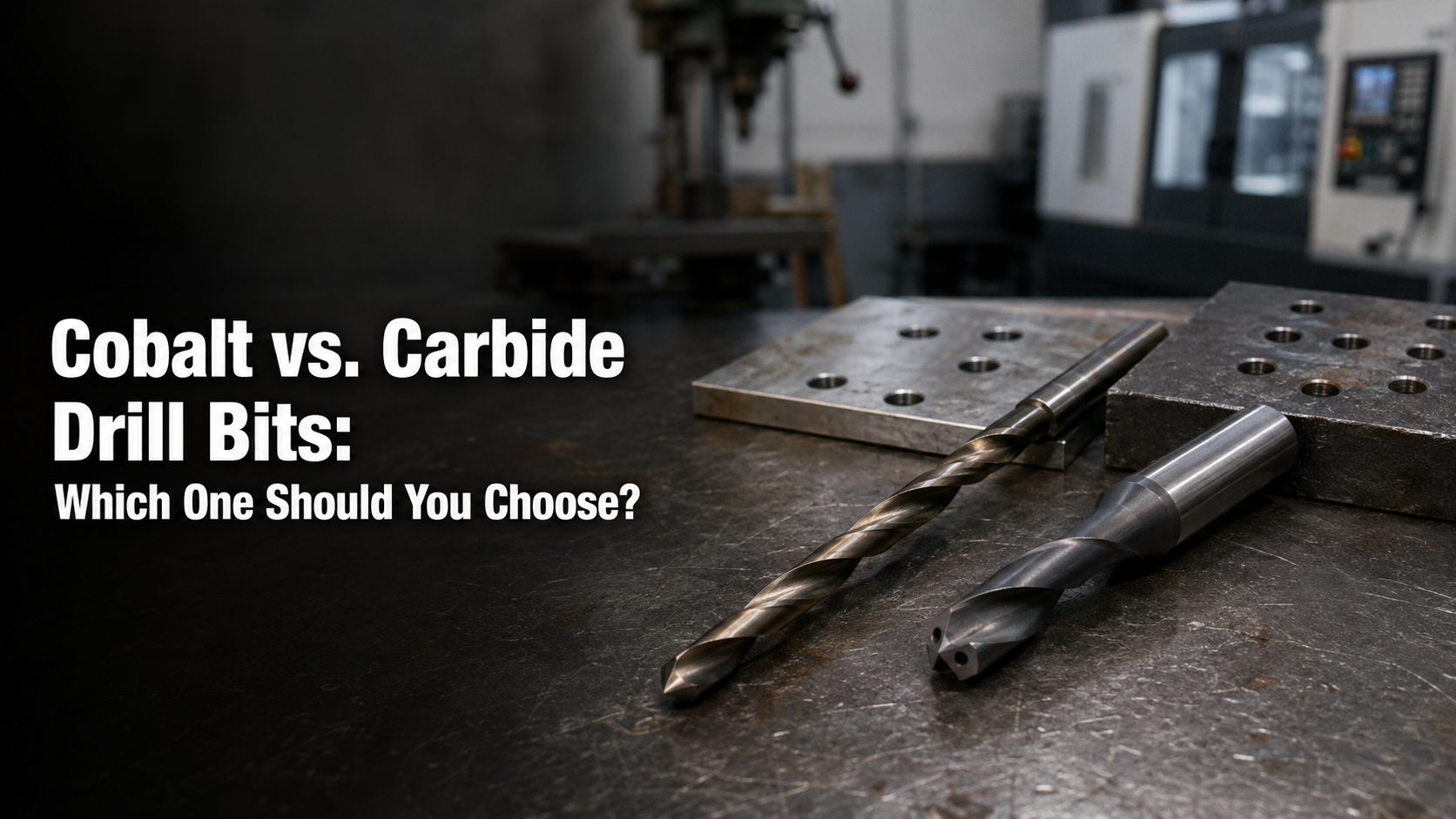
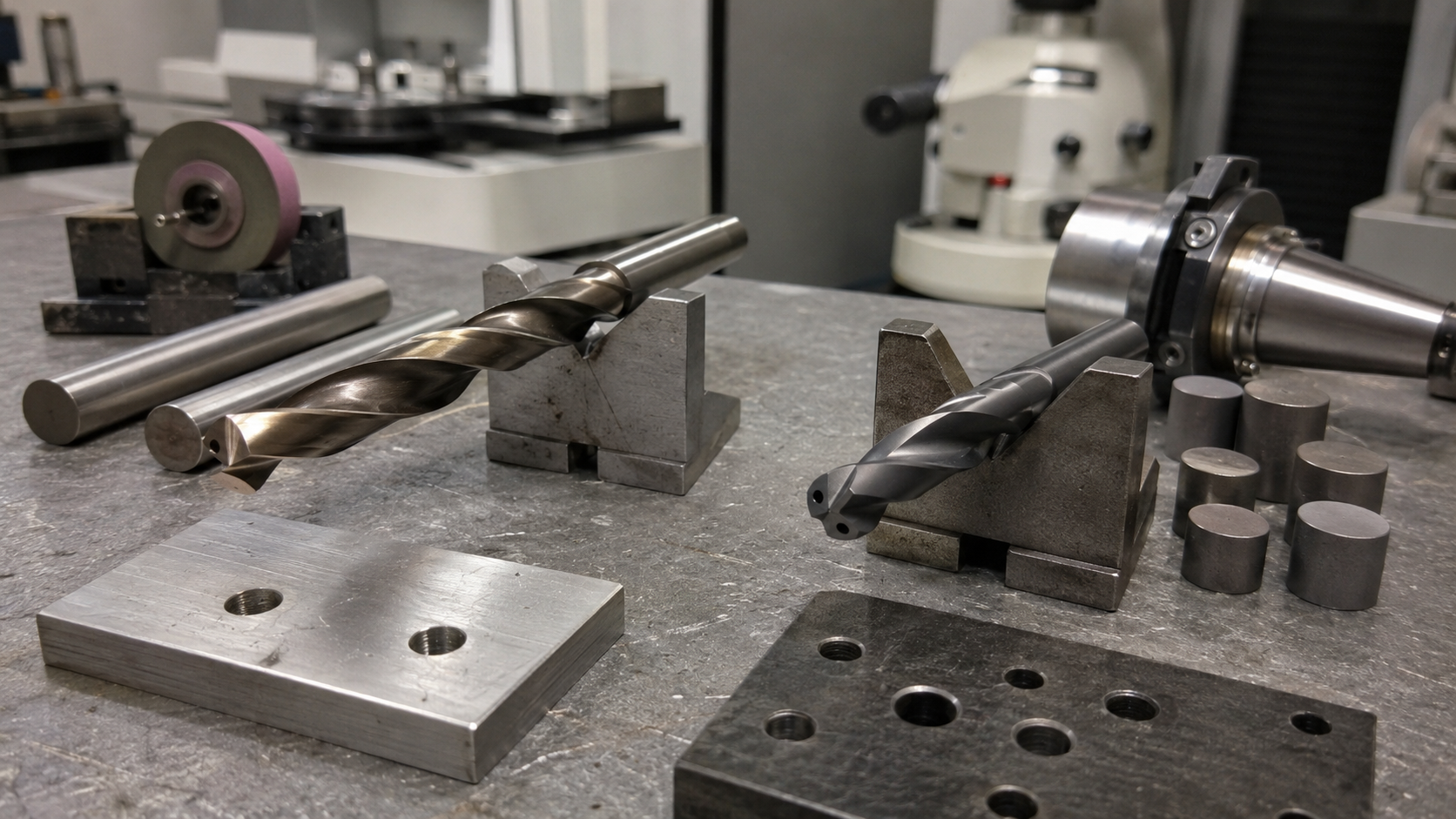
It is not created from cobalt itself, but from high speed steel which has had cobalt added to it. The two most prevalent grades are M35 which includes roughly 5% cobalt, and M42 which contains approximately 8%. Cobalt is added to hold the edge when the heat of drilling is developed, hence these drills are better for stainless steel, alloy steel and other tough metals than regular HSS drills.
Why You Might Choose Cobalt Drill Bits
If you need a robust drill that also resists heat, cobalt is a good choice. It can withstand more vibration, intermittent contact and minor setups errors than carbide, making it practical for hand drills, drill presses, lathes, lower stiffness machines and small to medium production runs. Cobalt drills are also cheaper to purchase upfront and can often be resharpened multiple times.
2. What Is a Carbide Drill Bit?
A carbide drill bit usually consists of tungsten carbide particles bonded together by a metallic binder, usually cobalt. For the most stiffness and accuracy , solid carbide drills are available . Brazed and indexable types are also available for larger holes or other production needs . Carbide is far more wear resistant and harder than cobalt HSS hence enables machining of harder materials at much greater cutting rates.
Why You Might Choose Carbide Drill Bits
Carbide can be considered if you have a rigid CNC machine and need to produce faster, have more consistent holes, or want longer periods between tool changes. It is notably effective on hardened steel, cast iron, abrasive alloys and in high volume drilling. Carbide, however, is less forgiving than cobalt so its benefits depend on steady workholding, low spindle runout, accurate feeds and consistent coolant delivery.
III. Cobalt vs. Carbide Drill Bits: Key Differences
1. Toughness and Breakage Risk
Cobalt Drill Bits are not as hard as carbide, but they are less likely to snap and can flex a little under stress. This makes them safer if your spindle is a bit off, workpieces are hard to grasp, or the drill hits an interrupted surface. A cobalt drill will normally wear down slowly or bend before it breaks quickly, so you have greater warning that something has to be fixed when conditions are bad.
Carbide drill bits are characterised by their extremely high compressive strength and somewhat poor resistance to bending and impact. They can retain their shape under severe axial cutting loads but will chip the cutting corners or shatter the drill under sideways pressure, vibration or repeated contact. If you have an unsteady setup, a carbide drill can fail before its wear resistance has a chance to really kick in.
2. Cutting Speed and Heat Resistance
Cobalt Drill Bits: Cobalt allows an HSS drill to keep its cutting hardness at greater temperatures, so it can run faster and last longer than a regular HSS drill when drilling tough metals. But it still needs modest cutting speeds. Run it at carbide parameters and you will quickly dull the drill and blue the cutting edges. You will also work-harden materials such as stainless steel.
Carbide drill bits may be run at two to four times the speed of a cobalt drill under stable CNC circumstances because it stays hard at much higher cutting temperatures. This can save cycle time considerably in big volume production. Any advantage is lost if the machine cannot deliver sufficient speed, stiffness, feed stability or coolant to maintain the drill cutting properly.
3. Hole Accuracy and Surface Finish
Cobalt Drill Bits: The hardness of cobalt allows the drill to deflect more under cutting pressure. A long drill, big overhang, uneven cutting edge or heavy feed can shift the hole out of position or provide a slightly larger entrance. Cobalt is good for regular production holes and holes that will be finished by a reamer or boring tool later.
Carbide Drill Bits: Carbide is very hard which minimises bending and helps the drill stay in the programd position. On a well-maintained CNC machine it can give superior hole diameter, straightness, roundness and wall finish than a comparable cobalt drill. Carbide is more conducive to repeated close-tolerance holes without additional finishing procedures.
4. Tool Life and Failure Patterns
Cobalt Drill Bits generally exhibit gradual flank wear, rounded cutting corners, increased thrust, and discolouration prior to losing their cutting ability. These symptoms are rather easy to notice, so you can change or regrind the drill before it destroys the workpiece. A good cobalt drill may be re-sharpened several times if the flutes and body are in good shape .
Carbide Drill Bits can provide substantially longer wear life when the cutting conditions remain consistent, but its failures can be more rapid. Excessive runout might result in micro chipping beginning at one corner and rapidly advancing to edge chipping or full fracture. Therefore, instead of waiting for clear visual wear, the tool life should be assessed in terms of the hole number, the spindle load, the hole size and the surface quality.
5. Machine and Setup Requirements
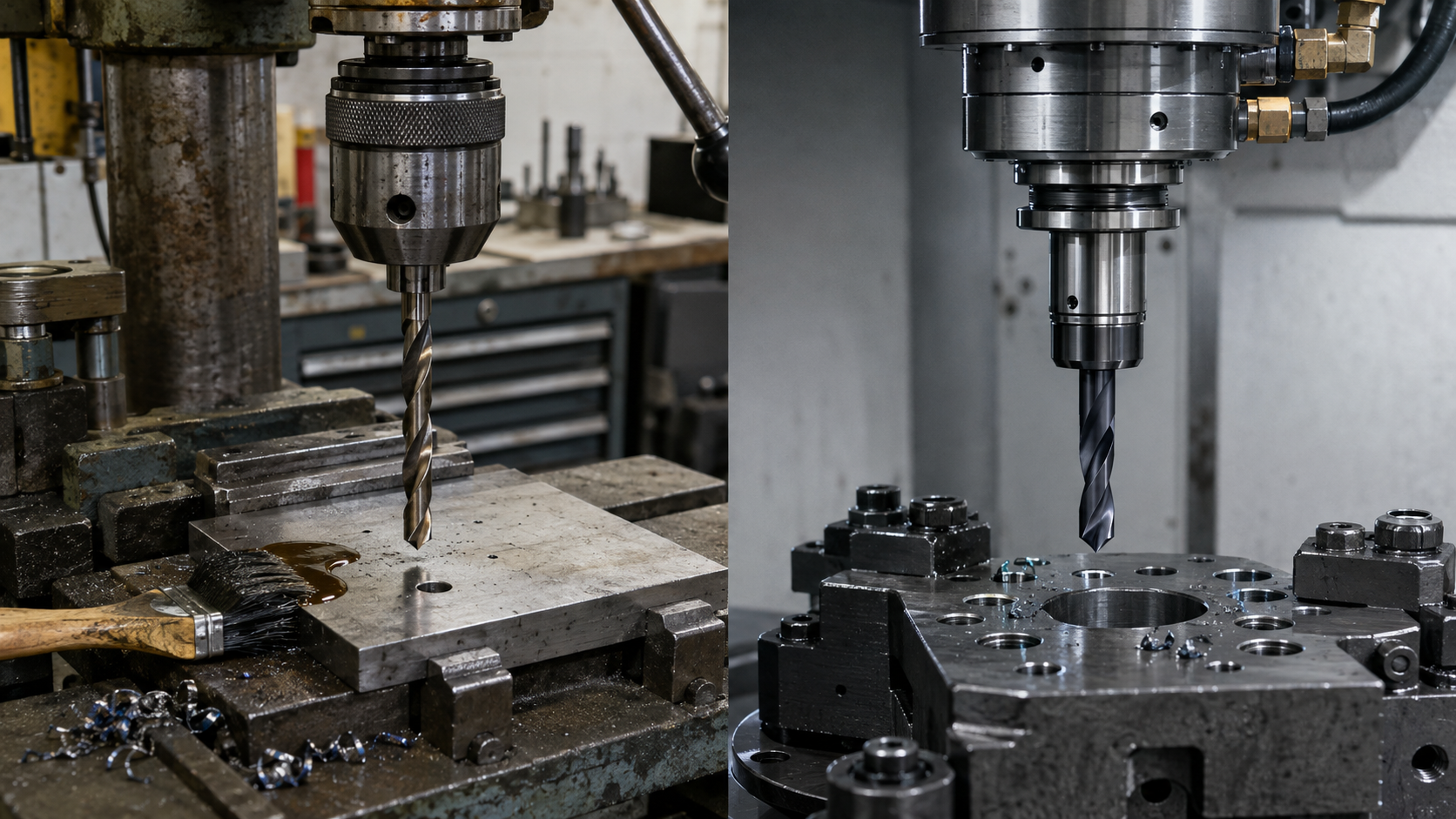
Cobalt drill bits are suitable for use in hand drills, drill presses, manual lathes, CNC machines and other applications where the feed or alignment may not be consistent. They’re a good solution if you change jobs a lot or can’t always guaranty a really tight setup. Drill shortening and strong holding of work piece will help in improving the quality of holes and tool life.
Carbide Drill Bits are ideally suited for sturdy CNC machines having accurate spindles, good holders and workholding. A reasonable aim for total indicated runout is something in the neighbourhood of 0.01 mm or less for normal solid carbide drills and closer to 0.005 mm for very small drills. Also prevent excessive overhang since this will increase vibration and bending load.
6. Coolant and Chip Evacuation
Cobalt Drill Bits require lubrication and frequent chip removal when cutting stainless steel, titanium and other materials that create heat or produce lengthy chips. A controlled pecking cycle can clean the flutes and prevent chips being re-cut for larger holes. Keep the drill cutting on the feed, otherwise, if allowed to rub, it will harden the surface of the work.
Carbide Drills Bits can be run with external coolant on shallow holes, although through-tool coolant is better for greater speeds and deeper holes. It cools the cutting edge and forces the chips out via the flutes before they get packed inside the hole. At a depth of about 5×D, the ability to clear chips and deliver coolant is often as critical as the grade of carbide being used.
7. Drill Point Geometry
Cobalt Drill Bits: A 118° point is good for general drilling in softer steels and other common materials, while a 135° split point decreases walking and works better in stainless steel and stronger alloys. The split point also minimises the thrust needed to start the hole. On manual machines, choosing the proper point geometry can be more important than merely selecting a greater cobalt concentration.
Solid carbide drill bits provide 135°-140° self-centering points, optimised margins and edge preparation for the material. These qualities enable several short carbide drills to enter a clean, flat surface without a separate spotting process. The material must fit the geometry . A sharp edge for aluminium may chip on hardened steel , while an overly honed edge may push material rather than cut it .
8. Coating Options
Cobalt Drill Bits: TiN is a good coating for ordinary steel drilling, whereas TiCN is better for more abrasive applications that require greater wear resistance. TiAlN and AlTiN are better heat resistant for alloy and stainless steel. However, coated cobalt drills lose part of the coating benefit after resharpening unless the tool is recoated. With aluminium, polished or uncoated drills are often preferred, since they help to minimise material adherence.
Carbide Drill Bits: Common coatings applied to steel, hardened steel and high temperature alloys include AlTiN, TiAlN and AlCrN. Polished, uncoated flutes, ZrN, DLC or some other low friction surface is good for aluminium, copper and other non-ferrous metals. Even if you use the correct carbide grade, the improper coating can cause built-up edge or extra heat.
9. Purchase Price and Cost per Hole
Cobalt drill bits have a lower purchasing price and if wear is confined to this point they can typically be re-sharpened three to five times. They are cost-effective for small production runs, repair jobs, changing hole sizes and equipment where carbide breakage would be hard to manage. And with volume constrained, slower cutting speed doesn’t matter so mu
Carbide drill bits cost more, but the higher speed, longer wear life, and more uniform hole quality can lower the cost per finished hole. They are especially helpful when shorter cycles reduce machine hours, or when fewer tool changes prevent production stoppages. The saving has to be assessed in acceptable holes per tool and not in the price of one drill.
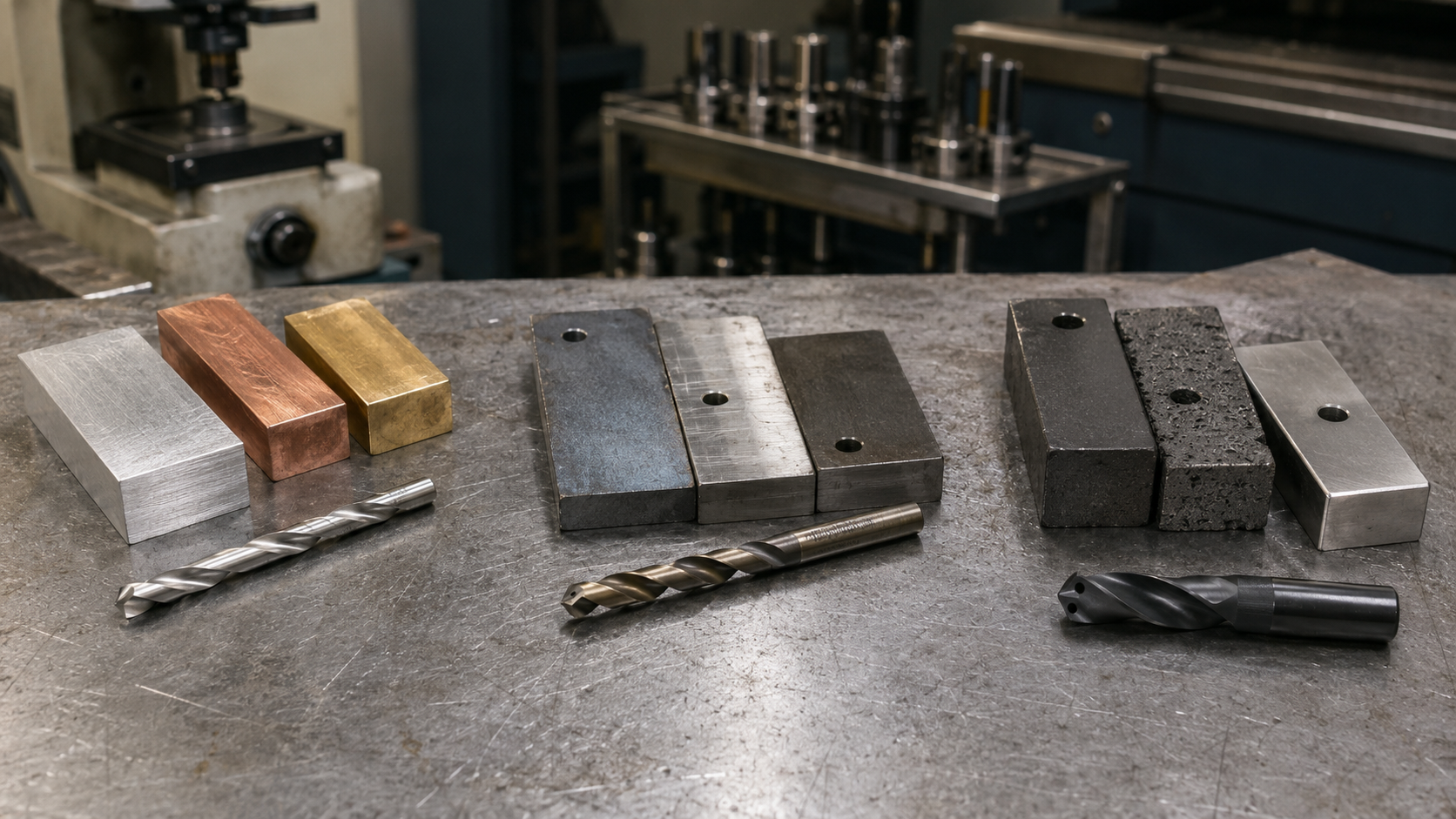
IV. Choosing the Right Drill Bit for Your Material
1. Aluminum, Copper, and Brass
Soft non-ferrous metals can be drilled with either cobalt or carbide. The cutting edge must be sharp and the flutes must release chips easily. Cobalt is inexpensive for low volume jobs. Polished carbide is preferred for high speed CNC manufacturing, high silicon aluminium, or holes requiring more uniformity . Avoid general purpose high friction coatings which cause soft material to adhere to the cutting edge.
2. Mild Steel and General Alloy Steel
Cobalt drills give consistent performance in mild steel and common alloy steel for use with drill presses, manual machines or small production batch. Carbide is the preferable choice if making the same holes over and again on a stiff CNC machine. For long production runs, a lower cost per hole can be achieved with higher cutting speed and lower drill deflection.
3. Stainless Steel and Titanium Alloys
Cobalt drills M35 and M42 are good practical alternatives for stainless steel, as they combine heat resistance with sufficient toughness to cope with problematic chip formation. When the operation generates more heat or the material is harder, M42 is better, but carbide is the choice for consistent high-volume CNC manufacturing. Need positive feed and a good coolant. Edges need to be crisp. Rubbing can workharden the workpiece quickly.
Cobalt can be used to drill titanium alloys in lower volume or less rigid settings but generally solid carbide is more productive on a stable CNC machine. The tool must be kept in contact with a controlled feed and the cutting edge must be constantly supplied with coolant. Speed too great creates heat, feed too little produces friction and quick wear.
4. Hardened Steel
Below about 35 HRC the cobalt can give an economical performance at a moderate cutting speed. This is in the range of roughly 35 to 45 HRC . Depending on the machine and the quantity to be produced , M42 cobalt or carbide will be suitable . If the hardness is over about 45 HRC, a coated solid carbide drill is usually the better choice, assuming the setup is stiff enough to avoid chipping.
5. Cast Iron and Abrasive Materials
Cast iron is not usually very hard. However, it is often very abrasive because of its graphite, its sand inclusions and its hard areas. Carbide usually gives longer wear life and improved hole uniformity in continuous cast-iron production. Cobalt can still be used for occasional drilling, repairs or machinery where vibration increases the likelihood of carbide breaking.
6. Nickel-Based Alloys and Superalloys
Nickel alloys are tough on standard HSS drills because they create high cutting temperatures and can work-harden rapidly. M42 cobalt is suitable for low volume jobs at a slower speed with good coolant flow, whereas application specific carbide is better suitable for steady production. Even a general purpose carbide drill can fail fast if the alloy is not matched to the drill edge preparation, coating, or coolant design.
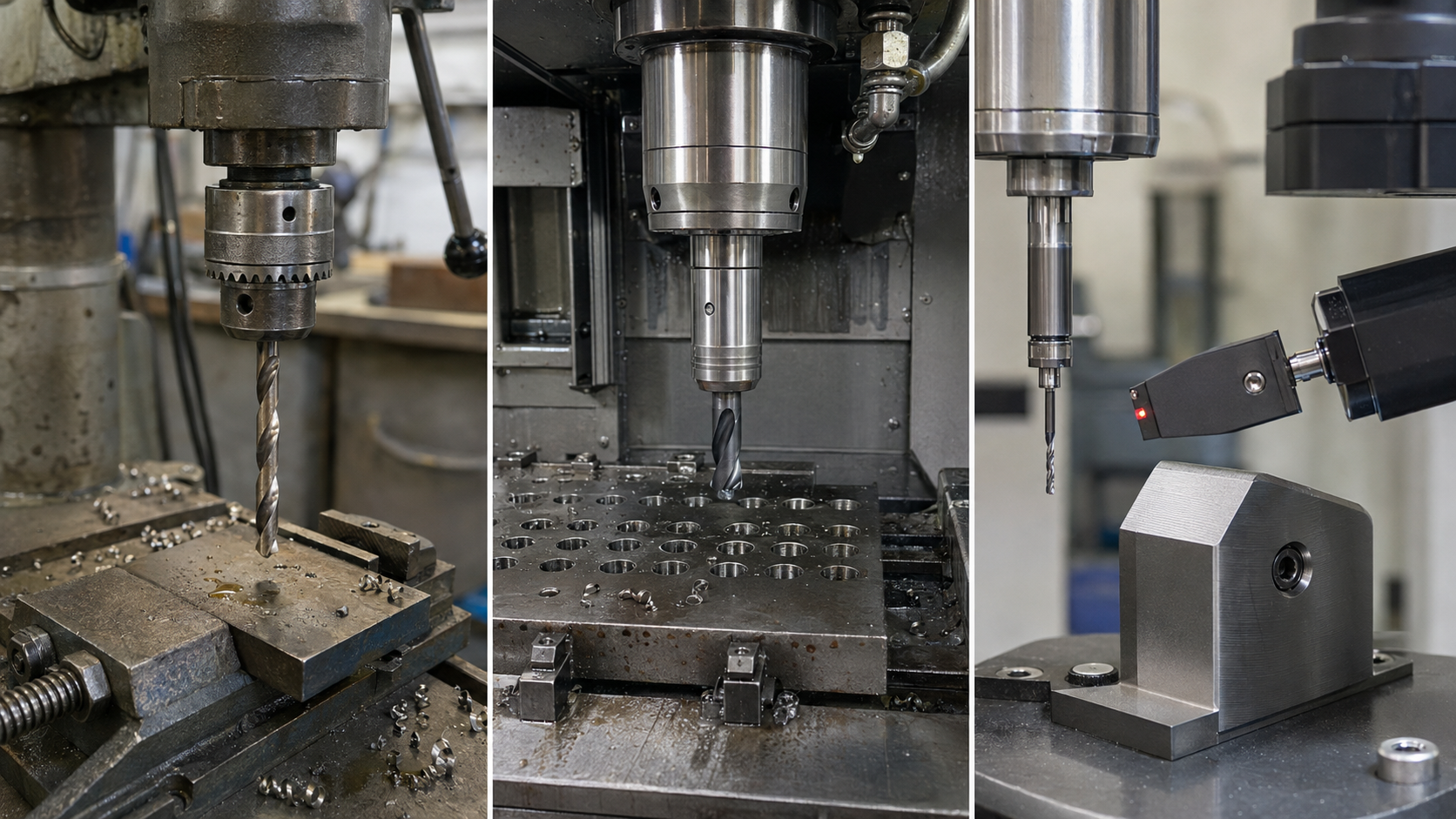
V. Choosing by Machine and Production Conditions
1. Manual Drills and Standard Drill Presses
Cobalt is more tolerant of minor variations in angle and feed than carbide, thus use it for hand drills and most regular drill presses. The 135° split point helps to minimise wandering on metal surfaces, but the workpiece still needs to be held securely in place. Solid carbide is generally a bad investment in a hand-held tool since it can be broken by the smallest sideways movement.
2. CNC Machining and High-Volume Production
Choose carbide when your CNC machine, spindle, holder, coolant and workholding let you maintain steady cutting conditions. The improved speed and stiffness enables you to make more holes with better dimensional consistency. Cobalt is still useful for short runs, odd set-ups and applications where the machine cannot hold the conditions required by carbide.
3. Interrupted or Angled Hole Entry
Cobalt is better for mild interrupted entry because its hardness allows it to absorb fluctuating loads. However, if possible, a steeply inclined or curved surface should be machined flat before drilling. Carbide can only drill interrupted or angled features if the drill geometry is suitable for the operation and the machine is stiff enough to avoid edge impact.
4. Deep-Hole Drilling
When the hole is deeper than around 3×D, chip evacuation becomes more important. Through-coolant carbide drills can pull chips out more effectively and can be run faster. Cobalt drills generally require a good peck cycle. At depths of 5×D or more, utilise a specialised drill for deep holes, and not just increase the cycle of a general purpose drill.
5. Small-Diameter and Tight-Tolerance Holes
A tiny solid carbide drill has extremely good stiffness and dimensional control, but must have very low runout, and a stable entrance surface. For drills smaller than 3 mm, aim for a runout of 0.005 mm or better when you can. If you are using a manual machine or shaky holder, a cobalt drill may last longer but the hole precision is worse.
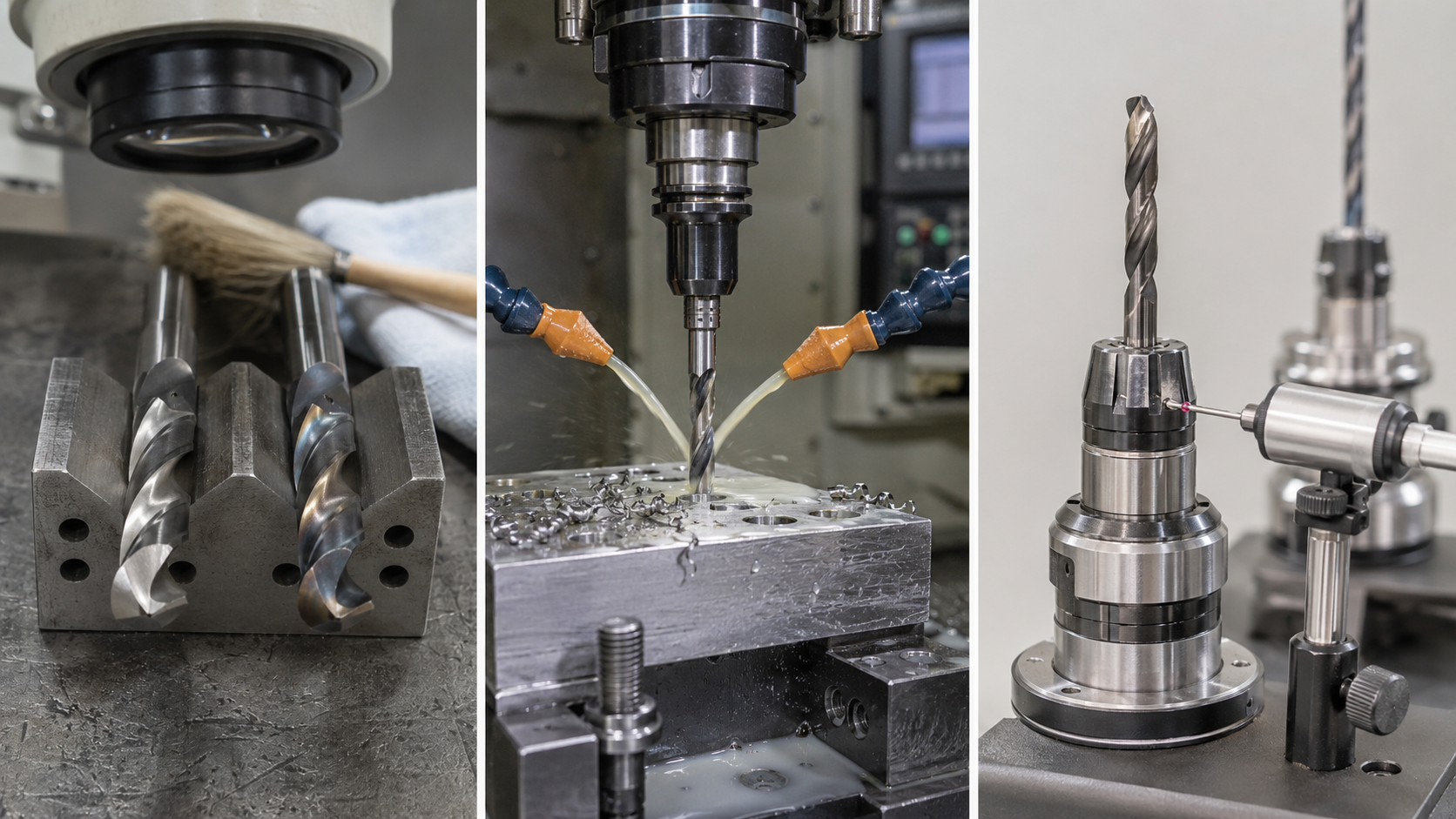
VI. Drill Bit Tips for Better Performance
1. Start With a Sharp Drill Bit
A dull drill requires more push to work, generating more heat and is more likely to produce an enormous or rough hole. Before a major production run check both cutting edges, the outer corners and the tip. If one cutting edge is longer than the other, the drill can cut oversize even if the machine is precisely aligned.
2. Match Speed and Feed to the Tool Material
Never run Cobalt at Carbide Cutting Speeds Never run Carbide with such low feed that it simply rubs the workpiece. The drill must make a regulated chip, not polish the bottom of the hole. Start with the manufacturer’s specifications for the material and diameter then fine tune from spindle load, chip shape, noise and hole condition.
3. Use the Correct Cutting Fluid
Stainless steel, titanium and nickel alloys generally require dependable lubrication and cooling to manage heat and prevent the material from sticking to the edge. Aluminium requires a lubricant that lowers built-up edge, although some cast-iron operations can be done dry with the proper carbide equipment. You want the coolant to reach the cutting zone, not just swamp the top of a deep hole.
4. Keep the Feed Steady and Clear Chips
Uneven hand feed may cause the drill to rub, grip or break, when it reenters the cut. In deep holes, clear chips before they pack tightly inside the flutes. But do not use more pecking movements than the job demands. Excessive pecking increases cycle time and repeatedly strikes the carbide cutting edges on the bottom of the hole.
5. Control Runout and Tool Overhang
Keep the drill as short as possible for the work and keep the shank, holder and spindle taper clean. Runout causes one cutting edge to do more work resulting in a larger hole, uneven wear and early chipping. This check is particularly crucial when a carbide drill is failing regularly on only one cutting corner.
VII. Conclusion
If you want toughness and flexibility, a cheaper initial cost, or improved reliability on manual and lower-rigidity machines, choose a cobalt drill bit. Go with carbide drill bits if you have a stable CNC system and need greater speeds, tighter control over the holes, longer production runs or better wear resistance in harsh and abrasive materials. If you need help in selecting the proper drill, tell us what you are drilling including workpiece material, hardness, hole diameter, hole depth, tolerance, machine type, coolant technique and monthly amount and we will recommend the right drill material, geometry, grade and coating.
VIII. FAQ
1. Is M35 or M42 Cobalt Better for Drilling Stainless Steel?
M35 has around 5% cobalt and is good for regular stainless steel drilling. M42 has about 8% and is better for hot hardness for more demanding applications. If you need longer runs or steeper grades, pick M42 but if you need more toughness and a lesser cost, go with M35.
2. At What Hardness Should You Switch From Cobalt to Carbide Drill Bits?
For many steels, cobalt is still viable below around 35 HRC. Between about 35 and 45 HRC, both M42 cobalt and carbide may be applicable. At about 45 HRC and above, coated solid carbide is often the more reliable production choice on a stiff CNC machine.
3. How Much Faster Can a Carbide Drill Run Than a Cobalt Drill?
Often in the same material, a solid carbide drill can run at around two to four times the cutting speed of a cobalt drill. Real gain relies on drill diameter, coating, coolant, hole depth, machine power and workholding rigidity.
4. What Spindle Runout Is Acceptable for a Solid Carbide Drill Bit?
For conventional solid carbide drills, keep total indicated runout at the cutting end at or below about 0.01 mm. For drills smaller than 3 mm, a target of near 0.005 mm will increase edge loading and reduce the likelihood of breakage.
5. Which Drill Bit Is Better for Holes Deeper Than 5×D?
For a stiff CNC machine, a carbide through-coolant drill for deep holes often offers the optimum productivity and chip evacuation. For lesser volume work a cobalt drill can be utilised, although it usually requires a regulated pecking cycle and more regular chip removal.
6. Can Cobalt Drill Bits Be Used Without Coolant?
With proper control of speed and heat, cobalt drills can be used on mild steel or cast iron to make shallow holes without liquid coolant. Stainless steel, titanium, deep holes and continuous drilling should be done with cutting fluid. Dry rubbing can dull the drill quickly or work-harden the material.
7. Should Carbide Drills Use External or Through-Tool Coolant?
External coolant may be adequate for shallow holes, about 3×D or less, if it reaches both cutting edges. For holes around 5×D or deeper, through-tool coolant is highly desirable, since the coolant cools the point and drives chips out of the flutes.
8. Which Drill Is Safer for Interrupted Cutting?
Cobalt is usually safer since it is tougher helping it absorb the shifting load of the cut. Carbide should only be used when the drill design allows interrupted entry and the machine, holder and workpiece are very rigid.
9. Can Cobalt and Carbide Drill Bits Be Resharpened?
Both types can be resharpened, but the original point angle, edge symmetry, relief and web geometry must be restored. Sharpening Carbides requires a proper diamond wheel and coated drills may need to be recoated to regain their original cutting performance.
10. How Many Times Can a Cobalt Drill Normally Be Resharpened?
A normal cobalt drill, if the wear is limited to the point and there is adequate flute length, can often be resharpened three to five times. This can be cut to one if there is severe overheating, chipped margins or body damage or if safe regrinding is not possible.
11. Does a Carbide Drill Need a Spotting Drill?
Many short self-centering carbide drills (135°–140°) will enter a flat surface immediately without spotting. Use a spotting operation when the drill manufacturer suggests it, the surface is irregular, or you can’t locate the hole in the right area by drilling straight.
12. Which Drill Is Better for Holes Smaller Than 3 mm?
Solid carbide is more stiff and size controlled on a precision CNC machine with runout close to or below 0.005 mm. Cobalt is safer on manual equipment or less stable holds as it can take more bending before it breaks.
13. Why Does a Carbide Drill Chip at the Hole Entrance?
Typical causes are high runout, unstable workholding, a rough or tilted entry surface, excessive feed during entry, and poor edge preparation. First check the condition of the holder and surface, then adjust the entrance feed and drill geometry.
14. Why Does a Cobalt Drill Stop Cutting Stainless Steel?
The drill may be blunt, running too quickly, feeding too light or rubbing without enough cutting fluid. Use a firm continuous feed, and cutting oil suitable for the material being drilled, and reduce the speed. Replace or resharpen the drill before the workpiece surface becomes hard.
15. What Information Is Needed When Ordering Cobalt or Carbide Drill Bits?
State workpiece material and hardness, hole diameter, depth, tolerance, machine type, spindle speed, holder, coolant technique and number of holes each month. The provider can use these details to select the drill material, point geometry, flute design, carbide grade and coating for your real operation.