




Your Direct Factory for Industrial Spiral Flute Taps
- Upward Chip Ejection: Twisted grooves pull metal chips up from deep blind holes.
- Safer Tapping: Strong tool bodies handle heavy CNC torque to prevent breaking.
- Clean Finishes: Sharp cutting edges leave smooth, accurate internal threads for bolts.
- Batch Consistency: Advanced grinding machines ensure reliable tool sizes in every order.
- Custom Designs: Our engineers can adjust spiral angles for your difficult metals.
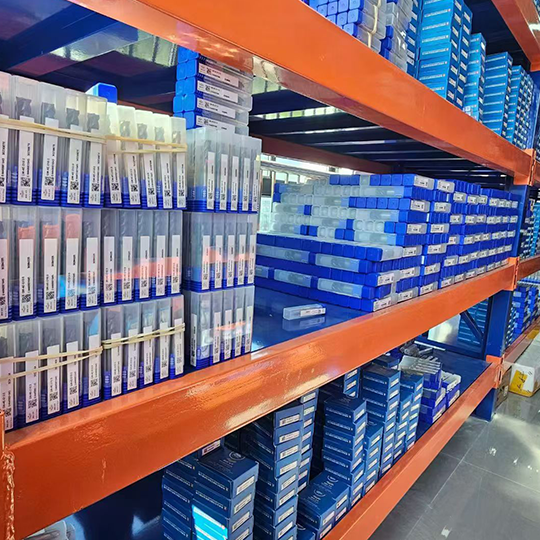
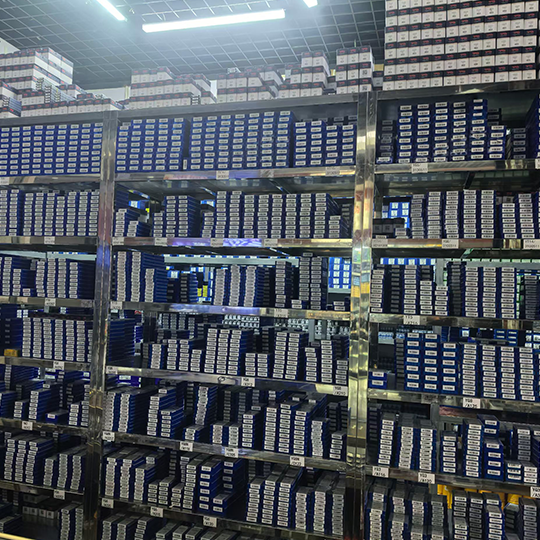
- Steady Supply: Large warehouse stocks ensure fast shipping for your production lines.
What is a Spiral Flute Tap?
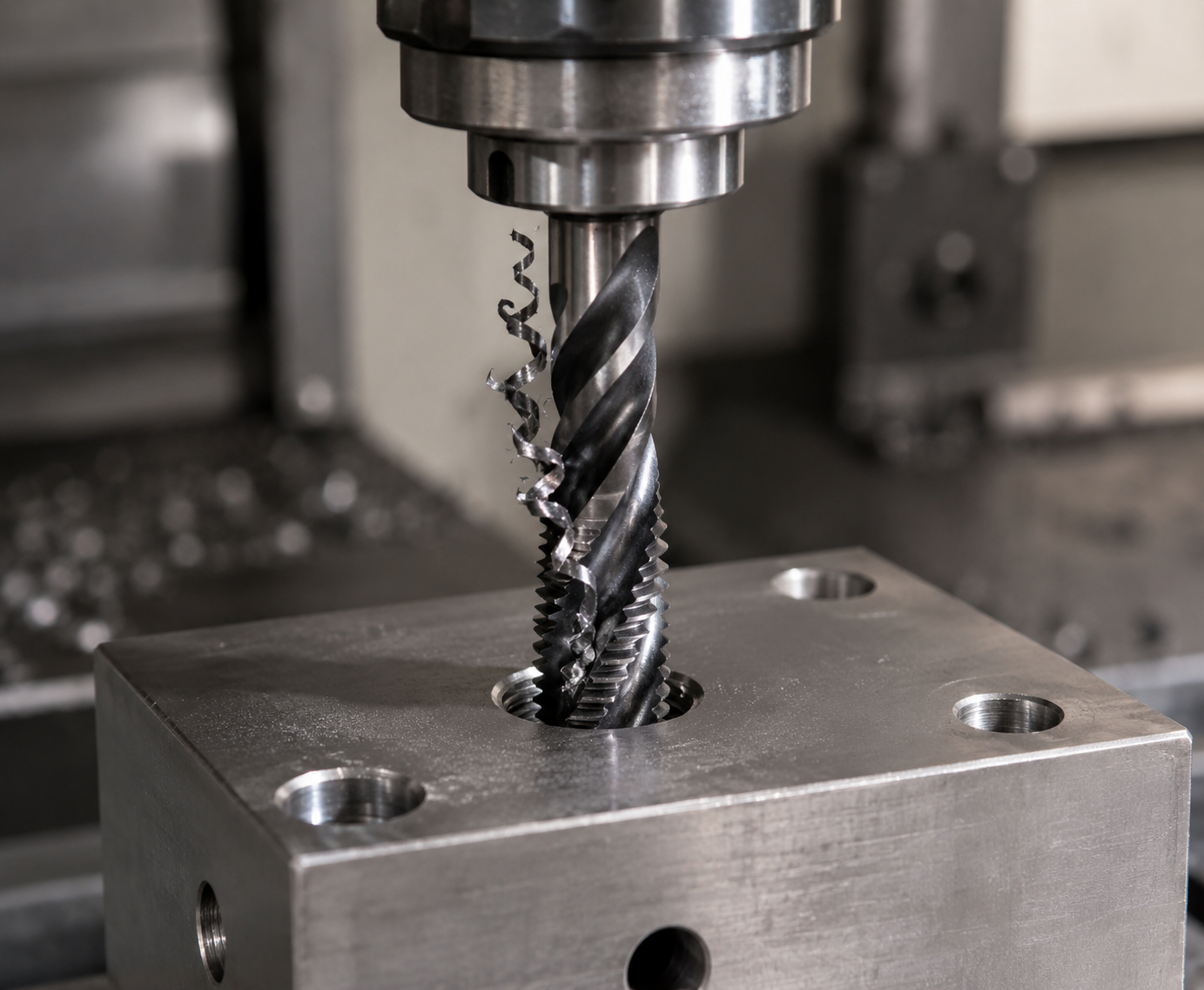
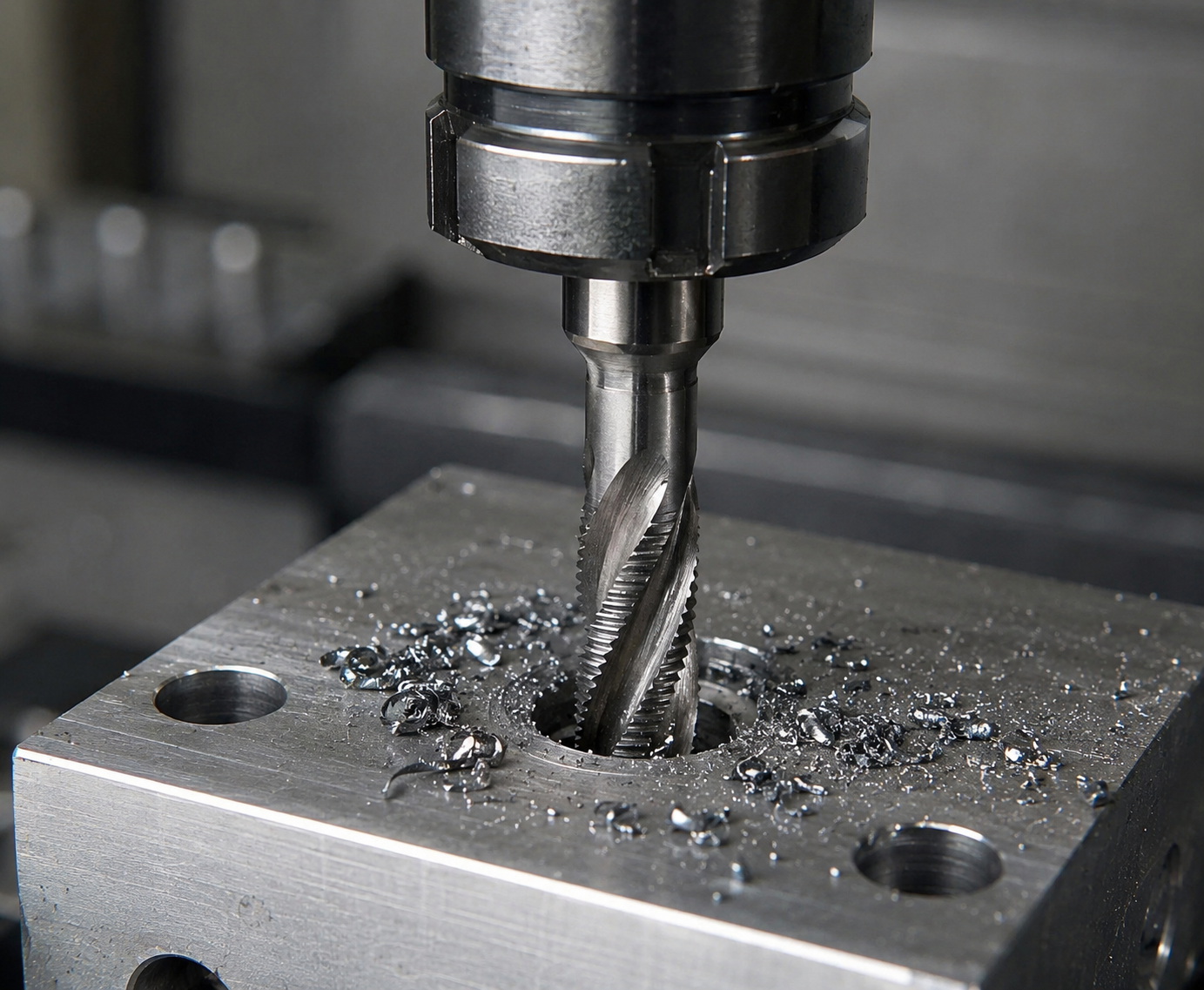
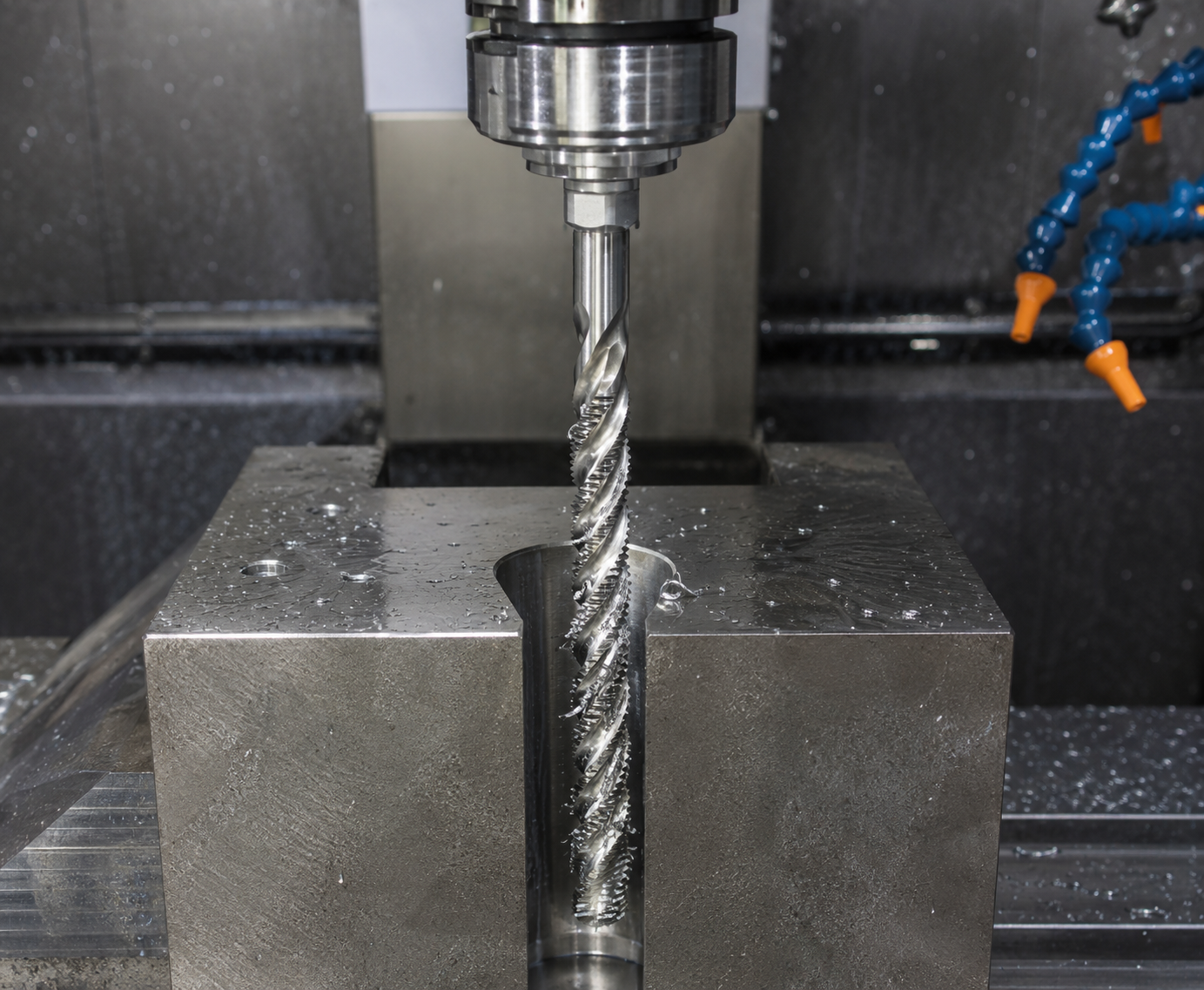
The metal chips have nowhere to fall when you need to cut internal threads into a blind hole. A spiral flute tap is the exact cutting tool that was made to do this job. It has lines that are twisted and look like a regular drill bit. These curvy channels work like an escalator as the tool cuts through the solid metal. As they work, they lift and pull the metal trash out of the hole at the top. The chips don’t get squished together at the solid bottom because of this instant upward release. This keeps the tap from getting stuck and breaking inside your part.
For safe, continuous CNC machining, you can count on spiral flute taps. You need this tool if your firm makes heavy metal molds, sealed pump housings with closed-end holes, or engine blocks for cars. Because it instantly moves the waste out of the way, you can thread hundreds of holes at high speeds without having to stop and clean up. This keeps your automated production lines going smoothly and keeps your expensive pieces safe from broken tools.
The Hidden Cost of Cheap Spiral Flute Taps
The metal waste has to go up when you thread an open hole. The cheap spiral flute tap won’t lift the chips if you put it into your CNC because the holes aren’t machined well. The tool doesn’t pull the trash out; instead, it packs the chips at the bottom of the hole into a tight, solid mass. Your mechanical spindle doesn’t stop pushing, so when the tap hits this solid blockage, it breaks right away. Now you have a broken piece of hardened steel stuck inside a costly part that is almost done. Either you have to stop the production line and spend hours trying to get the broken tool out, or you have to throw away the whole piece of work.
For safe, continuous CNC machining, you can count on spiral flute taps. You need this tool if your firm makes heavy metal molds, sealed pump housings with closed-end holes, or engine blocks for cars. Because it instantly moves the waste out of the way, you can thread hundreds of holes at high speeds without having to stop and clean up. This keeps your automated production lines going smoothly and keeps your expensive pieces safe from broken tools.
It always costs your factory more in scrap metal and machine downtime when you buy cheap tools. Hanöki makes heavy-duty spiral flute taps that are made to be used safely with CNC machines. Our finely ground holes pull every chip out of the way quickly, so they don’t get stuck. When you buy from our factory, you get reliable tools that keep your automated lines running smoothly and protect your valuable parts.
Spiral Flute Taps By Spiral Angle
 Slow Spiral (15° - 20°)
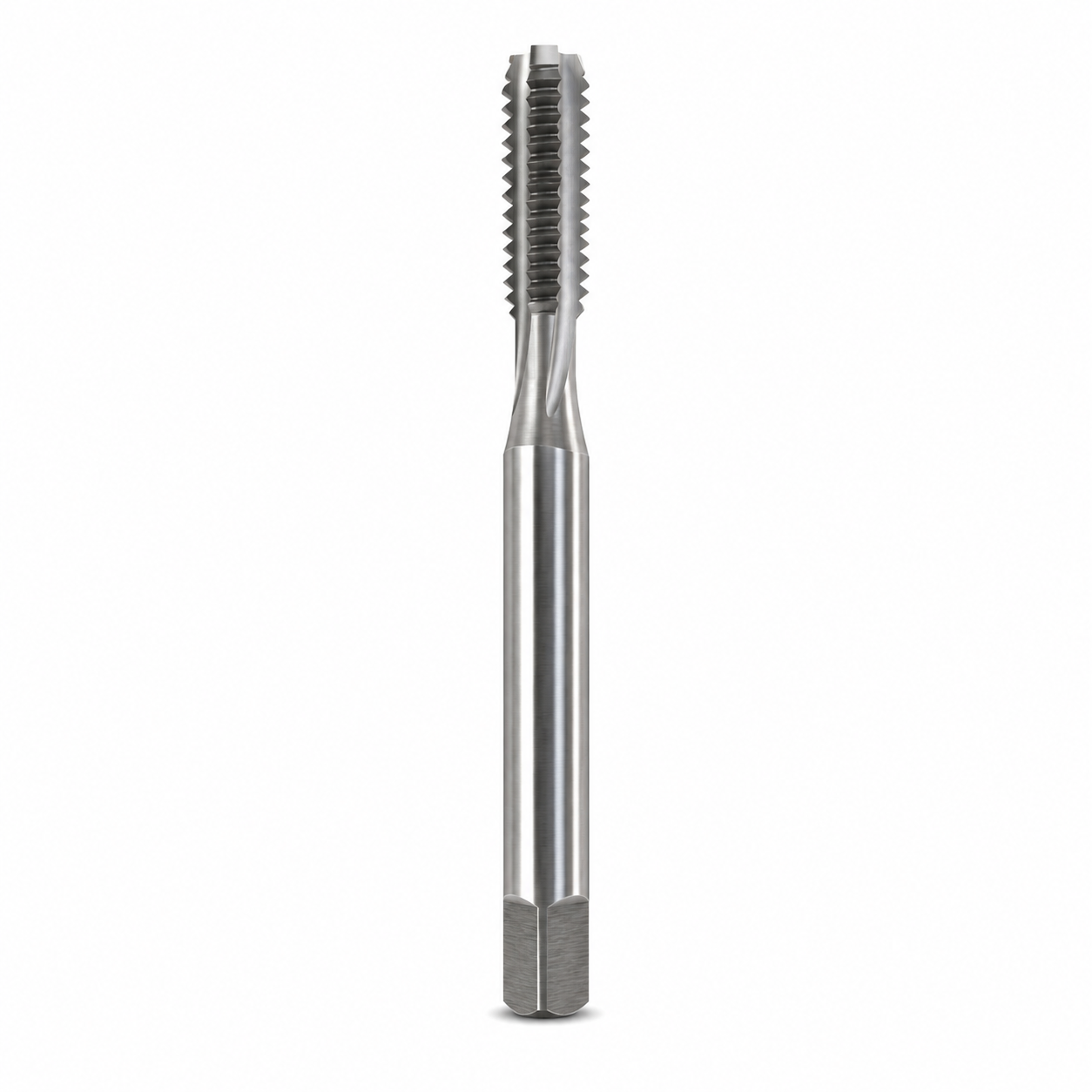
These have a small twist that makes the body of the tool very strong. These are used for cutting tough, hard-to-machine steels that need the most cutting strength.
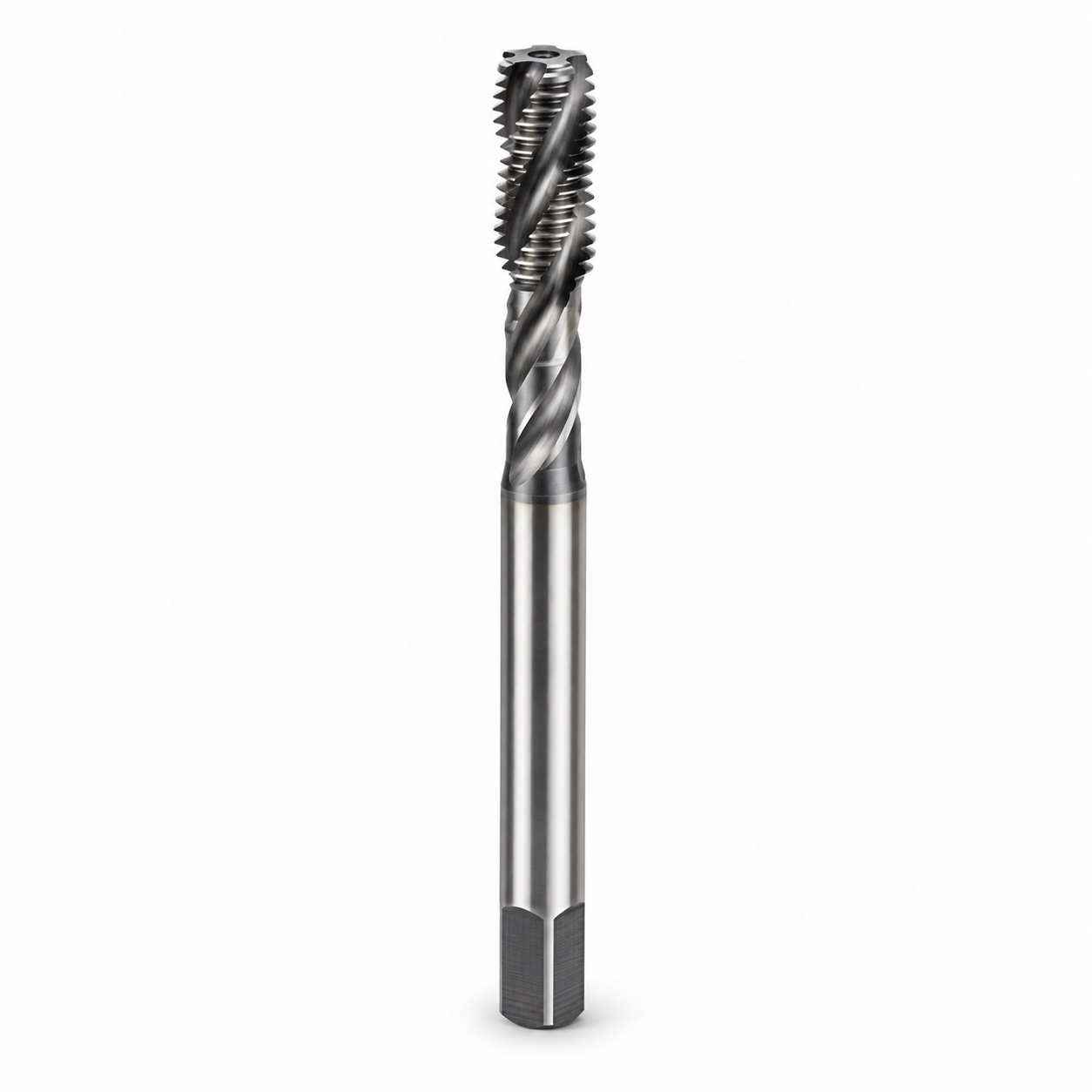 Standard Spiral (30° - 40°)
For general CNC cutting, this is the mill you should use. For standard carbon steels, they are the best balance of chip lifting and tool rigidity.
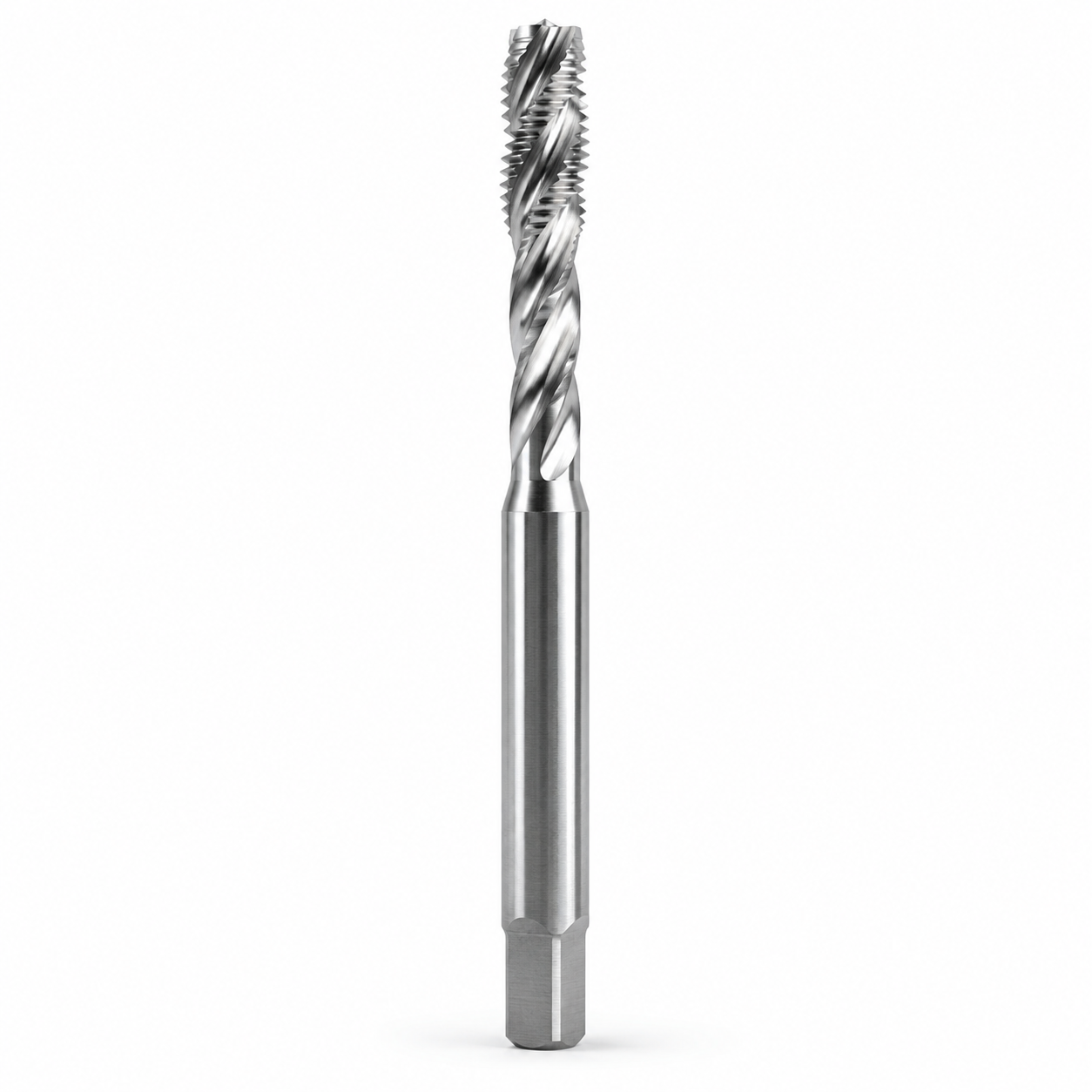 Fast Spiral (45° and above)
Built with a very sharp turn. These are what you need to pull long, sticky chips out of soft metals like copper and aluminum with force.
Spiral Flute Taps By Thread Standard
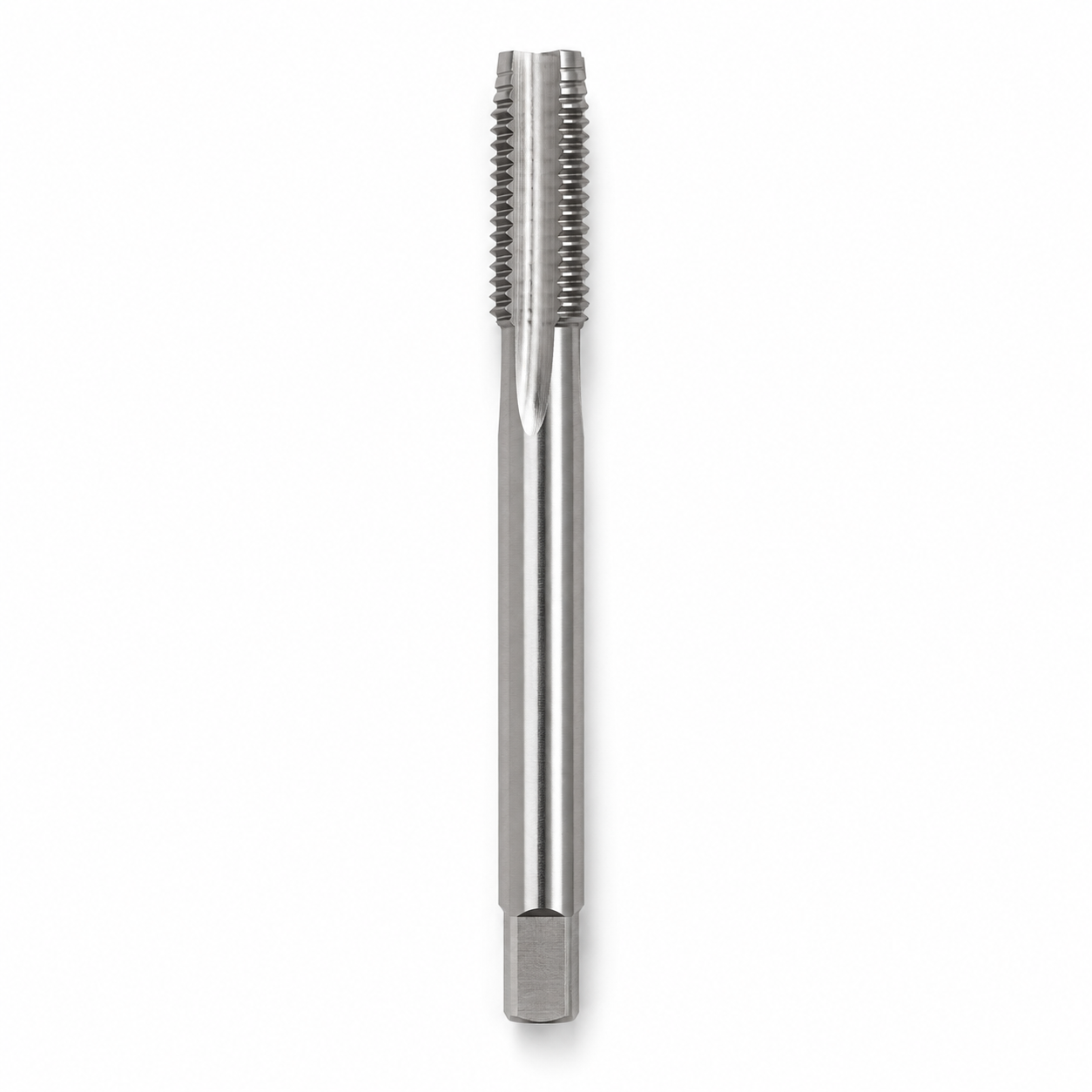 Metric Taps (M/MF)
The standard millimeter sizing. These are needed to make parts for cars and general world machinery.
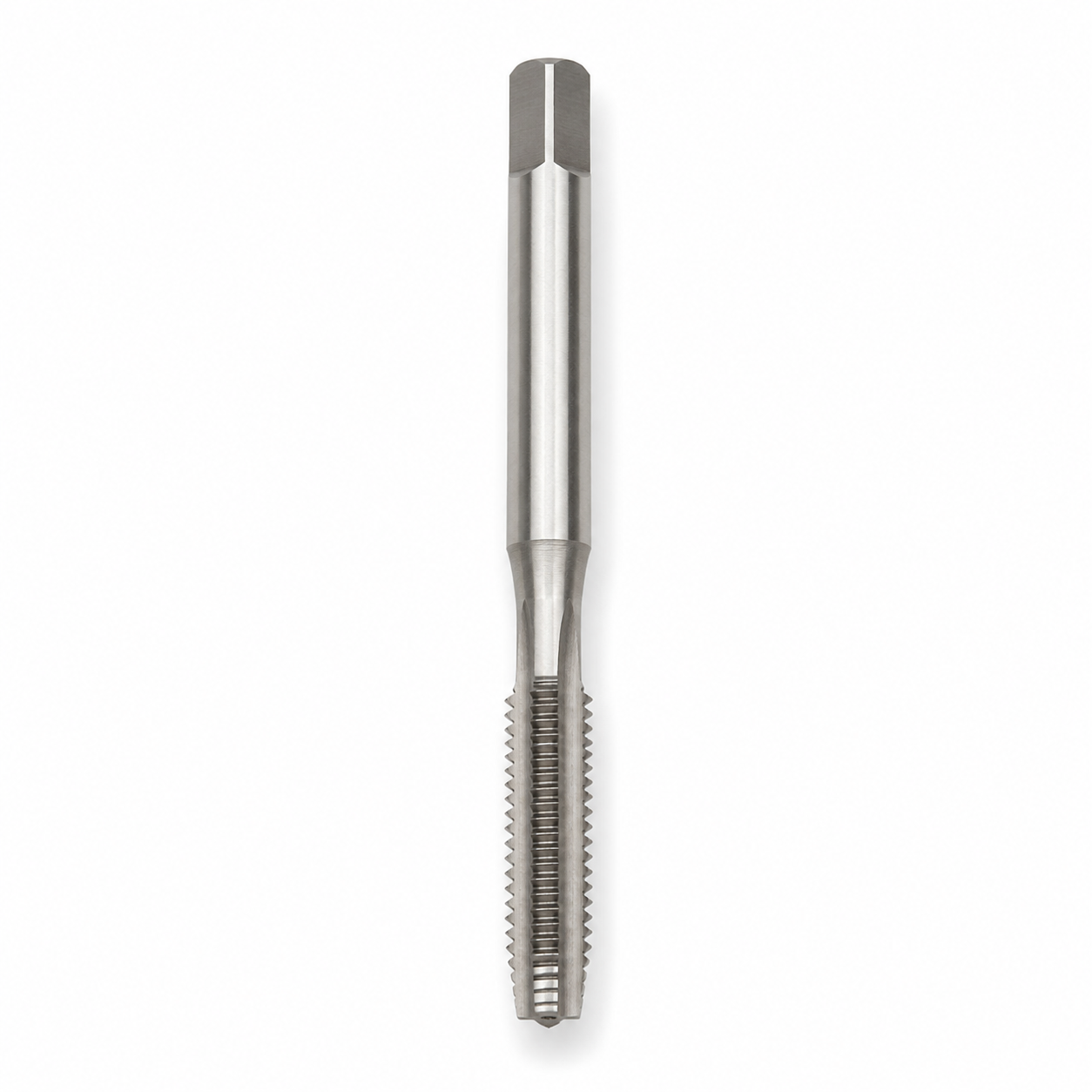 Unified Taps (UNC/UNF)
The required inch-based system. If your plant sends finished metal parts to the North American market, you need to run these.
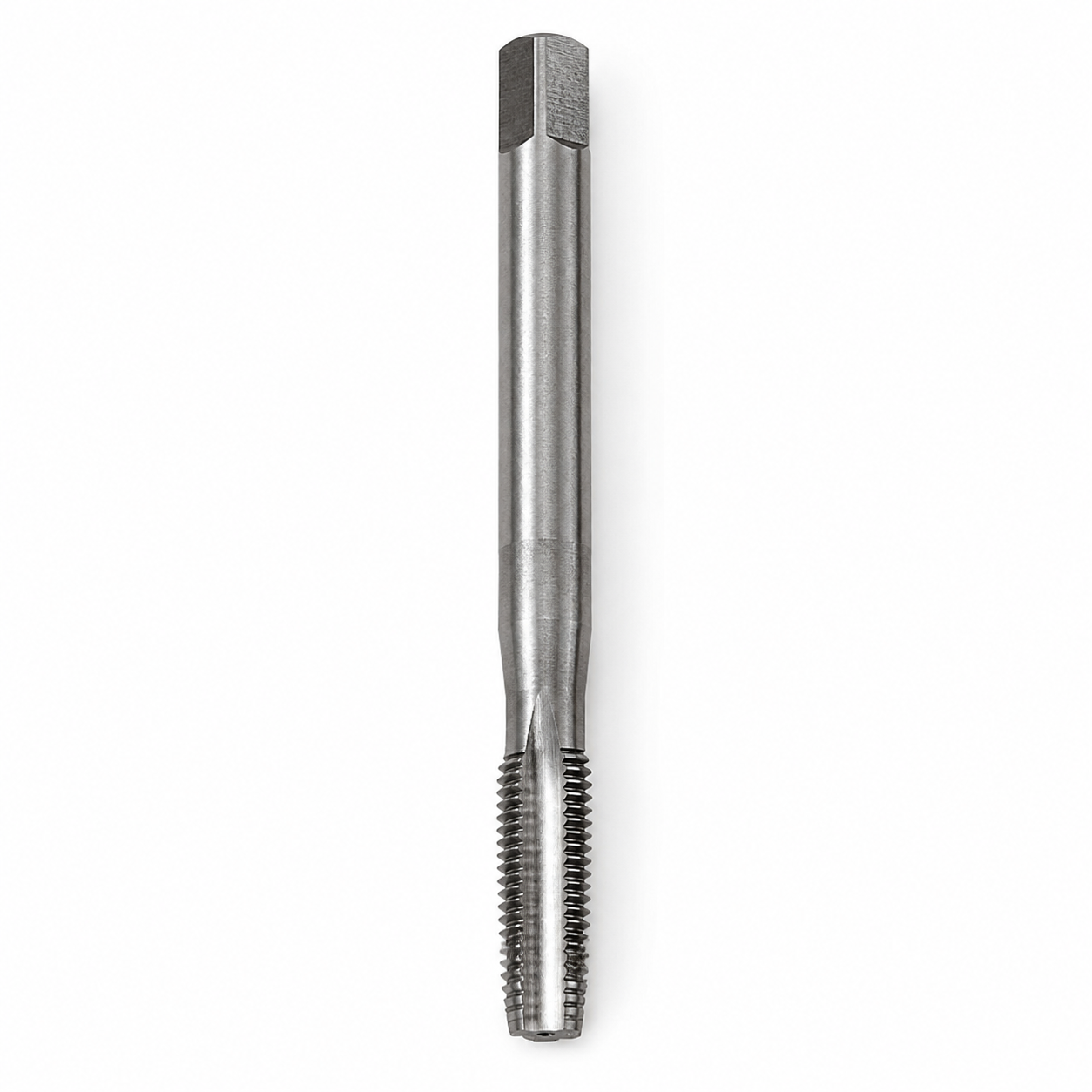 Pipe Taps (NPT/G/BSP)
Specifically curved to make seals that don’t let air in or out. These are used to make fluid pumps, hydraulic valves, and plumbing joints in a factory.
Spiral Flute Taps By Tool Material & Coating
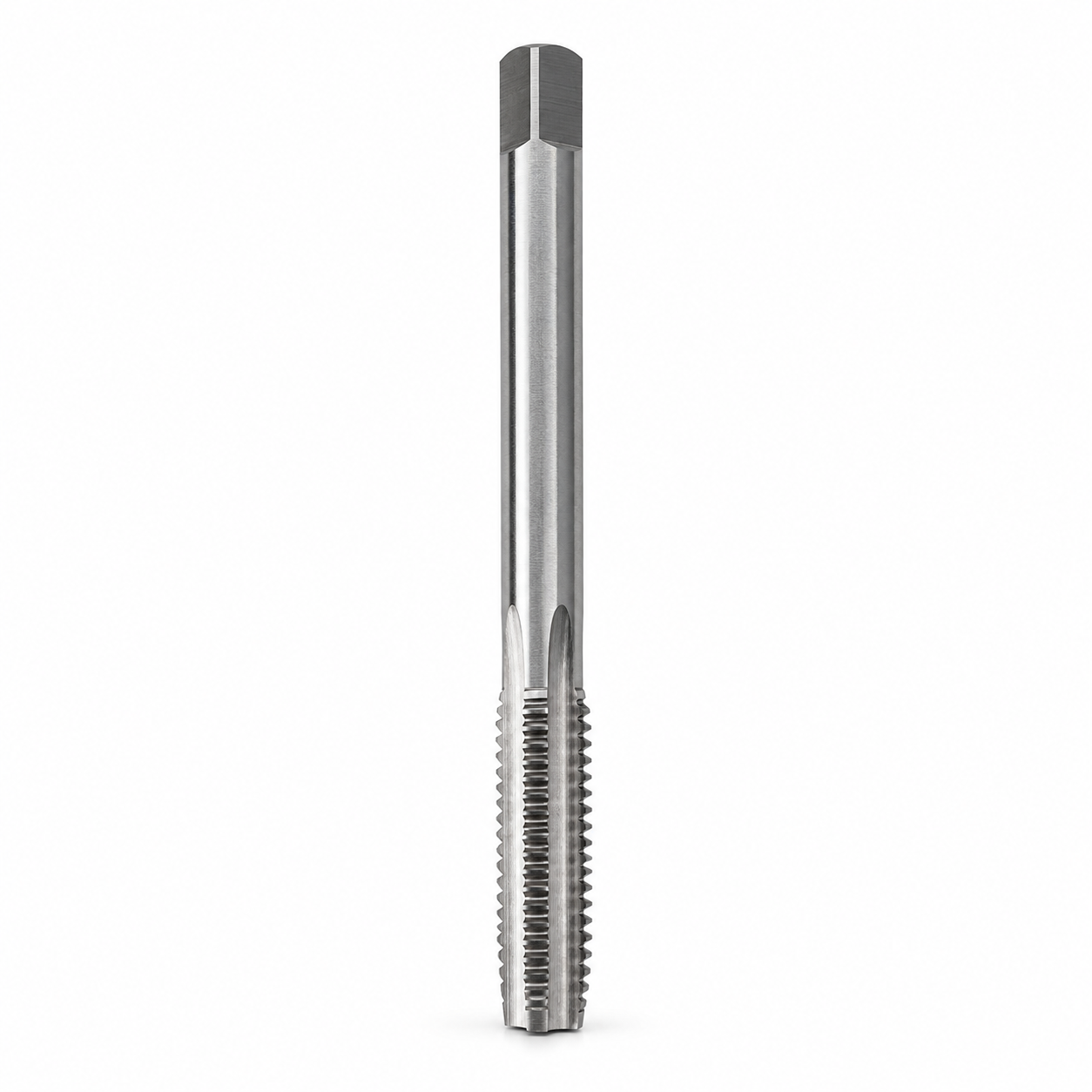 Uncoated HSS-E (Cobalt)
Strong cobalt steel with bare flutes. For cheap machining on soft, non-abrasive materials, these are what you need.
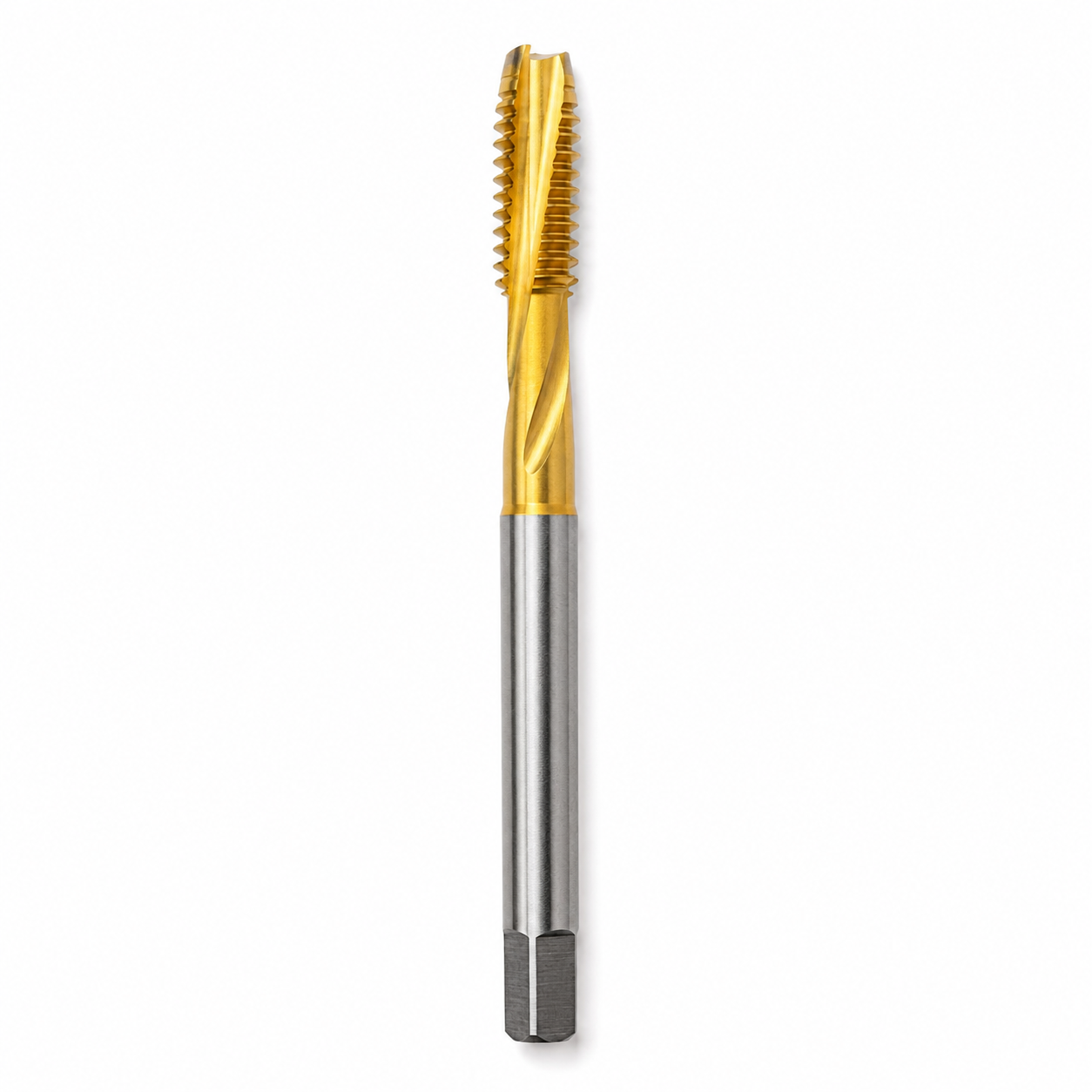 Coated HSS-E (TiN/TiCN/TiAlN)
Upgraded with premium surface treatments to fight friction. You can count on these to thread standard and tough steels continuously and quickly.
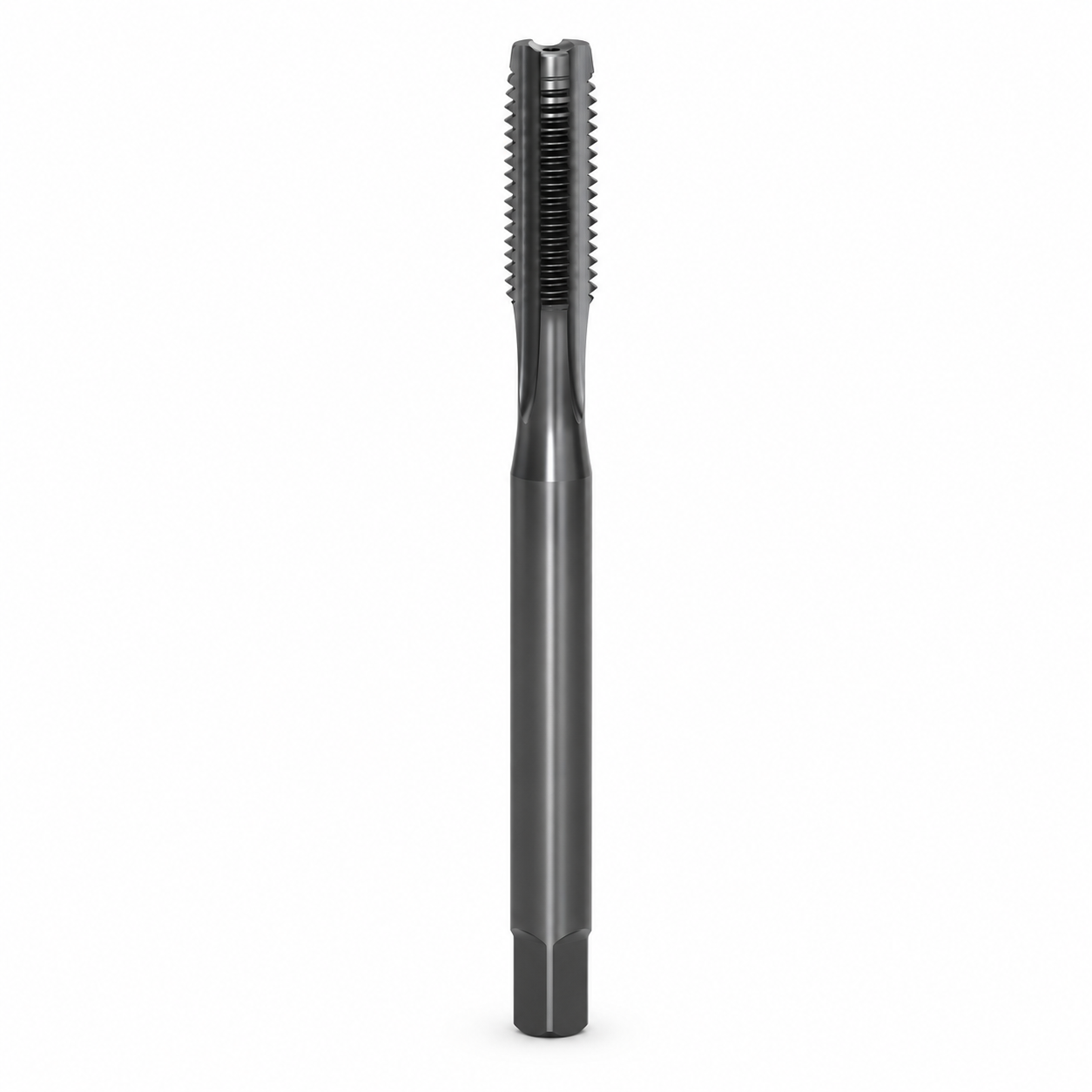 Solid Carbide
Made to be very stiff and not bend at all. When your machines need to cut through very hard metals, these are the only tools that will work. Regular steel tools would burn up right away.
Why Choose Hanöki Spiral Flute Taps
High-grade industrial steel that is stable is used to make spiral flute taps. This gives your tools a good balance of hardness and flexibility, so they can handle continuous CNC machining without breaking down too quickly.
We keep a close eye on the grinding process to make sure that the thread sizes stay exact. This makes sure that every hole you tap goes through gauge checks without any problems, so your assembly team can fit bolts tightly without any loose connections.
Every tap has twisted grooves that are machined to be smooth and even. This lowers the friction that happens when you cut and makes it easy for the scrap metal to slide up. This keeps your blind holes safe from tools getting stuck.
The tools we send out are not hardened until they are made in our own factories. So, we can directly control how tough the metal is, making sure that your taps never come too weak or too soft, which could be dangerous.
You can talk to the engineers directly if your workers are having trouble with tough metals on the shop floor. We give you useful advice on how to fix the problem with speed and feed.
We work with your production plan and don’t force you to buy huge amounts at once. For each assembly line, you can order just the right amount of units for your factory.
Reaches Closer to the Bottom of the Hole
When you’re blind hole cutting, the thread needs to go as far as it can. Spiral flute taps move the metal waste up and out, so chips don’t build up at the bottom. This makes it safe for your machine to cut threads much closer to the hole’s base without running into a wall of stuck debris.
Handles Sticky and Stringy Metals Easily
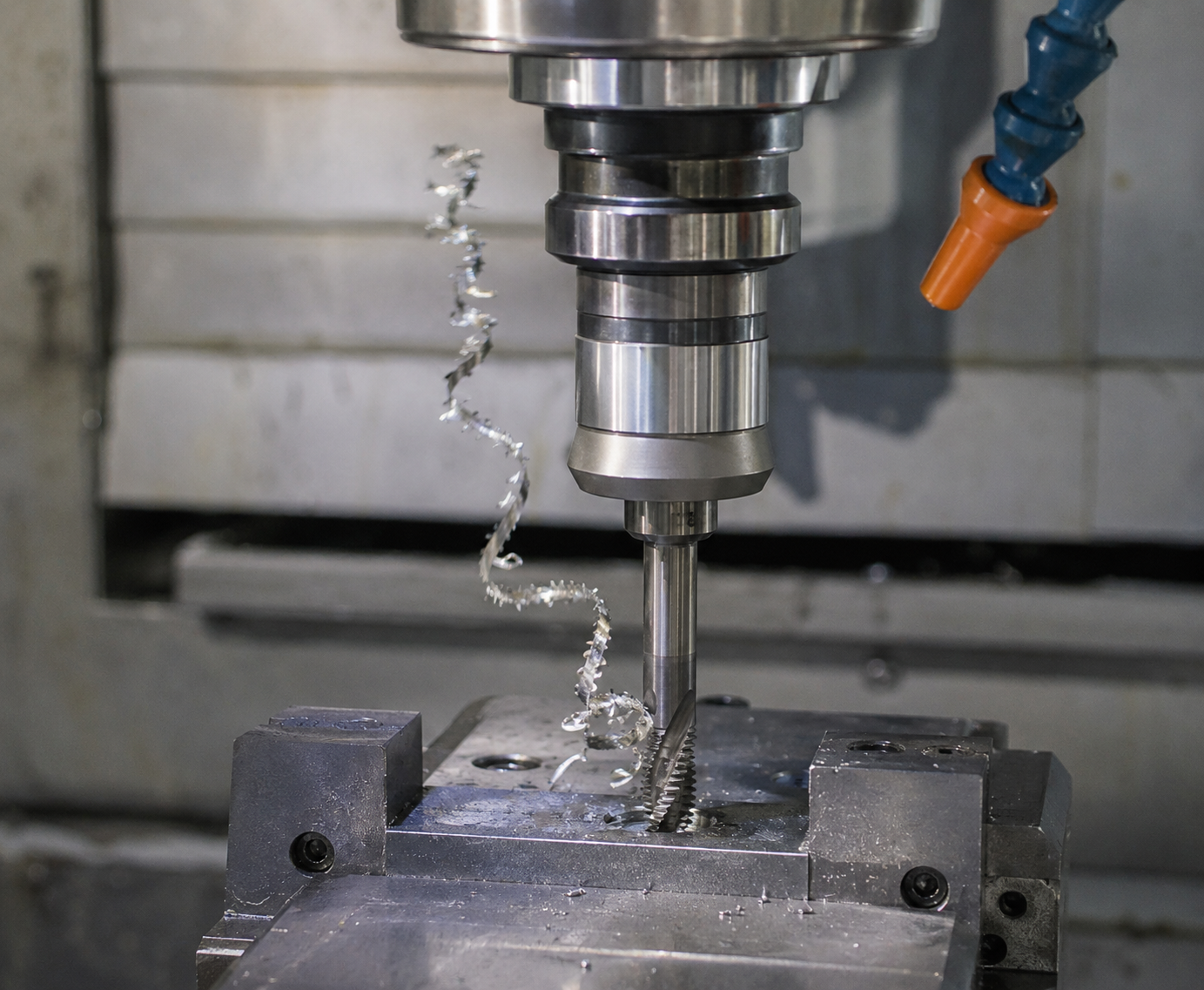
When you machine soft metals like aluminum, carbon steel, or stainless steel, you get long, stringy chips that are easy to tangle. Because spiral flute taps are twisted, these sticky ribbons naturally curl and pull away from the cutting zone. This keeps them from wrapping around your tool holders or getting stuck in your CNC spindle.
Allows Coolant to Reach the Cutting Teeth
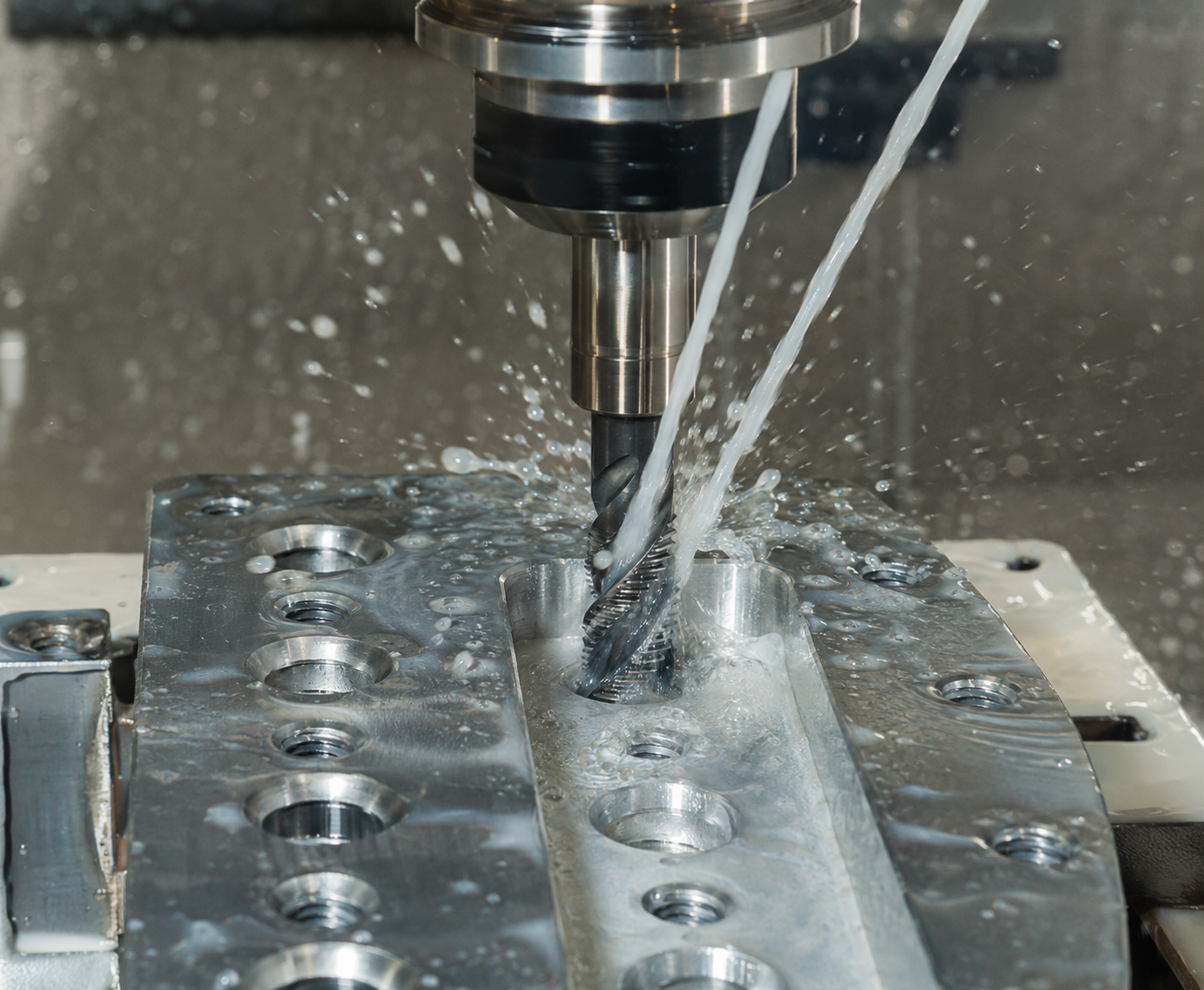
If the hole is blocked by packed chips, cutting fluid can’t get in to break up the friction. Spiral flute taps keep the upward path clear so that the high-pressure coolant in your machine can run straight down to the cutting edges. This turns down the heat right away, which keeps your tool from getting burned.
Lowers the Stress on Your CNC Motors
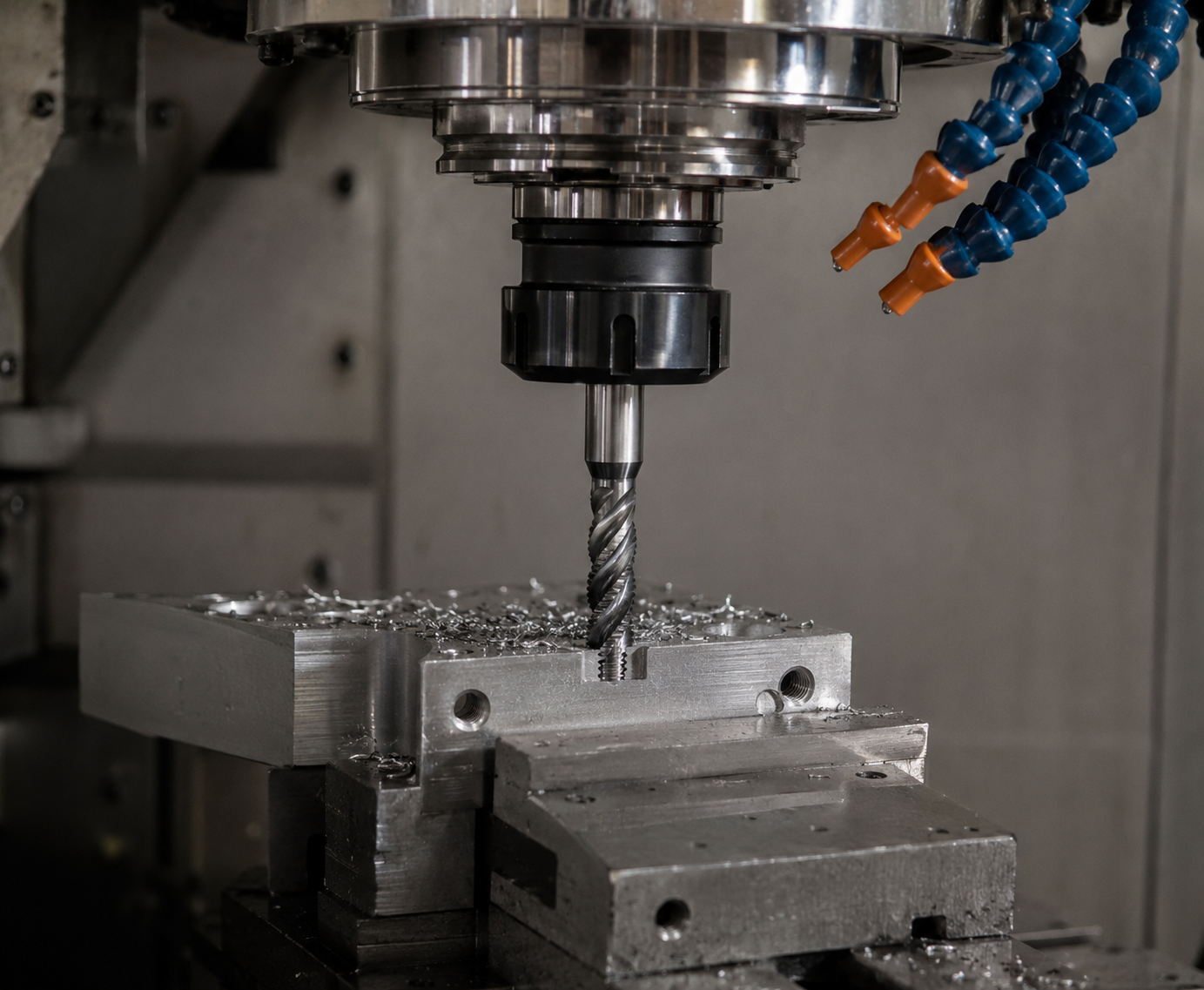
Tools need to be able to twist a lot of force in order to push chips down or let them pack tightly. Spiral flute taps need a lot less torque because they don’t cut smoothly; instead, they lift the material. Your expensive CNC motors and bearings will be safe from needless heavy wear and tear.
Makes Deep Hole Threading Much Safer
Chip packing is very dangerous when you need to thread a hole that is two or three times deeper than it is wide. The long vertical channel stays clear because spiral flute taps keep lifting. This makes deep-hole threading safe and predictable for your workers.
Protects Your Most Expensive Workpieces
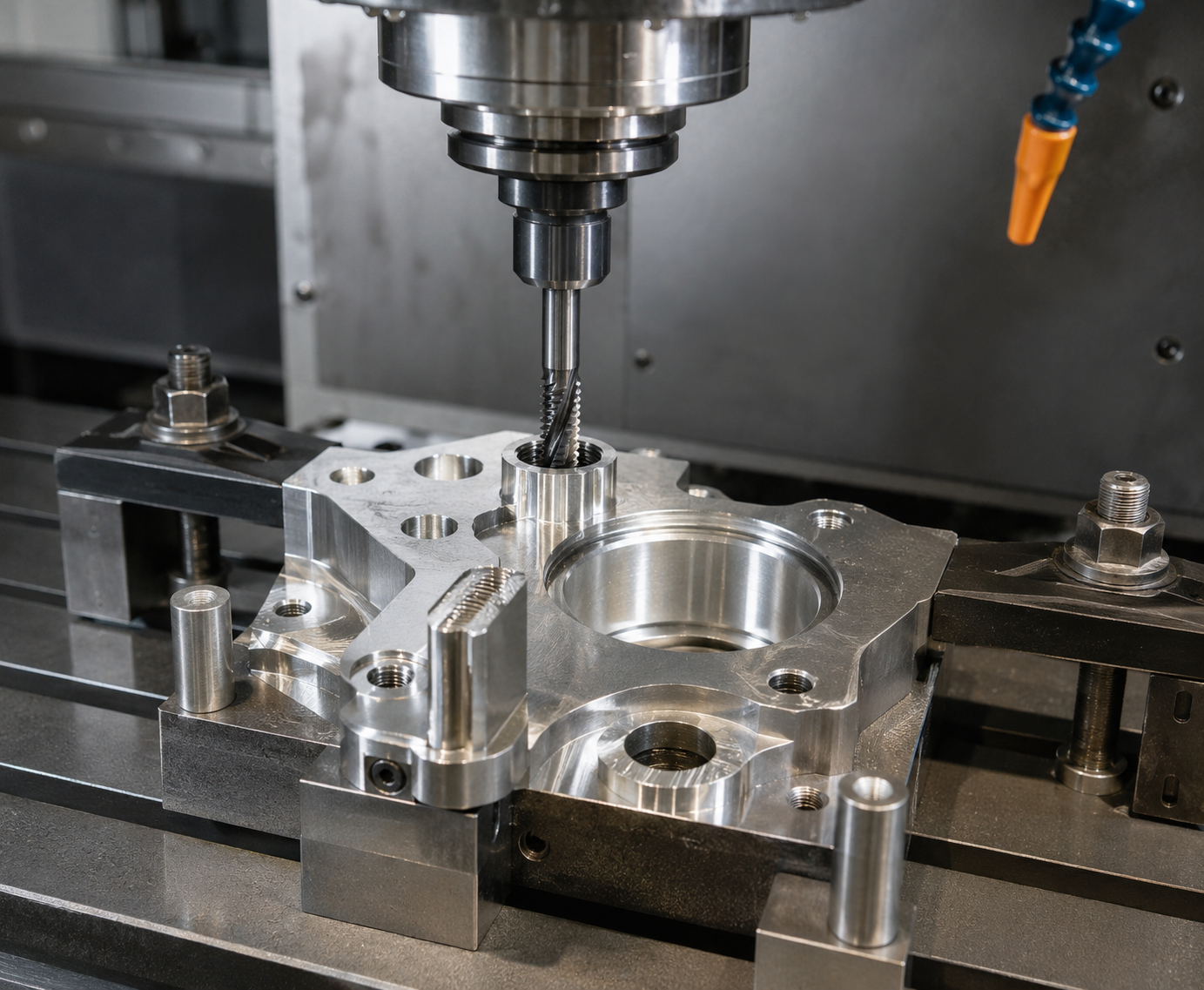
Most of the time, threading is the last step in a long and pricey CNC cycle. By keeping chip jams from happening suddenly and properly handling waste, spiral flute taps make it much less likely that a tool will break. This keeps almost-finished parts from ending up in the trash, which saves the plant time and raw materials.
Your Direct Factory for Professional Spiral Flute Taps

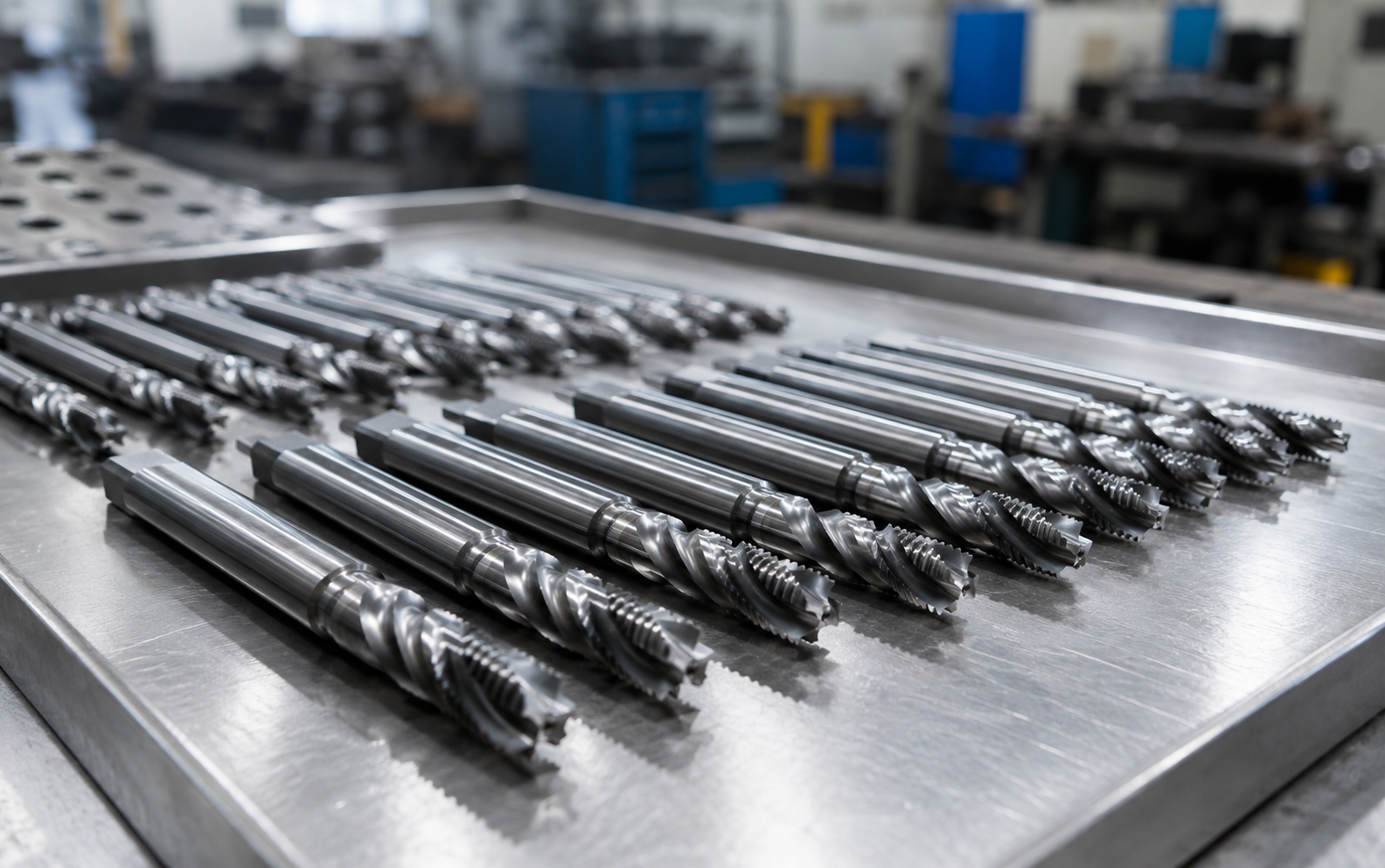
Heavy-duty Hanöki spiral flute taps have been made in our own 25,000-square-meter factory for more than 30 years. We have tight control over the quality of every batch because our production line uses more than 20 high-tech CNC grinding tools. This makes sure that the tools you get have correct twist angles and enough cutting strength to withstand high-speed automated machining.
You can get real industrial reliability by buying directly from our factory floor instead of going through a trading company. We have a huge stock of standard spiral flute taps that we can ship anywhere in the world right away, so your assembly lines never have to wait. If your workers ever have trouble getting chips out of metals that are hard to work with, our team of 10 senior application engineers is always ready to help directly. We can give you the reliable tools you need to keep your CNC equipment safe and working well.
Spiral Flute Taps Application Areas
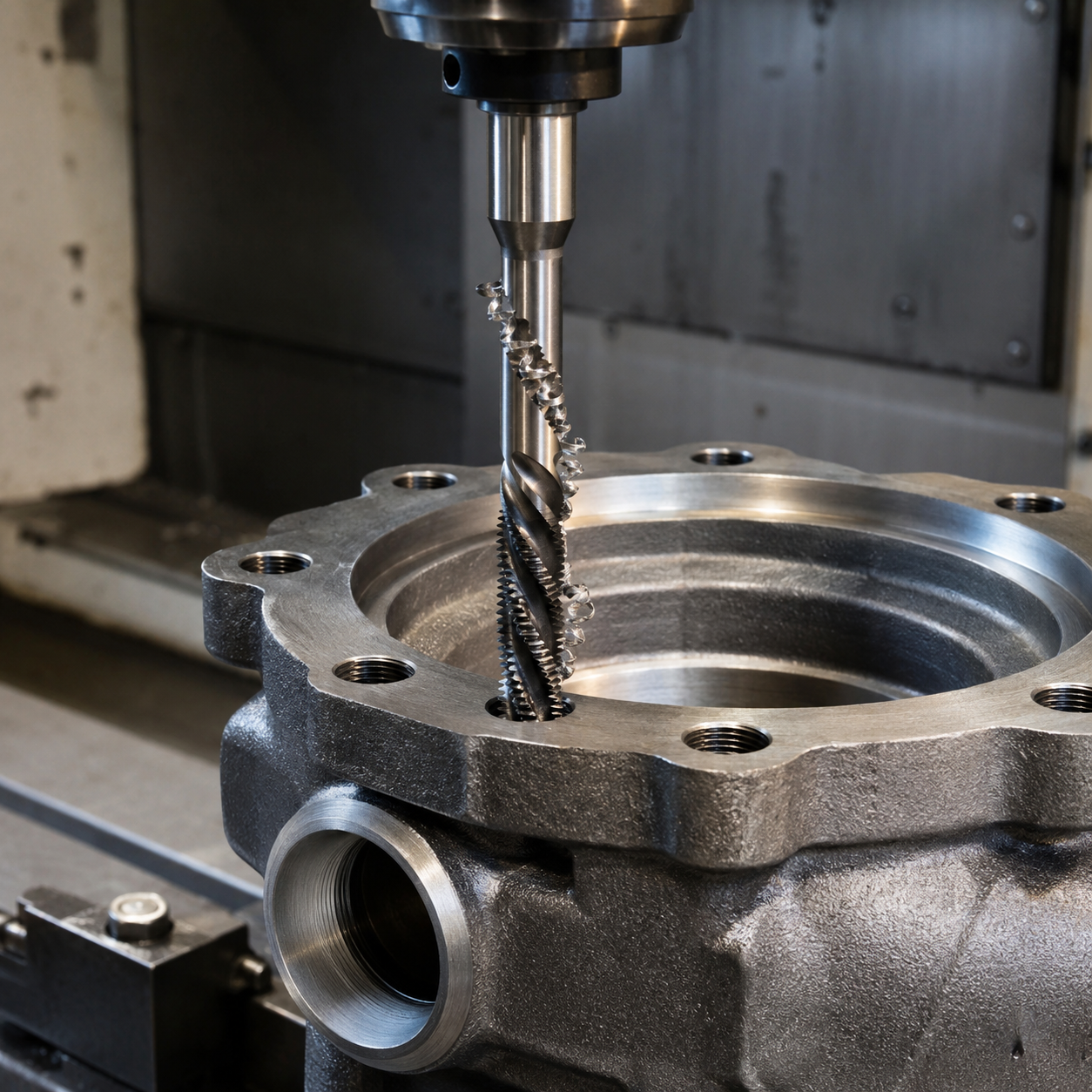
When you make heavy-duty water pumps or liquid control gear, you often need to drill closed-end holes in the heavy covers so that they can be bolted together. It is safe to pull the waste up by running spiral flute taps into the metal. This keeps any chips from getting stuck at the bottom and lets your bolts sit perfectly flat, keeping the pump housing dry.
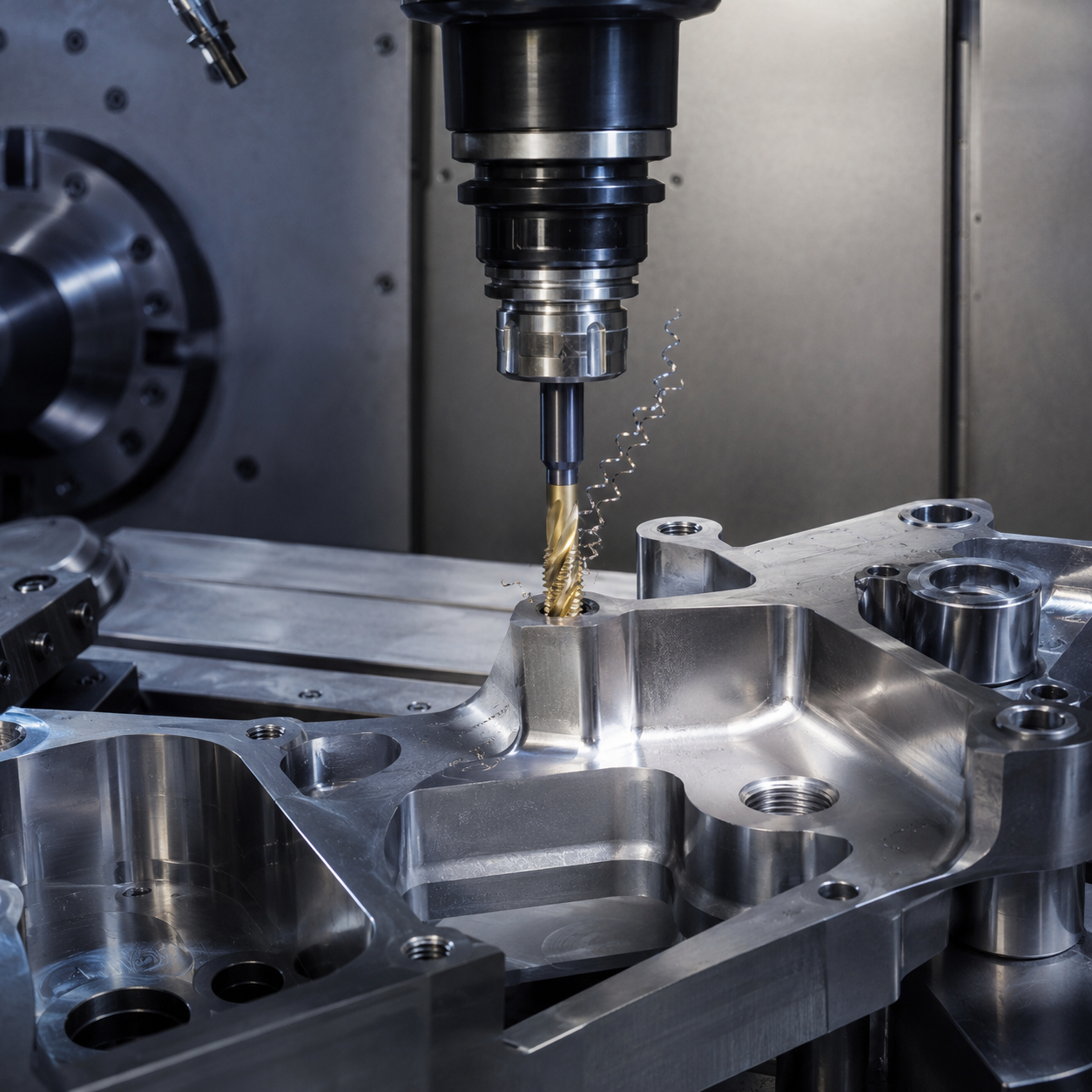
Threading very expensive, tough metal alloys is a part of machining landing gear or structural frames for airplanes. You can’t afford to break a tool deep inside these parts. Spiral flute taps safely pull the tough metal chips up and out of your blind holes. This keeps your strict production plan on track and protects your high-value aerospace workpieces from sudden CNC crashes.
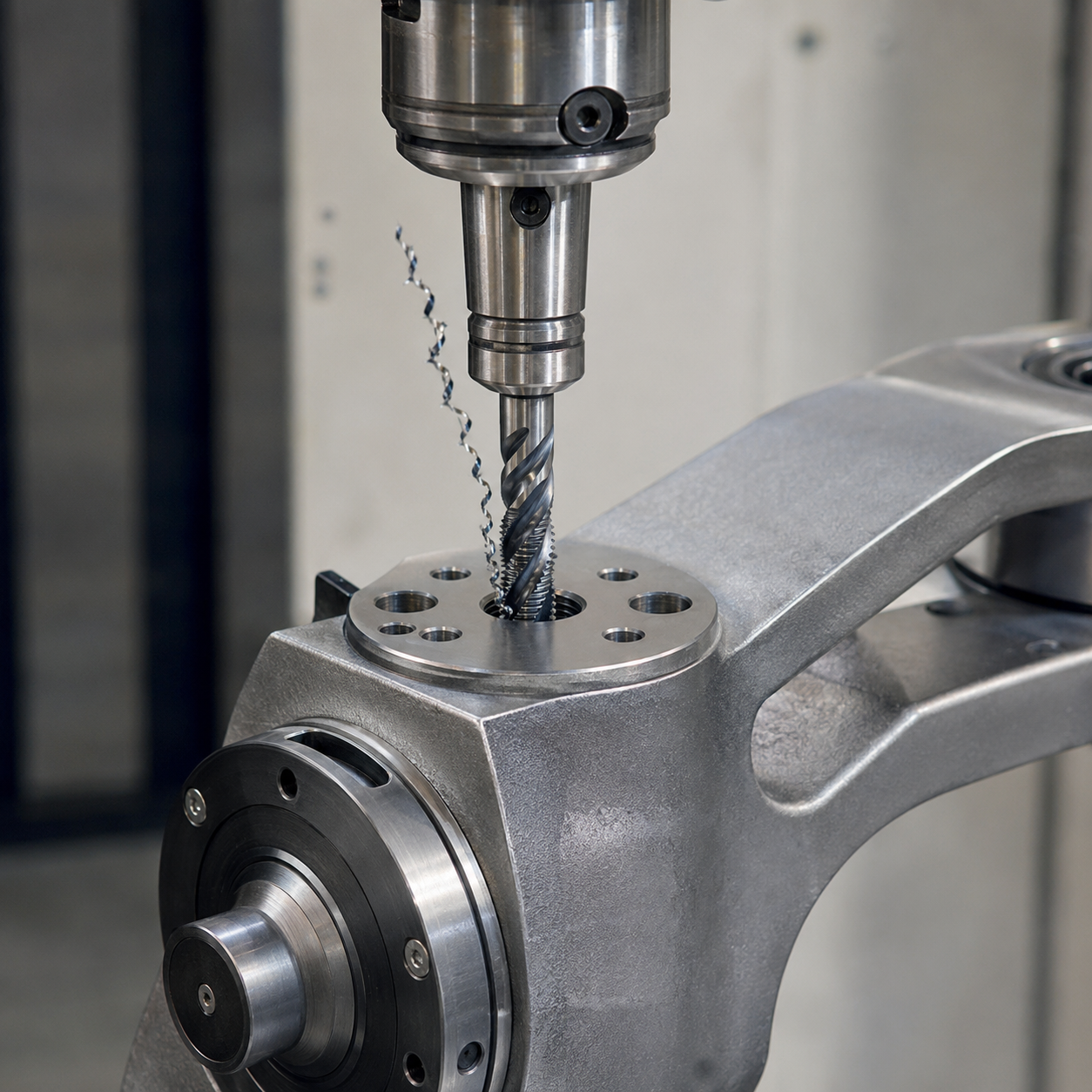
A lot of blind holes have to be drilled into solid metal joints in order for your factory to make robotic arms or automated assembly machines. Spiral flute taps are used to make smooth internal threads while the chips are ejected right away. This makes sure that the mounting places for the moving parts are strong and reliable, and you never have to stop your CNC machines to clean out the holes by hand.
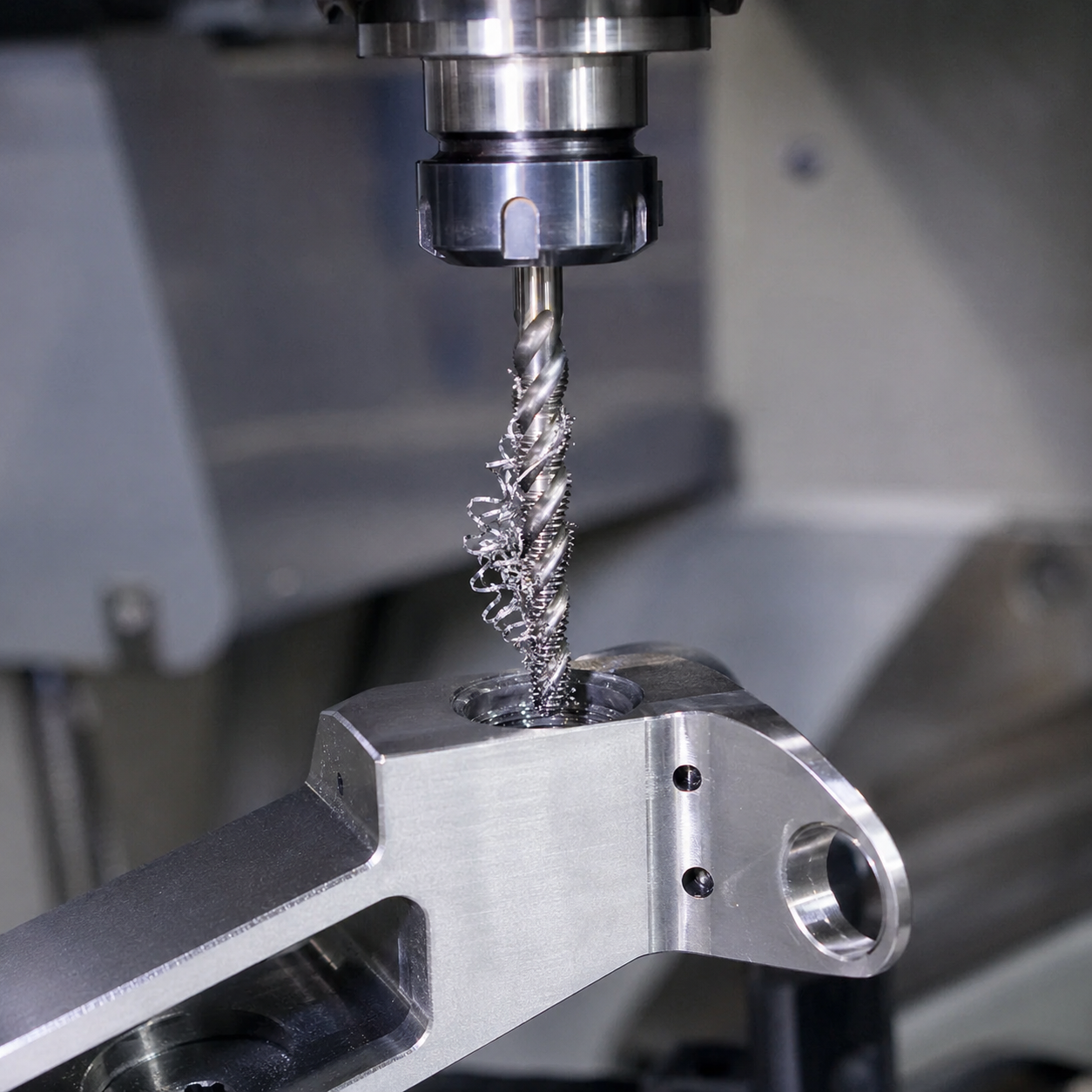
To make medical equipment like surgical tools or heavy hospital bed frames, tough stainless steel needs to be machined with deep blind holes. Spiral flute taps are what move the long, stringy steel chips out of the way before they can pack down tight. This makes threads that are clean, very accurate, and can easily pass the strict quality checks needed for medical assembly.
It is mostly used to make blind holes (holes that don’t go all the way through the metal) with internal threads. The twisted grooves on it pull metal chips up and out of the hole like an elevator.
When you use a normal tool, the chips will move forward and pack together tightly at the pointy end of the blind hole. This can’t happen with a spiral flute tap because it safely lifts the waste up. This keeps the CNC spindle from getting stuck and breaking the tool.
This type of tap is great for blind holes because it pulls metal chips up and out. Because it moves the chips up and down, a spiral point tap, also called a gun tap, should only be used for through holes with open ends.
You can use a spiral flute tap in a through hole, but it’s not the best way to do things. It takes more energy to lift chips than to push them down. They will run faster if you use a spiral point tap for through holes.
How hard the tool lifts waste depends on the twist angle. A steep-angled fast spiral pulls out sticky chips quickly, while a shallow-angled slow spiral makes the tool body stronger for cutting tougher steels.
To work with metal, which is soft and makes waste ribbons that stick together, you need a high-helix (fast spiral) spiral flute tap. The sharp twist pulls the sticky stuff out hard before it can stick to your cutting teeth.
Stainless steel quickly gets tough to work with. To handle the high temperatures and keep the threads from galling, you need a spiral flute tap made of strong HSSE (cobalt) with a high-quality covering, such as TiCN or TiAlN.
In most cases, no. Instead of stringy chips, cast iron breaks into a rough powder. It will be hard for a spiral flute tap to lift this powder. The right way to deal with cast iron dust is to use a straight-flute tap.
When metals get hard, regular high-speed steel tools will burn up. To thread hardened steel, you need a spiral flute tap made from solid carbide or powder metallurgy steel, along with a CNC setting that is very rigid.
Yes. But you need to keep the speed of your CNC under control and use a lot of coolant. This spiral flute tap will damage your part’s internal threads if it gets too hot. This is because the plastic chips inside the flutes will melt.
A spiral flute tap should always be used much more slowly than a regular drill bit. The exact RPM is based on the width of your tap and how hard the metal is. When you run faster in tough metals, you protect the cutting edges by going slower.
To keep the metal from being torn, your CNC feed rate needs to be exactly the same as the shape of the tool. This is easy to figure out: just multiply the spindle’s RPM by the spiral flute tap’s exact thread pitch.
It is best to use rigid tapping, where the CNC perfectly syncs the feed and spin. If your older machine doesn’t let you do this, you need to use a tension-compression (floating) holder to keep your spiral flute tap from breaking.
A circular flute tap can sometimes stop coolant from getting to the bottom because it pulls chips up. To keep the cutting teeth smooth, you should use a rich, high-pressure coolant mix to flush out the flutes all the time.
If at all possible, you should not use your hands. A spiral flute tap is designed to work with the steady power of an automatic machine. When you twist and reverse by hand, the threads often get messed up or the tool breaks.
A spiral flute tap typically breaks when the hole that was already drilled is too small, the cutting teeth are worn out, or chips pack together because the coolant pressure isn’t high enough to wash the chips away.
If chips are getting stuck in the grooves, the spiral angle on your tool might not be right for the metal. You can change your CNC’s twist angle to one that is faster, add more high-pressure water, or use a peck-tapping cycle.
If the spiral flute tap goes into the hole at an angle, the CNC feed rate doesn’t match the spindle RPM, or the cutting edges are dull and push the metal instead of shearing it, the threads will be too big.
A spiral flute tap that squeaks is not properly oiled. You need to stop the machine right away and either make the coolant more concentrated, switch to a thicker tapping oil, or slow down the spindle.
It’s hard to drill out the tool steel because it has been highly hardened. To get out the tap, you need a special tool. If the break is deep, you can take the part to an EDM (Electrical Discharge Machining) shop and burn out the tool there.
In order to make a spiral flute tap, the complex grooves and back-tapered teeth need to be ground on a 5-axis CNC machine. Making this shape costs more, but it keeps your plant from having to throw away expensive parts that don’t work.
If your threaded holes fail thread gauge checks, if the machine spinning load meter goes up, or if you can see that the cutting teeth are rounded and chipped, it’s time to get a new spiral flute tap.
Yes. A tough thermal barrier is made by a special coating like TiN or TiAlN. This lets your spiral flute tap run at faster CNC speeds and makes the tool last a lot longer when working with rough metals.
Back-taper means that the teeth get a little smaller as you move toward the shank. Because a spiral flute tap has to turn around to get out of a blind hole, this taper keeps the back of the teeth from hurting your new threads by scraping them.
The spiral flute tap can cut full threads very close to the base of a blind hole because it has a flat bottom, also called a semi-bottoming chamfer. This design is what you need when your assembly needs the most thread engagement in small spaces.
How to Choose the Right Machine Tap for Your CNC
If you choose the wrong machine tap, you could break a tool right inside your most expensive piece of work. If you push a simple straight-flute tap into a closed blind hole, the metal chips that get stuck will pack together and break the steel when your spindle hits it hard. In the same way, cutting tough alloys without the right coating will quickly wear down the teeth. To keep your parts safe, you need to use the right tool for the job. A spiral flute tap is the safest way to lift trash up and out of blind holes. A spiral point tap is the safest way to push chips down through open holes. If you use the right flute geometry and high-pressure coolant, your factory will avoid spending money on scrap metal and machine downtime, which costs a lot.